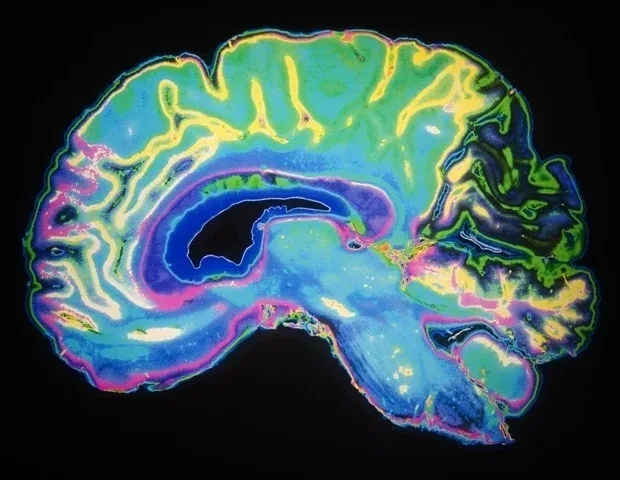
Researchers at Washington University in St. Louis have developed a technique that researchers and clinicians can use to assess the reliability of medical imaging tools. The new method also may be useful for regulators who evaluate new AI-backed medical imaging tools as they come to market.
Medical imaging foundation models are reshaping how artificial intelligence (AI) may interpret scans, combine clinical information, and support multiple tasks from a shared computational base. Rather than training a separate model for every disease or imaging problem, the approach uses large-scale pre-training to encode reusable knowledge into generalizable representations, which can then be adap…
Medical imaging foundation models are reshaping how artificial intelligence (AI) may interpret scans, combine clinical information, and support multiple tasks from a shared computational base. Rather than training a separate model for every disease or imaging problem, the approach uses large-scale pre-training to encode reusable knowledge into generalizable representations, which can then be adap…
Transformer-based architectures have become central to medical image analysis, yet their practical value remains difficult to assess because studies vary widely in tasks, datasets, validation protocols, baselines, and reporting quality. This survey critically reviews recent transformer-based, hybrid, foundation, and transformer-alternative models across segmentation, classification, reconstructio…
July 29, 2026 RSIP Vision is excited to announce our collaboration with Professor Yuqiang Bai from the University of South Florida’s School of Medicine, Ophthalmology department. The ground-breaking tear film imaging system developed by Professor Bai and his team shows promising potential for dry eye disease, and we are honored to contribute to this important … RSIP Vision Announces Project Partn…
Researchers have developed a new artificial intelligence-based method that could significantly improve the detection and classification of brain tumors from MRI scans, achieving higher accuracy than conventional diagnostic systems.
Lung cancer remains one of the leading causes of cancer-related deaths worldwide, and early identification of malignant abnormalities plays an important role in improving patient survival rates. However, accurate lung cancer classification using CT imaging remains challenging because of limited dataset availability, class imbalance, overlapping lesion characteristics, and lack of interpretability…
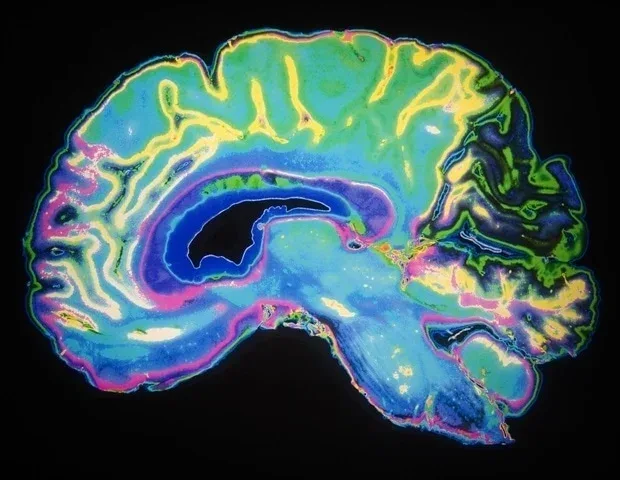
One of the uncomfortable truths about multiple sclerosis is that the part of the brain likely to reveal the most about the disease and how a patient will be impacted has been mostly invisible to clinicians.
Osteoporosis is a major illness that reduces bone strength, increasing the likelihood of fractures. Various imaging modalities are employed in the prediction and diagnosis of osteoporosis, including X-ray and Computed Tomography (CT). To assess the risk of fractures and bone disease, various machine learning (ML) techniques have been utilized. However, accurate diagnosis based on X-ray images rem…
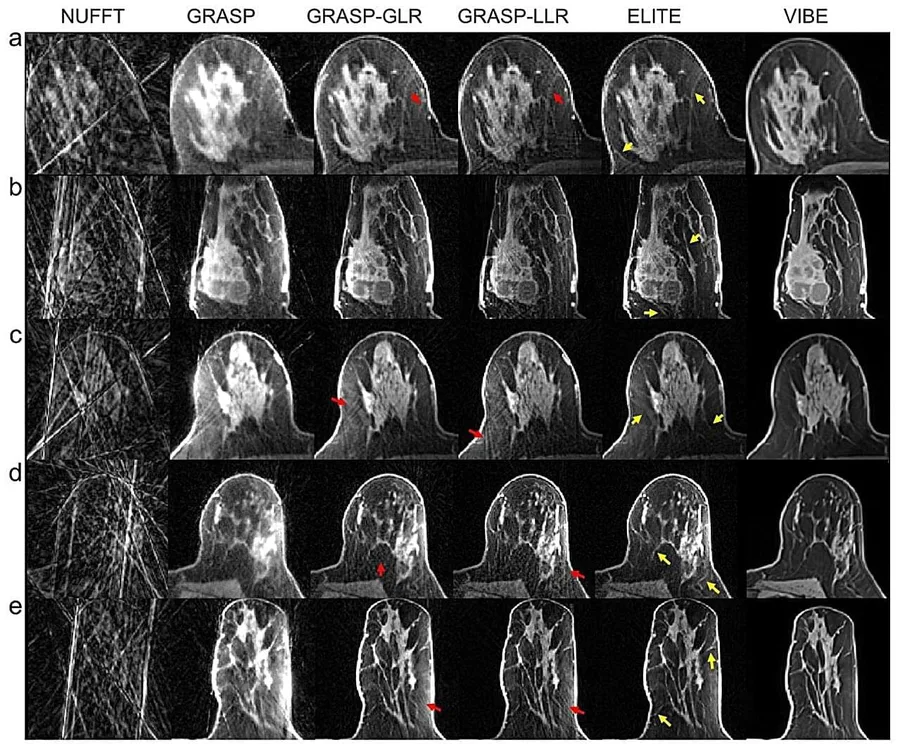
A group of researchers from the Technion and the United States reports a breakthrough in MRI scanning in a paper published in Nature Communications. The researchers developed an innovative method that accelerates and enhances MRI scans for breast cancer imaging, a disease diagnosed in approximately 2.3 million people each year, most of whom are women. […]
Nature Biomedical Engineering, Published online: 25 June 2026; doi:10.1038/s41551-026-01713-8 DentFound is a vision-language model for panoramic radiography in dentistry that shows excellent performance in both diagnostic tasks and report generation, offering support for real-world dental practice.
Nature Communications, Published online: 12 June 2026; doi:10.1038/s41467-026-74207-5 The study shows that multimodal medical AI models often rely heavily on text to interpret images and make predictions. As a result, they are highly susceptible to misinterpretation when the text is inaccurate.





 research.io