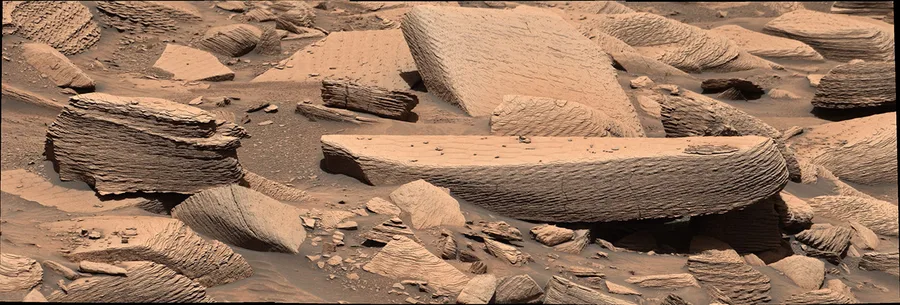
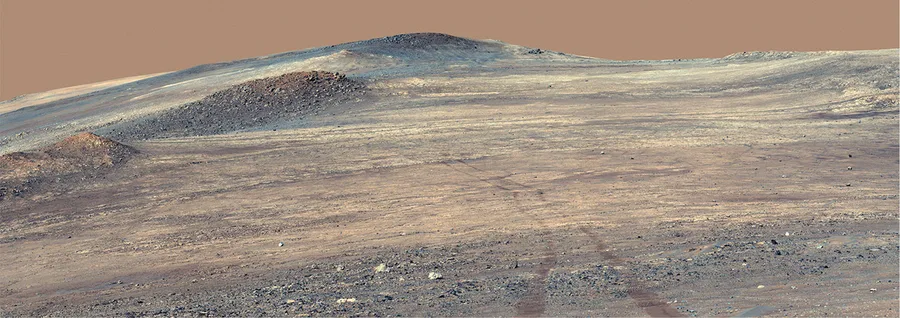
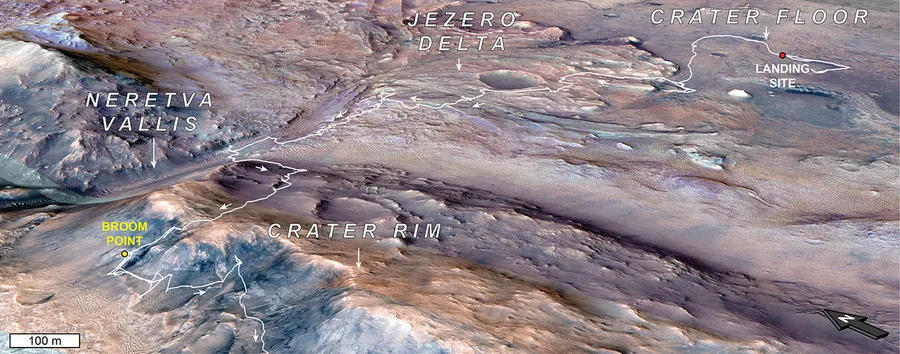
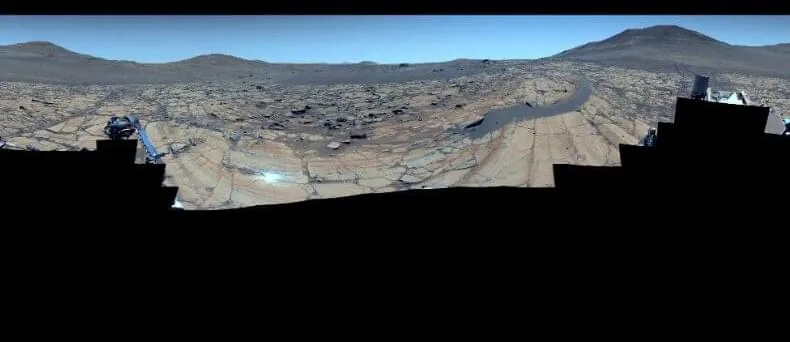
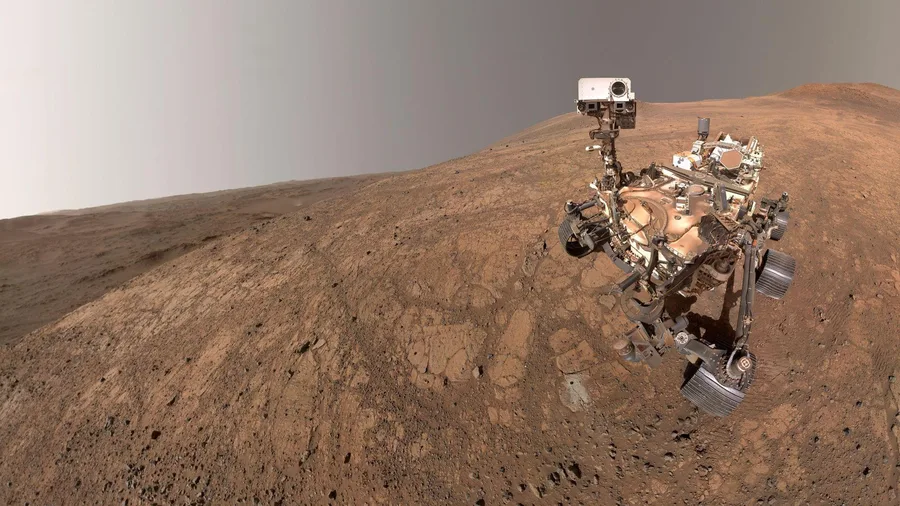
The imaging team of NASA’s Perseverance Mars rover has taken advantage of clear skies on the red planet to capture one of the sharpest panoramas of its mission so far. Visible in the mosaic, which was stitched together from 96 images taken at a location the science team calls “Falbreen,” are a rock that appears […]
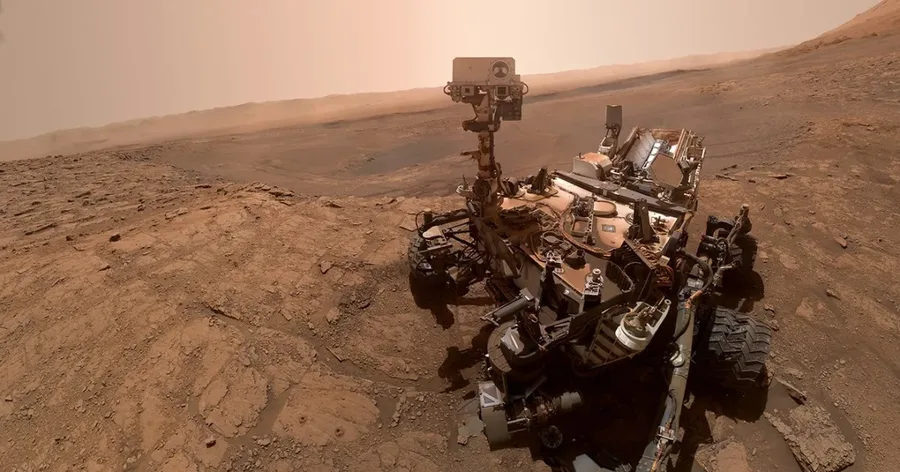
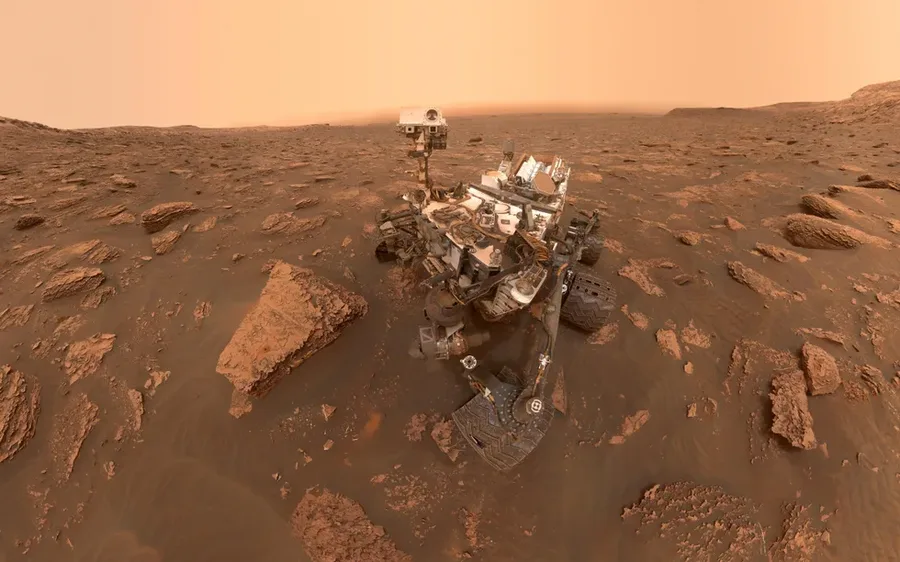
NASA launched its Mars rover Curiosity inside the Mars Science Laboratory (MSL) on Nov. 26, 2011. Complete with 10 science instruments and 17 cameras, the robot can analyze mineral types, search for signs of microbial life, and take color panoramas of the Red Planet’s surface. Curiosity’s landing on Mars was a new process, nicknamed the Continue reading "Aug. 6, 2012: Curiosity lands on Mars" The…
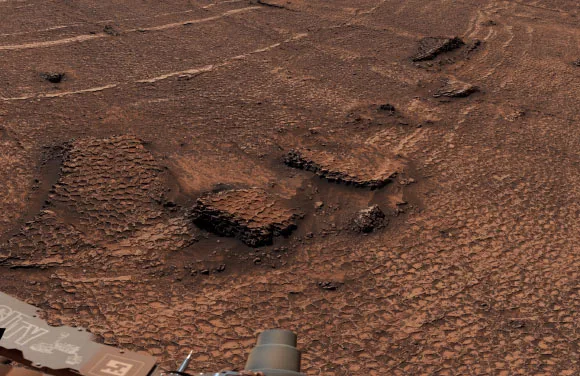
NASA’s Curiosity rover has stumbled on the largest patch of polygon-shaped ground fractures it has ever seen on Mars, a discovery that could reveal more about the planet’s watery past. The post Curiosity Finds Massive Field of Honeycomb-Shaped Fractures on Mars appeared first on Sci.News: Breaking Science News .
Billions of years ago, something powerful left its mark on Mars’ surface. Today, NASA’s Curiosity rover is helping scientists decode the evidence preserved inside rocks that have endured since the planet’s distant past.
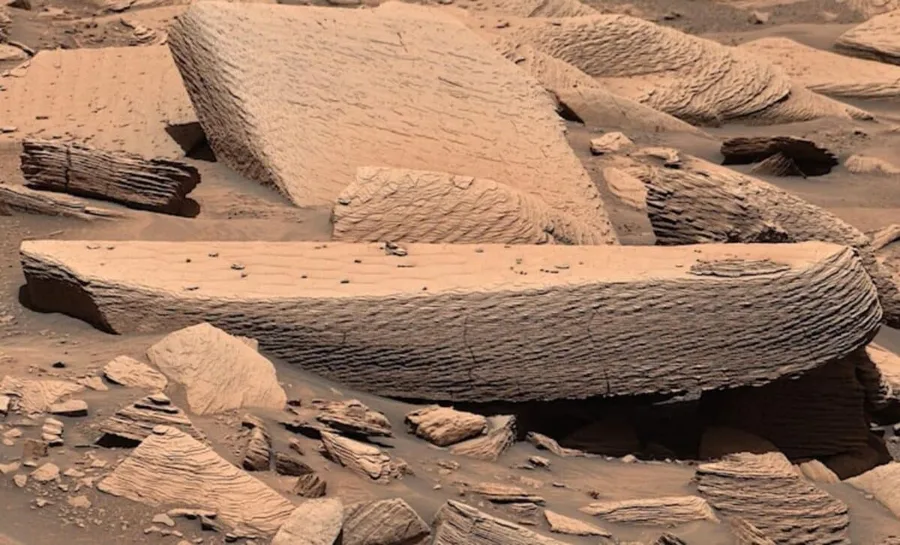
Description Billions of years ago, an hours-long Martian sandstorm blew so intensely that sand ripples began to climb upon one another as they moved across the surface. These layers of sediment eventually hardened into the multilayered rocks seen in this image, which was taken by NASA’s Curiosity rover on Dec. 12, 2024, the 4,391st Martian […]
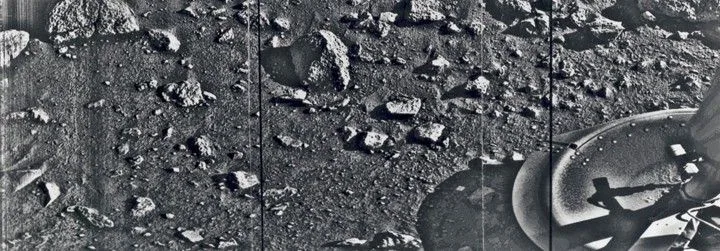
Only 10 years before the Viking mission launched, Mars was still just a mottled orange ball when viewed through even the best Earthbound telescopes, with few discernable features. Three NASA missions flew past in the 1960s, snagging grainy snapshots of a sliver of Mars as they hurtled by. In 1971, the Mariner 9 spacecraft arrived, […] The post Viking: 50 Years on Mars appeared first on NASA Scie…
Description NASA’s Perseverance rover appears as a green speck on the Martian surface on June 13, 2026, a day before the robotic explorer marked a distance milestone, having traveled a full marathon (26.2 miles, or 42.195 kilometers) on the Red Planet. Perseverance reached that distance after five years and four months of driving — on […]
Thirteen years ago last August, I was camped out in the Jet Propulsion Lab press room in Pasadena, Calif., waiting to see whether the Curiosity rover would survive its descent and skycrane-assisted landing on the surface of Mars. It did, and it was awesome . Since then, Curiosity (also known as Mars Science Laboratory) has traveled nearly 37 kilometers , drilled into and sampled 42 different rock…
Matthew Williams (https://www.universetoday.com/authors/houseofwilliams)
6/5/2026
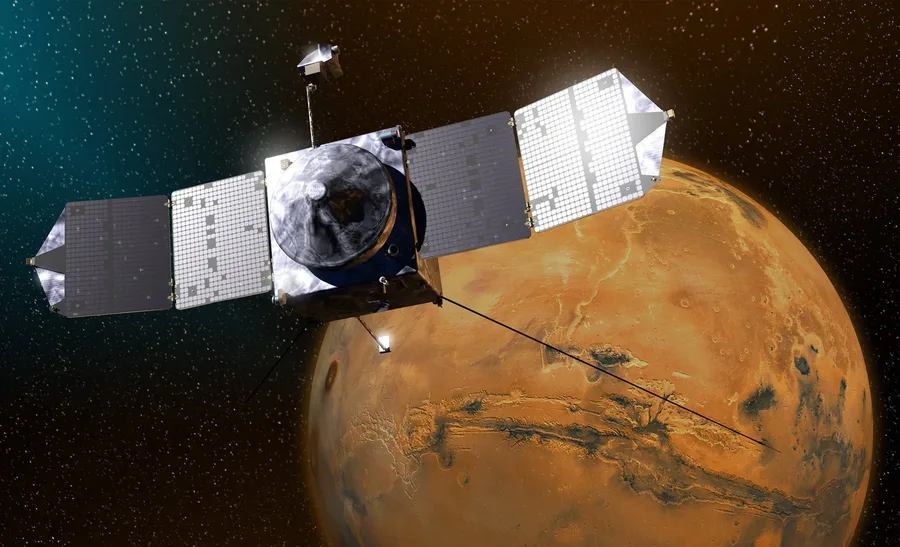
The first mission devoted to observing the Martian atmosphere and its evolution, NASA’s MAVEN (Mars Atmosphere and Volatile Evolution), has ended after more than 11 years in orbit at Mars and a decade beyond its primary, one-year mission.
NASA’s robotic explorers are looking for signs of ancient life on Mars. In its five years and counting on the surface of the Red Planet, the Perseverance rover has collected dozens of rock samples, including tantalizing features that could be signs of past life. Scientists want to keep studying Mars. That’s why NASA plans to send a fleet of next-generation helicopter drones and—one day—astronauts…
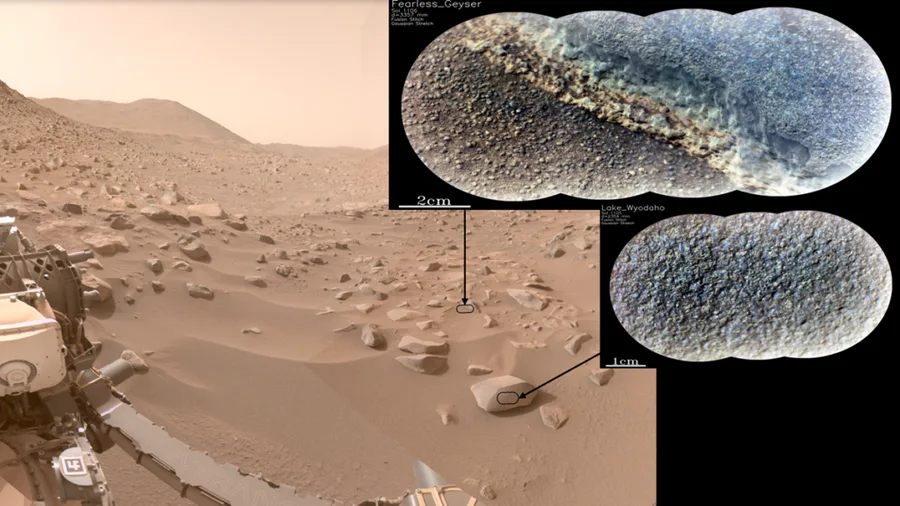
The Perseverance rover photographed the Margin Unit (Mars 2020 mission, sols 1005–1006) in the Jezero Crater. The inset images show spectroscopic mineral data from the rover’s SuperCam instrument suite. Credit: Navcam image: NASA/JPL-Caltech ; SuperCam mosaics : NASA/JPL-Caltech/LANL/CNES/CNRS/IRAP
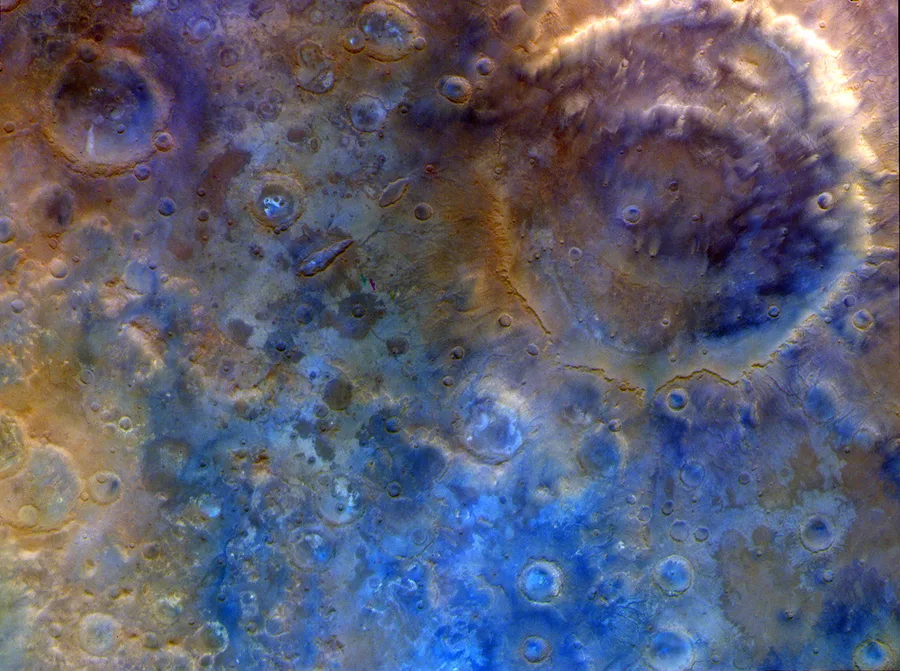
Description Captured by the multispectral imager instrument on NASA’s Psyche mission, this is an enhanced-color view of the large double-ring crater Huygens (upper right; about 290 miles, or 470 kilometers, in diameter) and the surrounding heavily cratered southern highlands near 15 degrees south latitude. The various colors in this dramatic scene are likely due to […]


 research.io