Conventional positive Poisson’s ratio honeycombs are prone to stress concentration and premature collapse under impact loading. Auxetic structures can reduce this problem through inward transverse deformation, but the coupled effect of auxetic geometry and nano-reinforced polymer matrices on impact energy absorption remains insufficiently understood. In this study, pure PLA and 1 wt% graphene nan…
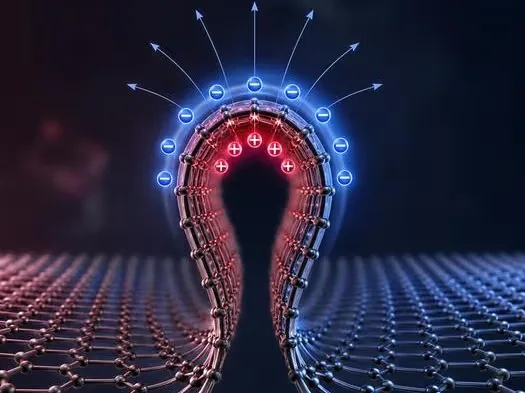
Rice University researchers have shown that tiny wrinkles in graphene can change the material’s electrical properties, providing evidence for flexoelectricity, a phenomenon in which a material generates an electric charge when it bends unevenly. The findings are published in Advanced Materials.
The ...
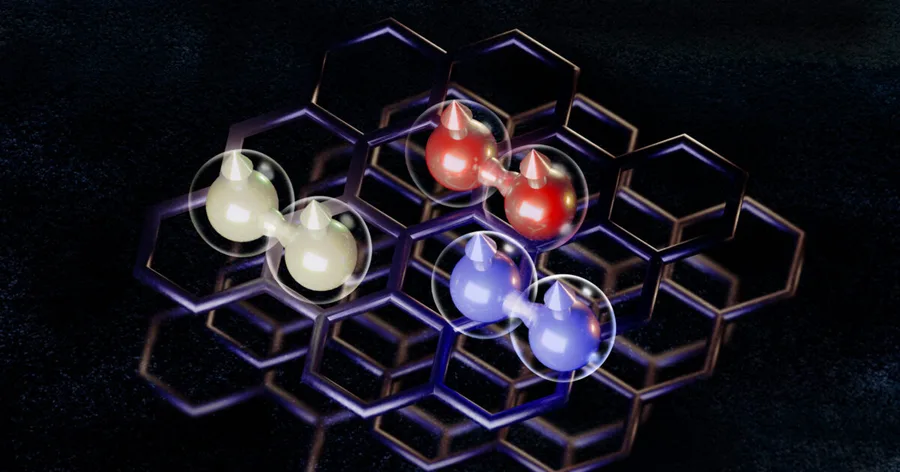
Graphite, the soft material found inside ordinary pencils, may seem simple, but scientists have discovered that it can behave in remarkable ways when examined at the atomic level. Researchers from the Massachusetts Institute of Technology (MIT) have found that a special form of graphene, which comes from graphite, can exist in several different superconducting states. […] The post Scientists disc…
The ordinary graphite in pencil lead is proving to be surprisingly multifaceted at the microscale. In a study appearing today in the journal Nature, MIT researchers report that a certain microscopic structure found in natural graphite can host multiple superconducting states. Superconductivity is an electronic state of matter in which electrons pair up and glide […] The post Graphene can hold mu…
Nature Communications, Published online: 24 June 2026; doi:10.1038/s41467-026-74752-z Electrothermal vacuum sublimation drying uses pressure and temperature control based on the water phase diagram. It quickly dries frozen graphene aerogels and supports wider applications in high-temperature synthesis.
Nature Communications, Published online: 16 June 2026; doi:10.1038/s41467-026-74399-w Using transmission electron microscopy, this study reveals the 3D structure of partially intercalated graphite, showing breakdowns in conventional staging behavior and highlighting how lattice defects govern early-stage intercalation.
graphene, magic angle, carbon, twistronics, 1.1 degrees, qubits, https://www.mundoamerica.com/entertainment/2026/06/09/6a27cd8821efa0694d8b4571.html The post In the laboratory of physicist Pablo Jarillo-Herrero, the ‘magician’ of graphene: “My dream is to create a prestigious university in Spain like MIT” appeared first on MIT Physics .
A modern materials study suggests that Thomas Edison’s early light bulb experiments may have unknowingly produced graphene decades before the material was formally theorized or isolated. Thomas Edison never heard the word “graphene,” yet researchers at Rice University think his work may still brush up against it. In a recent paper from chemist James Tour’s [...]
One-step, etch- free patterning enables clean, low-resistance graphene electrodes for transparent and flexible devices. The post Chungnam National University Team Pioneers Defect-Free High-Quality Graphene Electrodes appeared first on Semiconductor Digest .
Graphene is a 'miracle material': mechanically extremely strong and electrically highly conductive, ideal for related applications. Using a unique method physicists have now made graphene drastically more stretchable by rippling it like an accordion. This paves the way for new applications in which certain stretchability is required (e.g. wearable electronics).
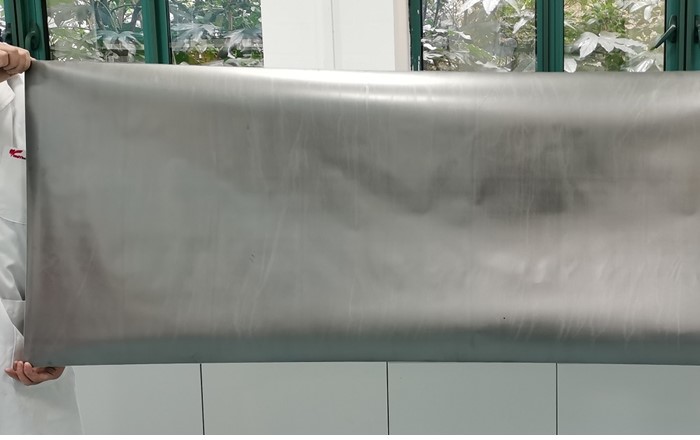
Researchers at Swansea University, in collaboration with Wuhan University of Technology, Shenzhen University, have developed a pioneering technique for producing large-scale graphene current collectors.
Is this the year of rapid graphene sales? Are we slipping deeper into a disillusionment phase? Who will emerge as the market leaders? Is consolidation inevitable? 2023 will be a telling year for the industry. The post IDTechEx Discusses What to Expect From the Graphene Industry in 2023 appeared first on Semiconductor Digest .
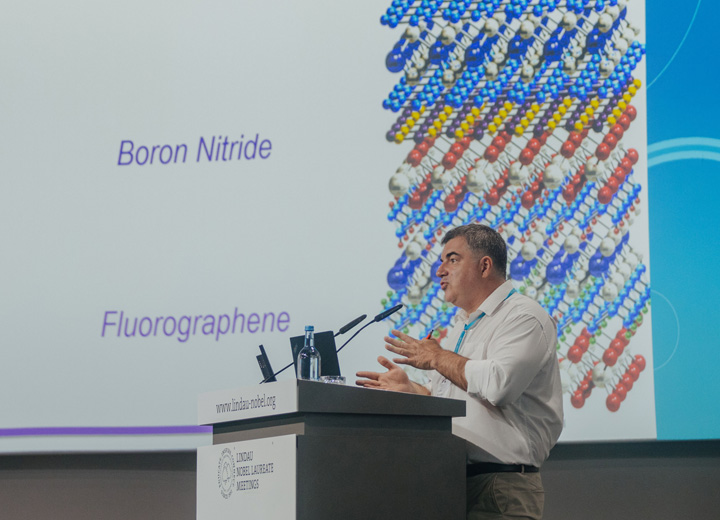
Sir Konstantin showcased how Chemistry progresses in the field of materials science. He showed examples of researchers worldwide working with materials like graphene and regularly identifying exciting phenomena. 40 years ago, Dan Shechtman discovered the quasi-cristalls. Der Beitrag Innovative Materials: From Arnold Schwarzenegger’s Terminator to Smart Membranes erschien zuerst auf Lindau Nobel L…
Looking back over the last 10 years, we would like to share with you some of the very best articles that have been published in RSC Advances. Many of these papers have been cited hundreds of times, providing valuable advances for further research, and some continue to be among the journal’s most downloaded articles as of […]
Sometimes, experimental results spark enormous curiosity inspiring a myriad of questions and ideas for further experimentation. In 2004, Geim and Novoselov, from The University of Manchester, isolated a single layer of graphene from bulk graphite with the “Scotch Tape Method” … Continue reading →
Don't follow the pack! I just read the Random Walk to Graphene , by Andre Geim. It is the lecture he gave when receiving the 2010 Nobel Prize in Physics. I should have read it long ago but was motivated to read it now because the following sentence features in Joseph Martin's "purloined letter'' argument about why condensed matter physics lacks status. Graphene has literally been before our eyes …
Looking back, 2017 was great year for advances in graphene research. Lightweight and flexible, yet durable, graphene consists of a single layer of carbon atoms arranged in a hexagonal lattice. The material has been used to better solar panel technology, to enhance medical devices, and for the overall benefit of chemical and industrial processes. Nature Research presents an editorially-curated col…
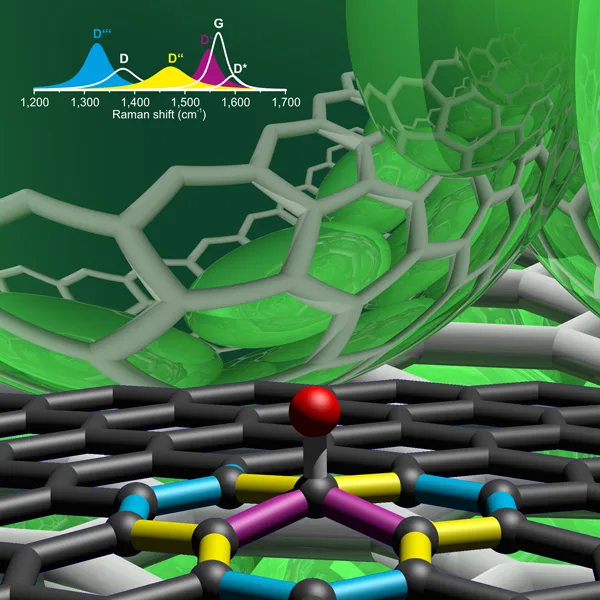
Graphene is considered as one of the most promising new materials. However, the systematic insertion of chemically bound atoms and molecules to control its properties is still a major challenge. Now, for the first time, scientists of the Friedrich-Alexander-Universität Erlangen-Nürnberg (FAU), the University of Vienna, the Freie Universität Berlin and...



 research.io