exoplanet
Astronomers have identified a strange planet nearly five times more massive than Earth, with an unusual composition that sets it apart from many worlds discovered to date.
Nature Astronomy, Published online: 05 June 2026; doi:10.1038/s41550-026-02876-9 Following two major 2025 announcements of possible extraterrestrial life — on exoplanet K2-18 b in April and in the Cheyava Falls rock on Mars in September — we surveyed the astrobiology community to capture the spread of expert opinion. These datasets establish baseline measures of scientific confidence in each case…
Planets might exist in the least likely place you’d imagine—around the outskirts of supermassive black holes

Astronomers have developed a technique that allows them to detect cloud cycles on distant exoplanets. Using data from the James Webb Sapce Telescope (JWST), the astronomers found that mornings and evenings on the gas giant WASP-94A b have extremely different weather patterns: mornings are riddled with sand clouds, while the skies are clear in the early evenings. By isolating the clouds, researche…
A new Keck Observatory study indicates that giant planets can spin faster than more massive brown dwarfs, revealing important clues about how planetary systems form and evolve. Astronomers have long suspected that a planet’s mass may be linked to how quickly it spins. In our solar system, Jupiter and Saturn rotate especially fast, each completing [...]
NASA’s Roman Telescope could reveal 100,000 hidden worlds and rewrite what we know about planets across the Milky Way. NASA’s Nancy Grace Roman Space Telescope is expected to dramatically expand humanity’s catalog of worlds beyond our solar system. Known as exoplanets, these distant planets number nearly 6,300 discoveries so far through NASA missions and other [...]
A chemical engineer noticed that the spectra of the hazy atmosphere of mini-Neptune planets looked like the soot produced by combustion engines.
The Kepler telescope changed how we saw the sky. It’s just one of the devices we’ve sent out beyond the reach of humans to search our solar system

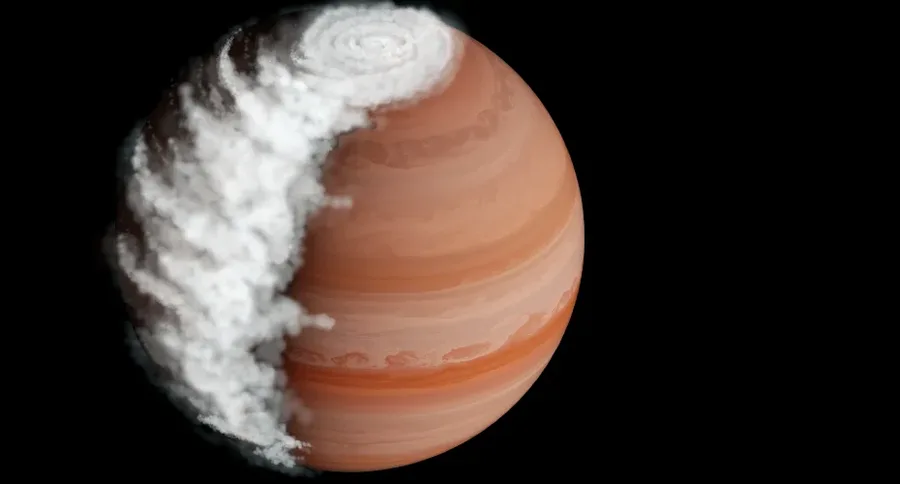
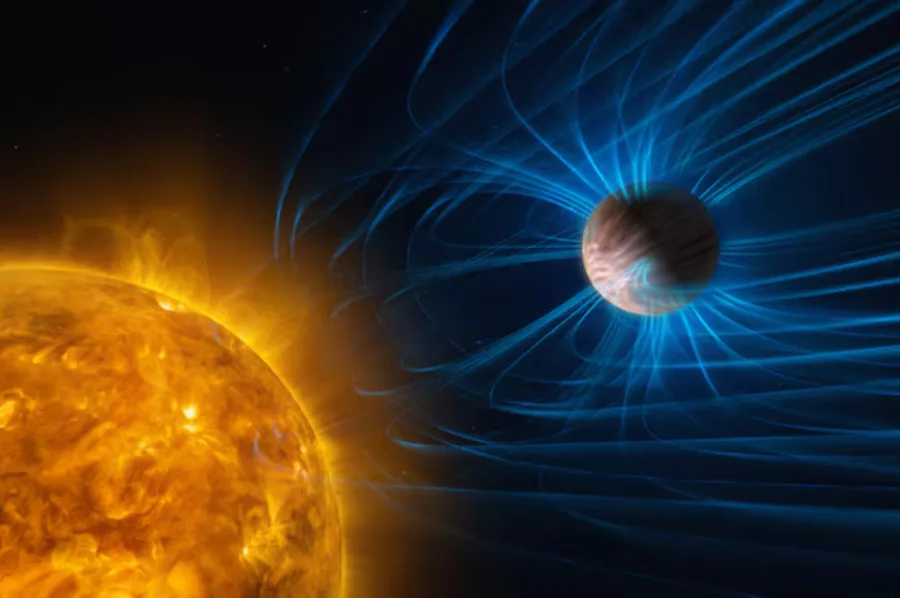
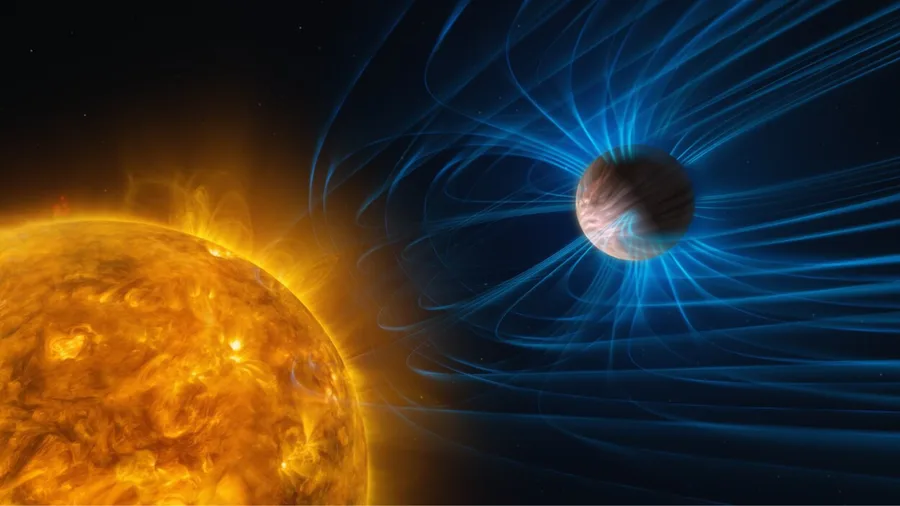
Astronomers studying wind speeds on distant exoplanets have discovered weather systems driven by magnetic fields, rather than the largely hydrodynamic weather patterns observed on Earth. This discovery is among the best evidence yet for the existence of magnetic fields on exoplanets.
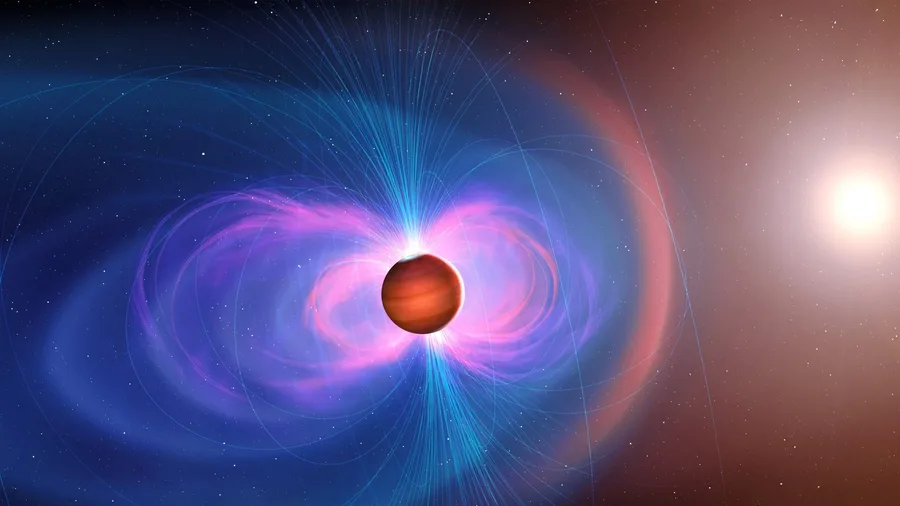
Astronomers have found magnetic fields on seven distant gas giants, revealing new insights into exoplanet atmospheres and potential habitability.

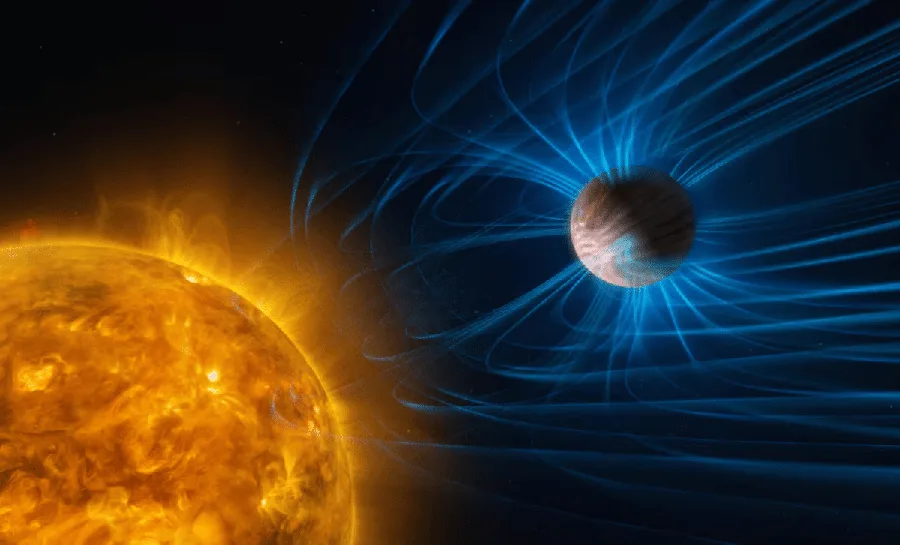
Astronomers have secured the most compelling evidence yet that planets orbiting distant stars possess magnetic fields, mirroring a characteristic shared by Earth and five other worlds in our own solar system. The breakthrough stems from observations of wind patterns across seven massive gas giants known as "hot Jupiters", conducted using telescopes located in Chile and Hawaii. Published today in …
By tracking fierce winds racing through the atmospheres of seven ultra-hot Jupiters, astronomers have uncovered the strongest evidence yet that magnetic fields shape weather on worlds beyond our Solar System. The post Astronomers Detect Clearest Signs Yet of Magnetic Fields on Extrasolar Planets appeared first on Sci.News: Breaking Science News .
Nature Astronomy, Published online: 02 June 2026; doi:10.1038/s41550-026-02870-1 Wind measurements in ultra-hot giant exoplanets reveal a temperature-dependent slowdown best explained by magnetic effects, suggesting that these exoplanets host magnetic fields no stronger than Jupiter’s.

Astronomers have discovered the first evidence of magnetic worlds beyond the solar system thanks to their high-speed, violent winds, representing a major step forward in exoplanet research.

As NASA's Roman Telescope gets closer to launch, astronomers are preparing for what could become one of the largest planet searches ever conducted.
Using the Gemini North telescope in Hawai'i and the European Southern Observatory's Very Large Telescope, a team of astronomers measured wind speeds on seven very hot, Jupiter-like exoplanets. The observations revealed that the winds on these planets are most likely governed by magnetic fields, providing the first robust measurement of magnetic activity on planets outside the Solar System.
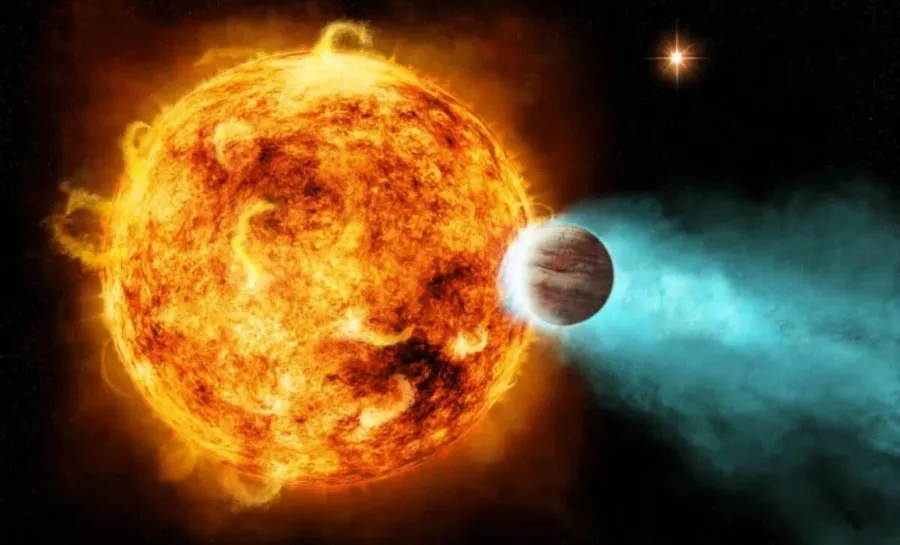
The hottest giant planets in the galaxy should, in theory, have the fastest winds. The...
How do you weigh a planet you can't see? Astronomers may have the answer and it involves "reading between the rings," the bright beautiful structures exoplanets create.
research.ioSign up to keep scrolling
Create your feed subscriptions, save articles, keep scrolling.