epistemology

PhilPapers: Recent additions to PhilArchive

_Synthese_ 207 (197). 2026Debunking arguments aim to show that a subject’s justification for a belief is undercut by their learning that the belief, or the justification supporting it, is not appropriately connected—explanatorily, modally, or otherwise—to the truth of its content. A common reply to such arguments is that a subject can be shielded from losing their justification if they hold relev…

epistemologyphilosophy
PhilPapers: Recent additions to PhilArchive

_Synthese_ 207. 2026I defend traditional epistemology against the charge that it can’t provide intellectual or practical guidance. What you should do and how you should inquire often depend on what you know. Therefore, it can be helpful to figure out what you know. But there is reason to think that traditional epistemology can improve knowledge-recognition in the same way recognition skills are e…

epistemologyphilosophy
PhilPapers: Recent additions to PhilArchive

Rationality is usually very fundamental within philosophical inquiry; it helps people figure out their beliefs, justifications, and truths. Because of this, rationality is utilized in every field of contemporary philosophy, including epistemology, logic, metaphysics, and many other fields. It helps act as a norm that facilitates rational thought, which helps lead to the discovery of truths; howev…

epistemologyphilosophyphilosophy-of-mind
PhilPapers: Recent additions to PhilArchive

This paper demonstrates that any single-layer deterministic ontology — most prominently the 4D block-universe model — generates an epistemological self-refutation when applied to evolutionary processes. Human scientific knowledge is necessarily retrospective: it is constructed exclusively from realized (past) nodes within a stratified architecture. While this “rear-view mirror” methodology is rel…

epistemologyphilosophyphilosophy-of-science
PhilPapers: Recent additions to PhilArchive

_Synthese_. forthcomingReflective Equilibrium (RE) is often cited as an influential philosophical method but faces a range of objections, including that it is overly demanding, vacuous, or methodologically irrelevant. This paper identifies a fundamental issue that complicates both the evaluation of RE and broader discussions of philosophical methodology: the lack of clarity about what constitutes…

epistemologyphilosophy
PhilPapers: Recent additions to PhilArchive

_PSA: Proceedings of the Biennial Meeting of the Philosophy of Science Association_. forthcomingSuppose an epistemic agent has multiple strategies available to them. Among these, one strategy maximizes their expected accuracy, while another does not maximize their own expected accuracy, but instead maximizes the expected accuracy of the epistemic group they belong to. Call an agent that takes the…

epistemologyphilosophy
PhilPapers: Recent additions to PhilArchive

_Asian Philosophy_ 19 (3):239-264. 2009In this paper I propose a naturalist account of the Buddhist epistemological discussion of svasaṃvitti ('self-awareness', 'self-cognition') following similar attempts in the domains of phenomenology and analytic epistemology. First, I examine the extent to which work in naturalized epistemology and phenomenology, particularly in the areas of perception and i…

epistemologyphilosophy
Hot Questions - Stack Exchange
PhilPapers: Recent additions to PhilArchive

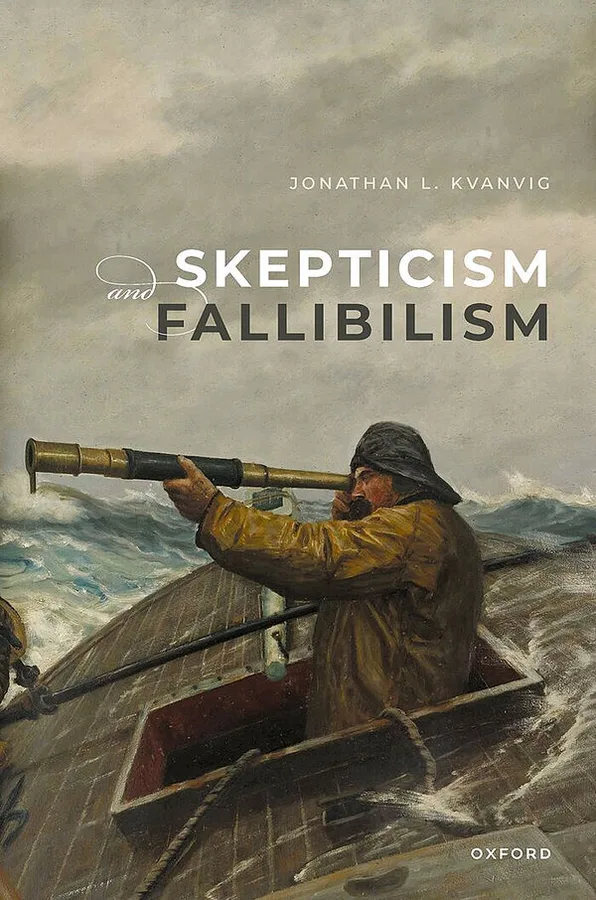
_Pacific Philosophical Quarterly_. forthcomingExternal world skepticism is often thought to entail that we should suspend judgment about the existence of the external world. I challenge this orthodoxy by arguing that, when combined with a plausible principle of ontological parsimony, the skeptical challenge intensifies into an argument for outright disbelief in the external world. The principle i…

epistemologyontologyphilosophy
PhilPapers: Recent additions to PhilArchive

_Internet Archive_. 2026Coherence-Weighted Information Theory and the induced-weights program that grounds it require empirical validation across the cross-domain regime where their universality claims live. Adaptive Realism and Synthetic Epistemology forbid correspondence-truth validation at the foundational level. The real is what persists across recursive coherence arbitration, and external gr…

epistemologyphilosophy
PhilPapers: Recent additions to PhilArchive

Agrippa’s trilemma is usually treated as a threat to justification itself: every belief appears to end in regress, circularity, or arbitrary stopping. This paper argues that the trilemma gains its force by committing a Sorites-style error. It asks for the exact grain at which fallible belief becomes certain knowledge, and when no such grain can be found, treats knowledge as unstable. Against this…

epistemologyphilosophy
PhilPapers: Recent additions to PhilArchive

In The Handbook of Rationality. London: MIT Press. pp. 579-590. 2021Social epistemology studies knowledge in social contexts. Knowledge is ‘social’ when its holder communicates with or learns from others (Epistemology in groups), or when its holder is a group as a whole, literally or metaphorically (Epistemology of groups). Group knowledge can emerge explicitly, through aggregation procedures lik…

epistemologyphilosophy
Imperfect Cognitions
Shiho Sugiura (noreply@blogger.com)
6d ago

This week's post is by Shao-Pu Kang, an assistant professor at National Tsing-Hua University, Graduate Institute of Philosophy, his recent publication Against an Epistemic Argument for Mineness in Review of Philosophy and Psychology.   Shao-Pu Kang Suppose you see a sunrise. You are thrilled, feel a chill in the air, hear your inner voice saying “that’s magnificent,” imagine

epistemologyphilosophy
PhilPapers: Recent additions to PhilArchive

This paper argues that the epistemological crisis induced by large language models (LLMs) lies not in the inaccuracy of their outputs but in the structural nature of the knowledge they deliver. Drawing on Wang Yangming’s (1472–1529) doctrine of the unity of knowledge and action (zhixing heyi 知行合一), the paper defines Epistemic Friction—the process by which a knowing subject bears irreversible cost…

epistemologyethicsphilosophy
PhilPapers: Recent additions to PhilArchive

The article addresses the problem of epistemic power in the scientific evaluation of theories. Contemporary literature already contains well-developed lines of analysis related to social epistemology, scientific objectivity, scientific pluralism, epistemic injustice, scientific imperialism, peer-review bias, cumulative advantage, and metrics of research evaluation. These lines form a substantivel…

epistemologyphilosophy
PhilPapers: Recent additions to PhilArchive

The article asserts the inevitability of dismantling the theory of knowledge as an independent discipline. It demonstrates that the object previously defined as the accumulation of knowledge is, in reality, a process of blind registration of impulses within an ultra-dense medium. The insolvency of the concepts of "truth" and "justification" is shown in the face of the rigid rheology of the protei…

epistemologyphilosophy
PhilPapers: Recent additions to PhilArchive

_Internet Encyclopedia of Philosophy_. 2025This article explores philosophical ideas and concepts central to Afro-diasporic religions such as Vodou, Santeria, Candomblé, and Winti. Afro-diasporic religions have their origins in communities displaced by the Atlantic slave trade, blending elements from indigenous African traditions with Christian and original ideas. Afro-diasporic religions have be…

epistemologyethicsphilosophyphilosophy-of-mind
PhilPapers: Recent additions to PhilArchive

_Philosophical Studies_ 153 (3):365 - 375. 2011Schulz has shown that the suppositional view of indicative conditionals leads to a corresponding view of epistemic modals. But his case backfires: the resulting theory of epistemic modals gets the facts wrong, and so we end up with a good argument against the suppositional view. I show how and why a dynamic view of indicative conditionals leads to a …

epistemologyphilosophy
PhilPapers: Recent additions to PhilArchive

_International Journal for the Study of Skepticism_. forthcomingIn Explanatory Solutions to Skeptical Problems, McCain argues that “Phenomenal Explanationism” (PE) can resolve several of the most influential skeptical arguments from the history of epistemology. His engagement with skepticism, however, bears on much more than his particular brand of explanationism. Specifically, the way PE’s anti-…

epistemologyphilosophy
PhilPapers: Recent additions to PhilArchive

_Zenodo_. 2026This essay reflects on what may be the most fundamental question in philosophy: why does anything exist at all? I argue that the question is genuine and that an answer exists - but lies currently beyond our epistemic reach. These limitations are reframed through the concept of an 'epistemic capability cone', restricting our epistemic insights. However, as humanity evolves, its horiz…

epistemologyphilosophy
research.ioresearch.io

Sign up to keep scrolling

Create your feed subscriptions, save articles, keep scrolling.

Already have an account?