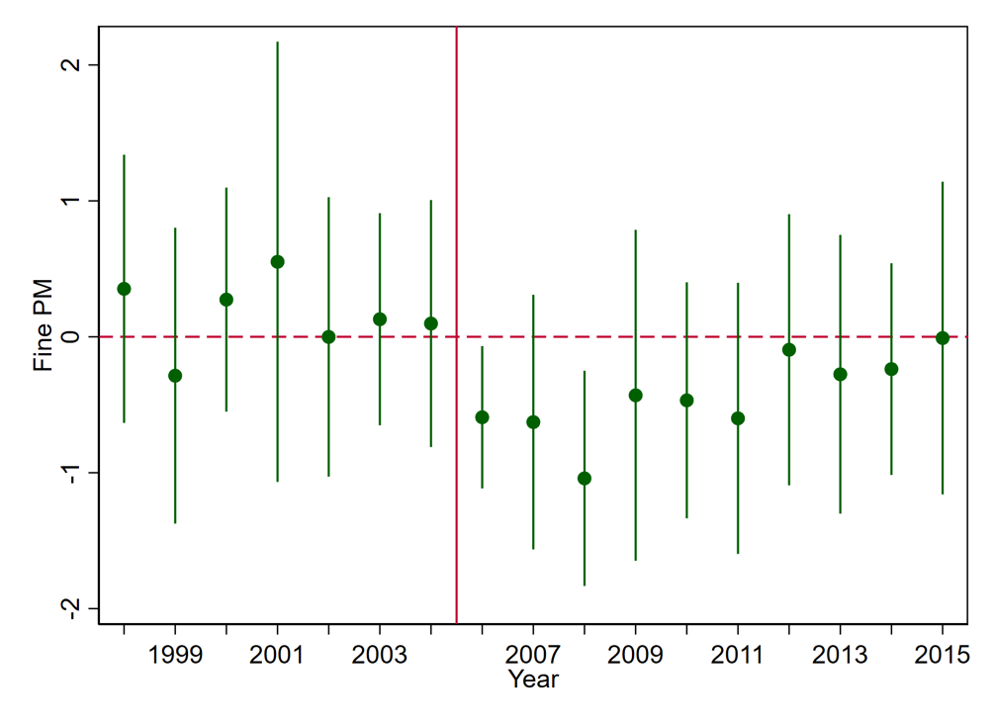
Quasi-experimental and experimental approaches to environmental economics
Greenstone, Michael; Gayer, Ted
This paper argues that an increased application of quasi-experimental and experimental techniques will improve understanding about core environmental economics questions. This argument is supported by a review of the limitations of associational evidence in assessing causal hypotheses. The pa…
As the world marks Earth Day, a troubling paradox has emerged in the fight to save rhinos, one of the planet's most iconic species. As 20th-century security tactics fail to stop a $20 billion global poaching market, Fred Chen argues we must pivot from fences to market disruption.
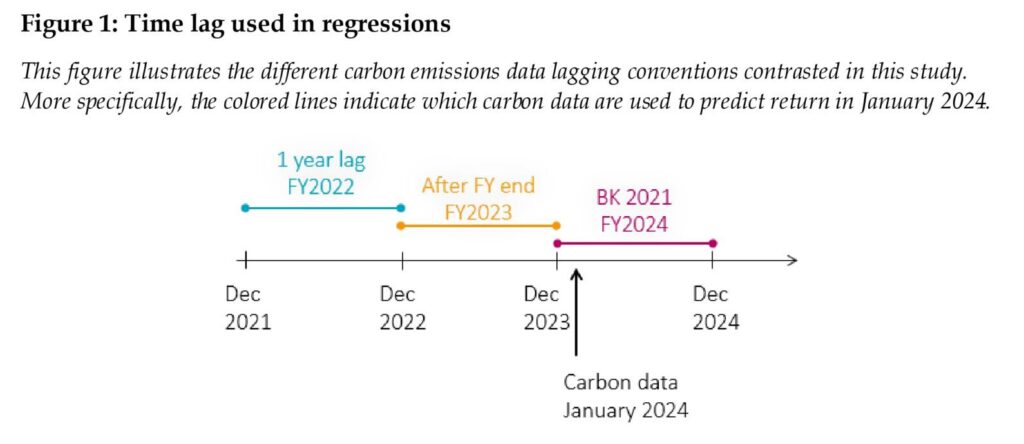
Carbon that has not yet been emitted should not be used to predict stock returns. While this sounds obvious, prior research papers (e.g., Bolton and Kacperczyk, 2021) have done exactly that. This critical observation forms the basis for the Robeco Institutional Asset Management research team’s re-examination of the relationship betweenclimate risk and asset pricing. Investors and academics alike …
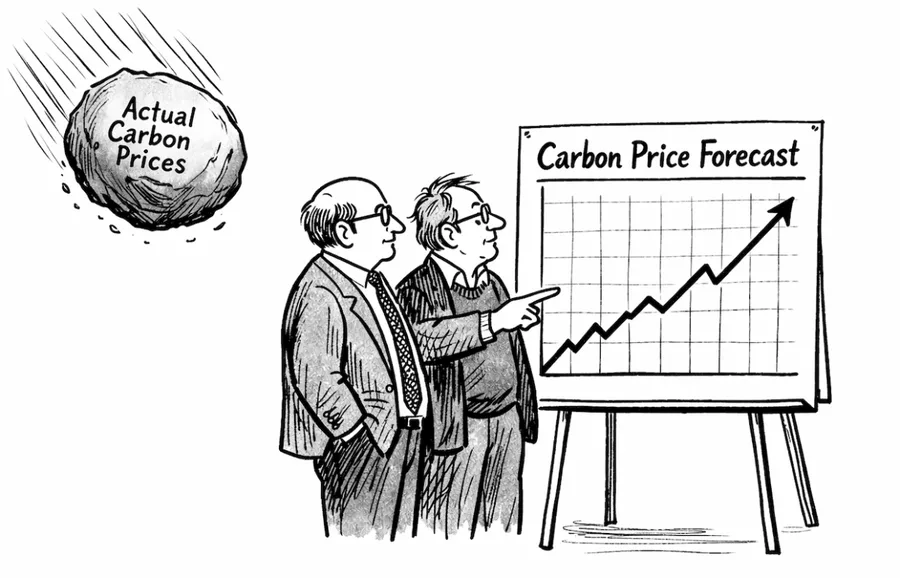
About 18 months ago, I presented analysis predicting that renewing California's cap-and-trade program would stimulate demand for allowances and raise carbon prices. The opposite has happened. I just hate it when the world doesn't behave like an economic model. What could be going on?
The Master of Science in Applied Natural Resource Economics is a STEM program that allows students flexibility as they learn how to evaluate environmental and natural resource issues through an economic lens. Use this program to prepare for a PhD or to advance your career in industry or government.
Put your interest in natural and environmental resources to work for you. The curriculum emphasizes…
Andrej Ceglar, Ivan Jaccard, Miles Parker, Alexander Popov and Francesca Zucchi discuss the importance of considering natural capital in growth models in this ECB article: We develop a framework underscoring the importance of incorporating natural capital into growth models and policy discussions, recognizing its role as a productive input and as a sourceof enjoyment. Both […]
Firm location decisions are one of the most important choices managers make, optimizing factors such as proximity to customers, suppliers, […] The post Firm Presence, Pollution, and Agglomeration appeared first on CEEPR .
That’s not an ethical judgment, just simple math. Over the years, our team of bloggers has put out quite a few posts on rooftop solar, many of which discuss the … Continue Reading Every Electricity Demand Reduction is a Cost Shift
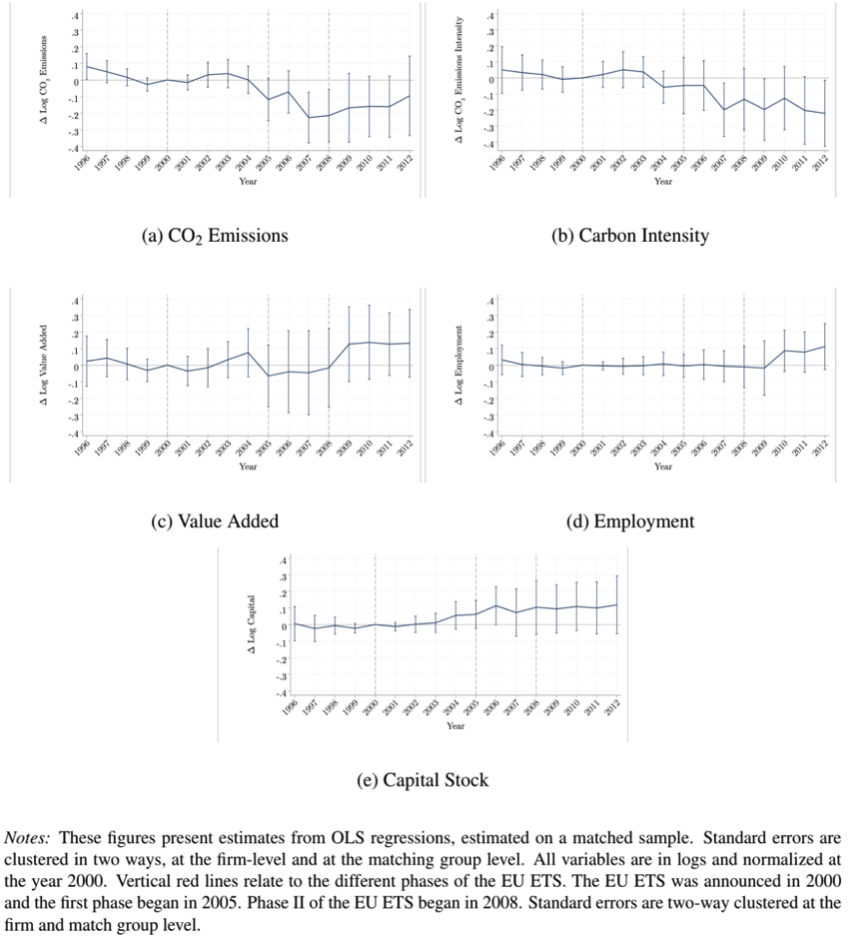
The unchecked accumulation of greenhouse gas emissions is one of the starkest examples of market failure worldwide. Despite the high costs they impose on society through climate change, these externalities remain largely unpriced in economic decision-making. In theory, market-based regulatory instruments—such as carbon pricing—have the potential to mitigate climate change at the lowest cost to [……
The Inflation Reduction Act’s subsidies for electric vehicles provide moderate climate benefits and help US firms at the expense of foreign auto manufacturers, but are not a home run. Today’s … Continue Reading Will the IRA’s “Buy American” Tilt Help US Electric Vehicles?
In recent years, climate experts and even regulators have increased attention on the financial sector as a driver of both emissions and capital formation in the low-carbon economy. There has been growing emphasis on “aligning” capital allocation by financial institutions to the transition to net zero greenhouse gases (GHG) in the hopes of both minimizing […]
What can we learn from California’s pioneering efforts to price carbon at the border? Everybody’s talking about border carbon adjustments. The EU has announced its plan to tax the emissions … Continue Reading The Whac-a-Mole Economics of Border Carbon Adjustments
In this Q&A with MIT SHASS Communications, Professor Clare Balboni describes the burgeoning influence of economics in understanding climate, energy, and environmental issues. The post Q&A: Clare Balboni on environmental economics appeared first on CEEPR .
The 2018 Bank of Sweden Prize (falsely known as the Economics Nobel Prize) winner William Nordhaus opens the revised version of his Prize lecture as follows: “I begin with the fundamental problem posed by climate change – that is a public good or externality. Such activities are ones whose costs or benefits will spill outside […]
The role of economics in future environmental regulation. We are all breathing into paper bags. What is at stake in Tuesday’s election is beyond measure. If you do not feel … Continue Reading Sticks and Stones or Prices and Quantities?
In a feature on MIT News, Professor Jing Li discusses course 15.0201/14.43 - Economics of Energy, Innovation, and Sustainability. The post Energy economics class inspires students to pursue clean energy careers appeared first on CEEPR .











 research.io