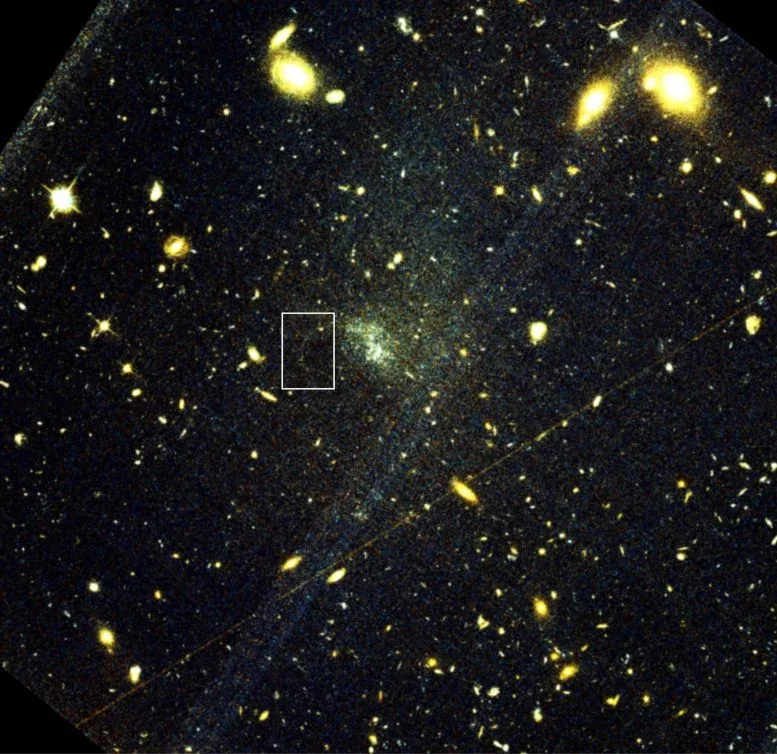
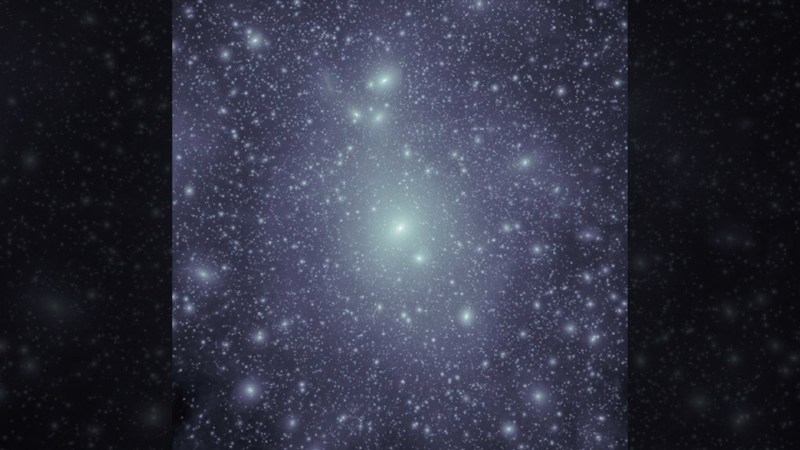
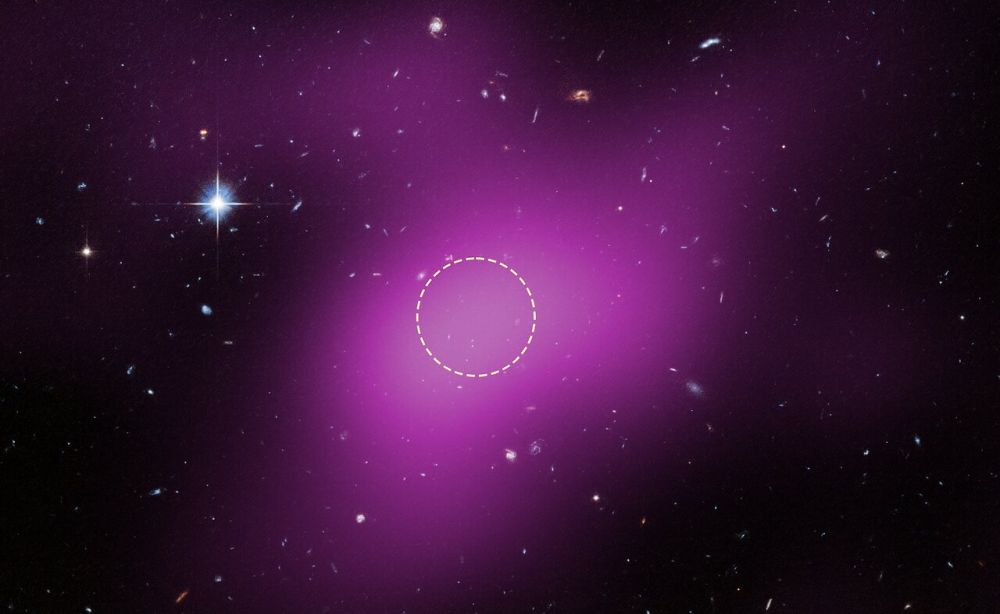
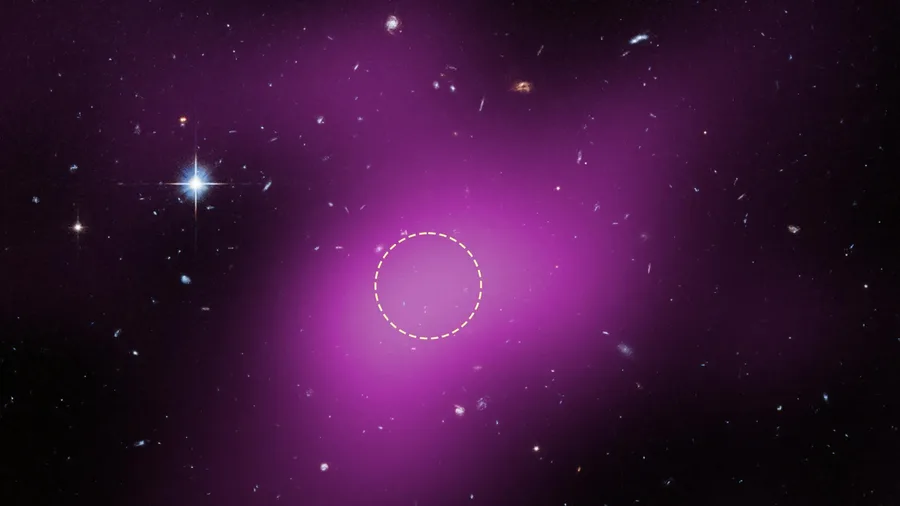
A ghostly ribbon of stars winding around a faint galaxy 115 million light-years away is giving astronomers a rare new way to trace one of the universe’s most elusive ingredients: dark matter. The thin structure surrounds UGC 9050-Dw1, an ultra-diffuse galaxy about 115 million light-years from Earth. Researchers say it is the first known globular [...]
Are fainter galaxies really different than brighter ones? This study reveals that, despite being dimmer, low surface brightness galaxies obey the same fundamental laws of galaxy formation, offering new clues about how galaxies and dark matter halos evolve.
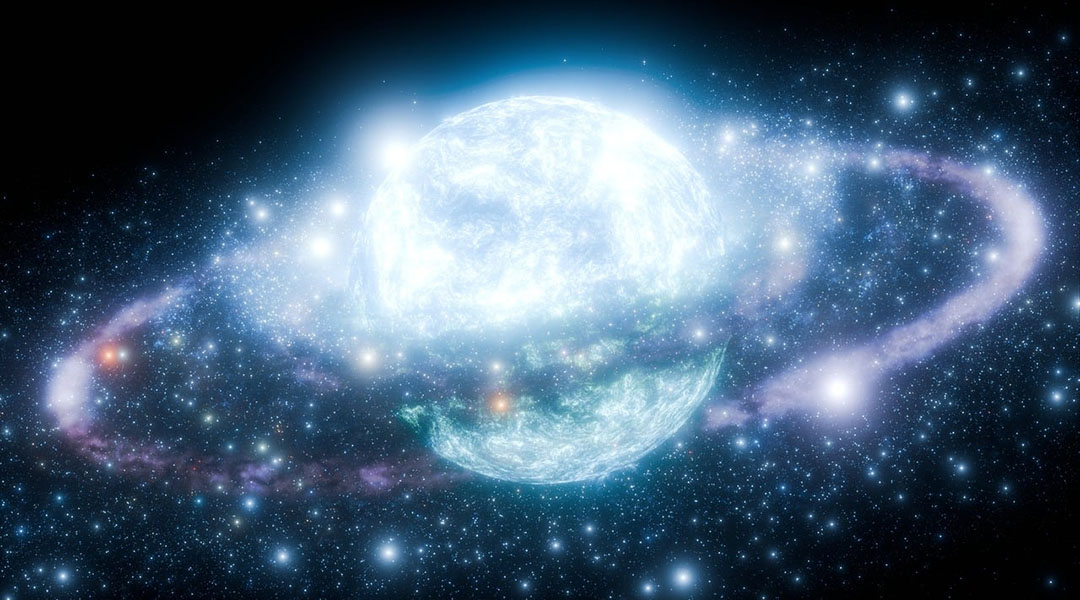
Hypothetical dark matter stars known as ‘boson stars’ could leave telltale ripples across the cosmos, offering researchers a new way to probe the invisible forces shaping the universe.
By Jonathan O’Callaghan
In 2019, a strange event was observed in the depths of space. Called GW190521, the event sent out gravitational waves – invisible ripples in the universe – that were picked up on Earth. Thes…
Dark matter, one of the Universe’s greatest mysteries, may have been born blazing hot instead of cold and sluggish as scientists long believed. New research shows that dark matter particles could have been moving near the speed of light shortly after the Big Bang, only to cool down later and still help form galaxies. By focusing on a chaotic early era known as post-inflationary reheating, researc…
Hubble has revealed a strange cosmic object called Cloud-9, a dark matter–dominated cloud with no stars at all. Scientists believe it is a “failed galaxy,” a leftover building block from the early Universe that never lit up. Its discovery confirms long-standing theories about starless galaxies. Cloud-9 offers a rare glimpse into the dark side of cosmic evolution.
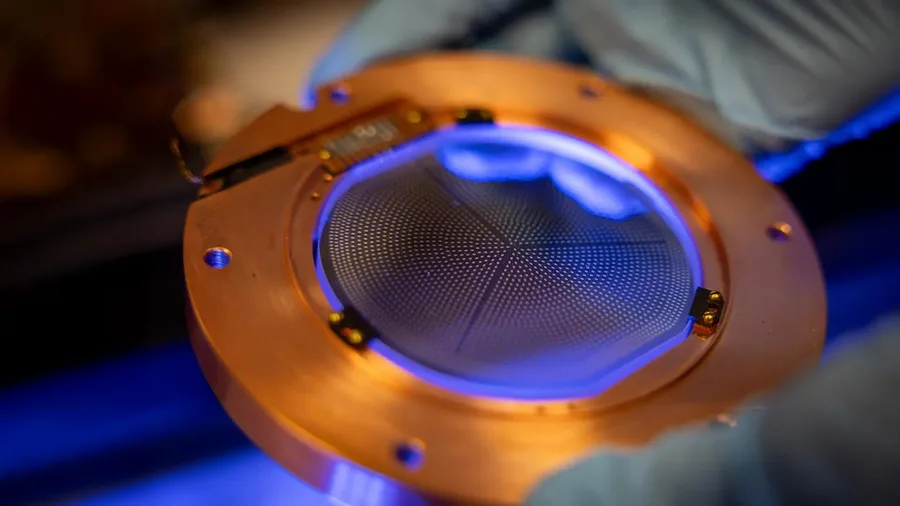
Nearly everything in the universe is made of mysterious dark matter and dark energy, yet we can’t see either of them directly. Scientists are developing detectors so sensitive they can spot particle interactions that might occur once in years or even decades. These experiments aim to uncover what shapes galaxies and fuels cosmic expansion. Cracking this mystery could transform our understanding o…
We may not know what dark matter is, but that hasn't stopped scientists from trying to understand its role in the Universe. The Lambda-Cold Dark Matter (CDM) model is the standard model that explains the cosmos the best, although it's not the only model. It makes a number of predictions about dark matter and researchers look for opportunities to test those predictions. The results either help con…
Dark matter may be invisible, but scientists are getting closer to understanding whether it follows the same rules as everything we can see. By comparing how galaxies move through cosmic gravity wells to the depth of those wells, researchers found that dark matter appears to behave much like ordinary matter, obeying familiar physical laws. Still, the possibility of a hidden fifth force lingers, o…
USC researchers led the development of a computer simulation that gives astrophysicists a mechanism for testing ideas about dark matter and its behavior in the Milky Way and other galaxies. The post Scientists code Milky Way twin galaxies to better understand dark matter appeared first on USC Dornsife .
USC researchers, along with a team of experts from UC San Diego, Carnegie Observatories and other institutions, led the development of a computer simulation tool they call “COZMIC,” giving astrophysicists a mechanism for testing ideas about dark matter and its behavior in the Milky Way and other galaxies. The post Scientists code Milky Way twin galaxies to better understand dark matter appeared f…
Pappalardo Fellow Benjamin Lehmann received the School of Science’s Infinite Expansion Award, one of nine postdocs and research scientists who were recognized as extraordinary members of the MIT community. As a 2022-2025 Pappalardo Fellow, Benjamin studies dark matter and enjoys mentoring students and doing community outreach. “Dr. Lehmann has made noteworthy contributions to the Physics […] The…
Dark matter may be gathering in dense clouds around neutron stars, potentially making it easier to observe it from Earth. The post Swirling clouds of axions around neutron stars could help scientists detect dark matter appeared first on Advanced Science News .
85% of the universe is dark matter, astrophysicists say. You already knew this of course. But did you also know that scientists are now saying that some of this dark matter might form stars, the so-called axion stars. And that these stars may explode? What are axion stars? Is this plausible? How could we find out whether it's correct? Let’s have a look.
This video comes with a quiz:
Astronomers anticipate upcoming images of the Andromeda galaxy may hold vital clues Although dark matter makes up 27% of the universe, astronomers have been unable to observe it directly. Now, in a new study, an international team of researchers including Northwestern University astrophysicists has found that upcoming images from NASA’s Nancy Grace Roman Space Telescope
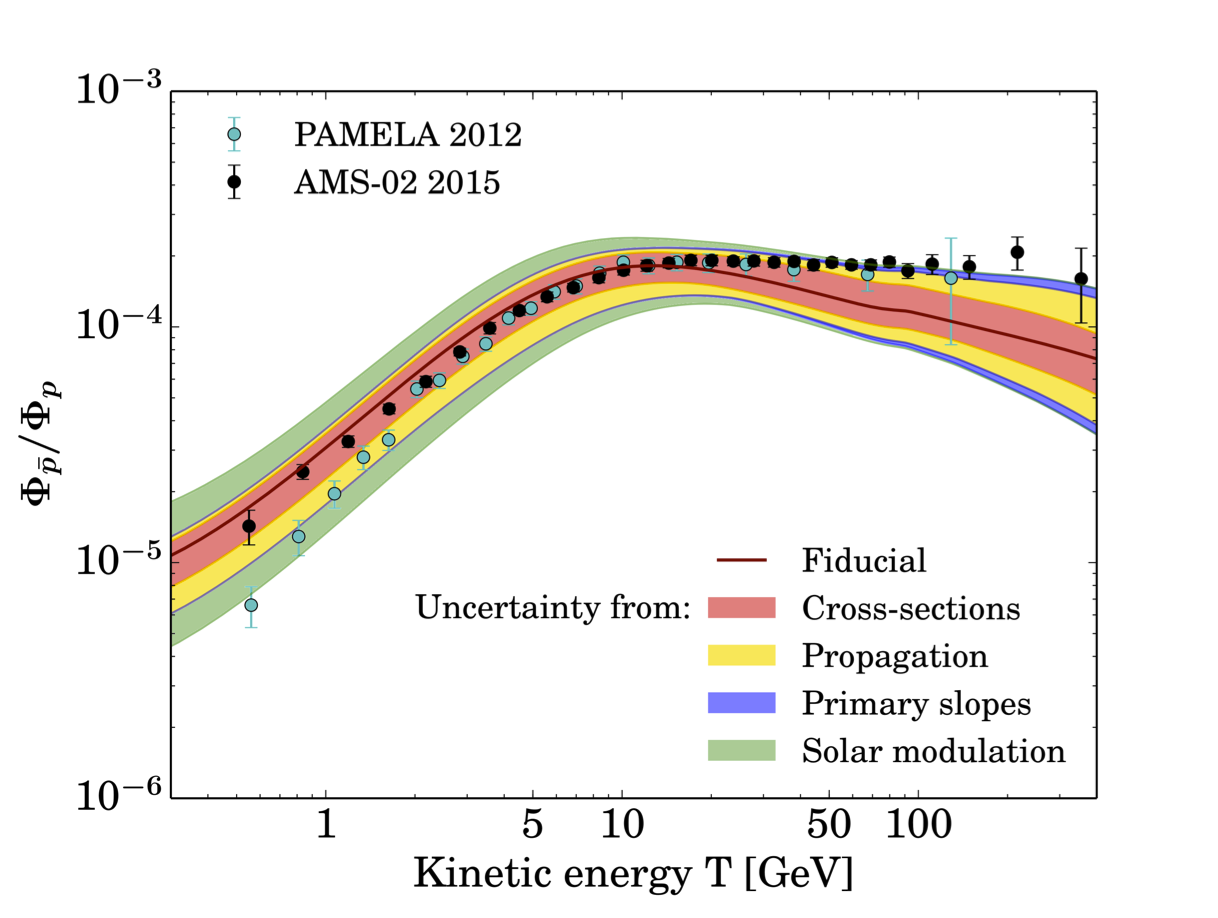
This week the AMS collaboration released the long expected measurement of the cosmic ray antiproton spectrum. Antiprotons are produced in our galaxy in collisions of high-energy cosmic rays with interstellar matter, the so-called secondary production. Annihilation of dark matter could add more antiprotons on top of that background, which would modify the shape of the spectrum with respect to the…