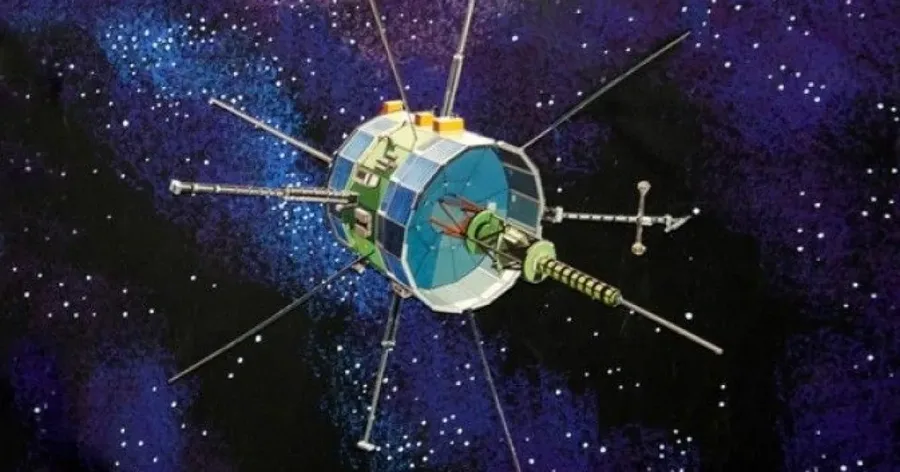
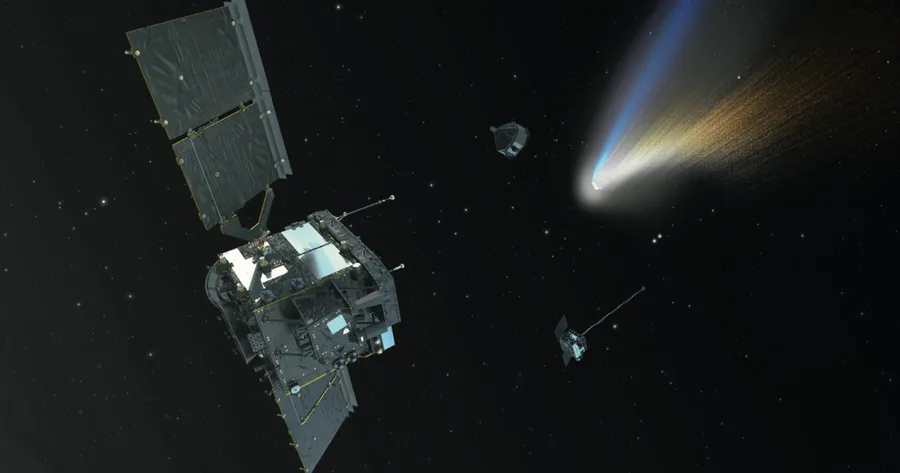
Launched as the International Sun-Earth Explorer-3 in 1978, a joint NASA-ESA mission, the ISEE-3 probe studied the solar wind and Earth’s magnetic field from the L1 Lagrange point. When its mission was complete in 1981, NASA proposed repurposing the craft by using it to intercept a comet; such reuse would save the money and time Continue reading "Sept. 11, 1985: The ICE probe encounters Comet Gia…
Interstellar comet 3I/ATLAS contains exceptionally high levels of methanol, suggesting it formed under conditions very different from those that shaped most comets in our solar system. ALMA also revealed that tiny icy grains around the comet are releasing methanol like miniature comets, giving astronomers an unusually detailed look at an object from another star system.
Andy Tomaswick (https://www.universetoday.com/authors/andy-tomaswick)
4d ago
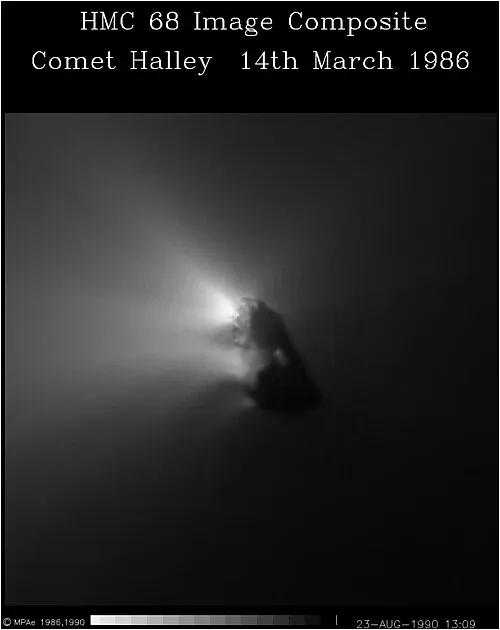
Halley’s comet captures the imagination in a way that few other astronomical objects do. When it last made its approach toward the Sun (admittedly when this author, who is now middle-aged, was one year old in 1986), humanity responded with a fleet of spacecraft known informally as the “Halley Armada”. Yet, because of the comet’s trajectory, those spacecraft were only able to visit their target fo…
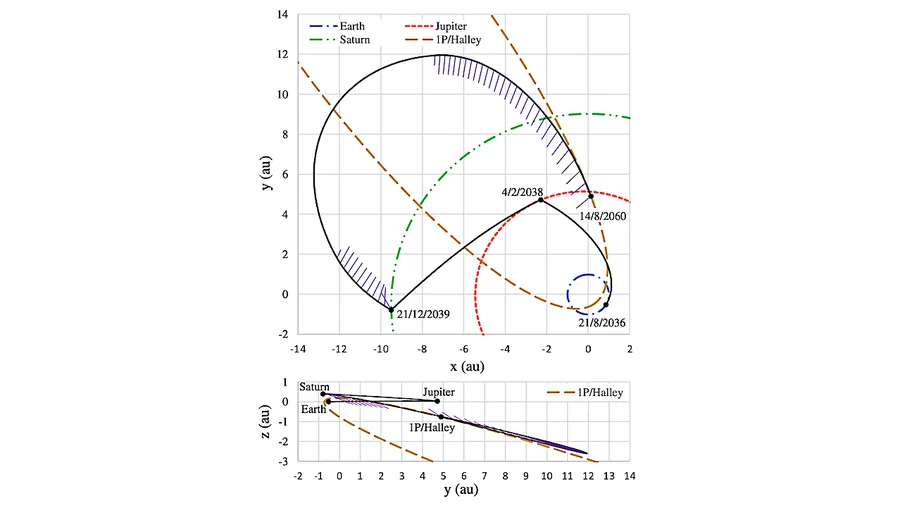
[astro-ph.EP] The perihelion of comet 1P/Halley in 2061 is an excellent chance to revisit this object of outstanding scientific and cultural relevance. During its 1986 approach to the Sun, it […] The post Double Gravity-Assist Rendezvous Trajectory to Halley’s Comet Using Deep-Space Low Thrust appeared first on Astrobiology .
Brian Koberlein (https://www.universetoday.com/authors/brian)
9d ago
In 1992, Centaur 450P/LONEOS had a close encounter with Saturn, shifting its orbit closer to the Sun. Now astronomers can observe how a small icy body transforms into a comet over time.
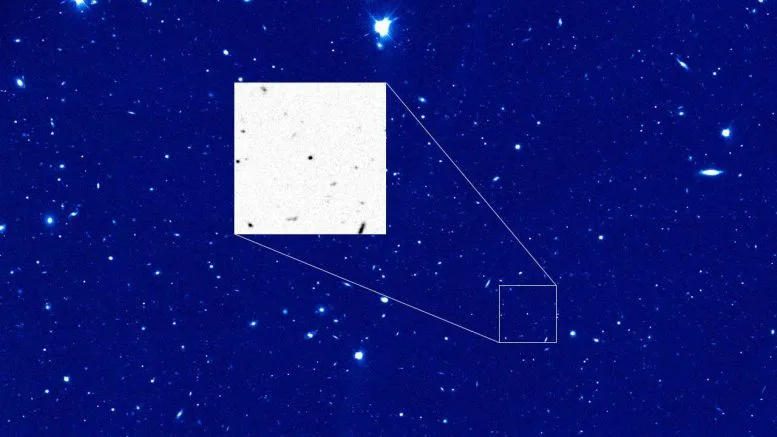
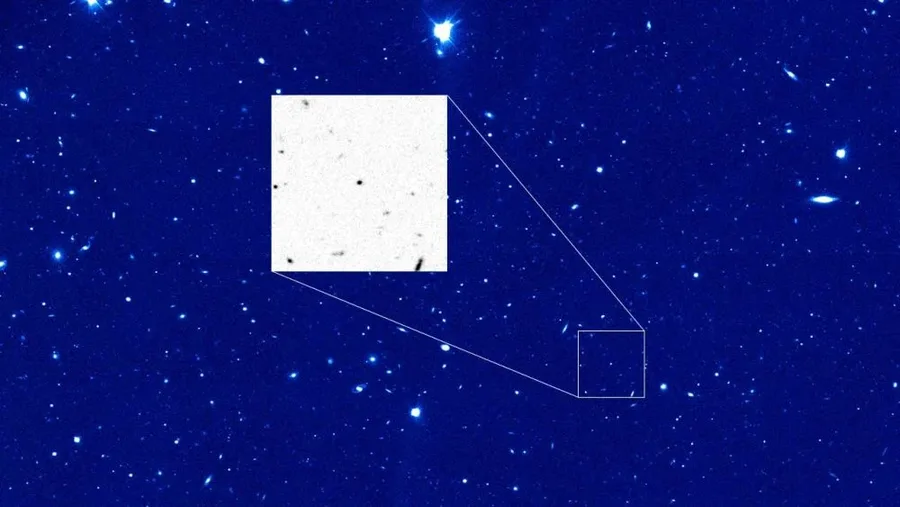
An accidental Subaru Telescope image of a distant bare comet is giving astronomers a clearer look at the surface of a cometary nucleus. A comet can reveal its surface most clearly when it is still far from the Sun, before warming releases the gas and dust that normally hide its nucleus. Researchers found just such [...]
Japanese researchers got lucky when a comet they wanted to study was found photo-bombing archival images from Japan's Subaru Telescope. The Subaru, with its 8.2 meter mirror, happened to image comet 28P/Neujmin from just the right angle to accurately characterize its surface. Their work is part of the ongoing effort to understand comets and asteroids, why some of them share properties, and what t…
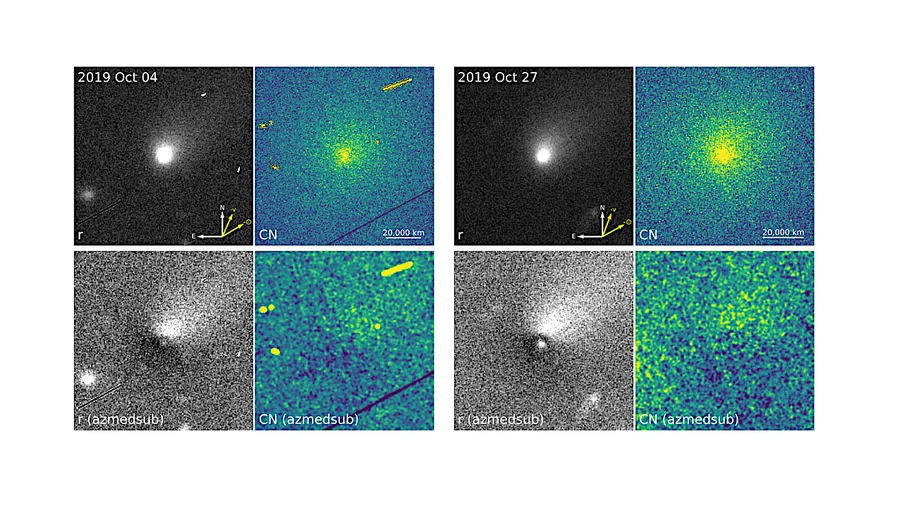
[astro-ph.EP]. We report on imaging, spectroscopy, and narrowband photometry of interstellar comet 2I/Borisov obtained at Lowell Observatory from 2019 September 13 to December 16. We measured chemical composition on four […] The post The Highly Unusual Behavior And Chemical Composition Of Interstellar Comet 2I/Borisov appeared first on Astrobiology .
David Dickinson (https://www.universetoday.com/authors/david-dickinson)
18d ago
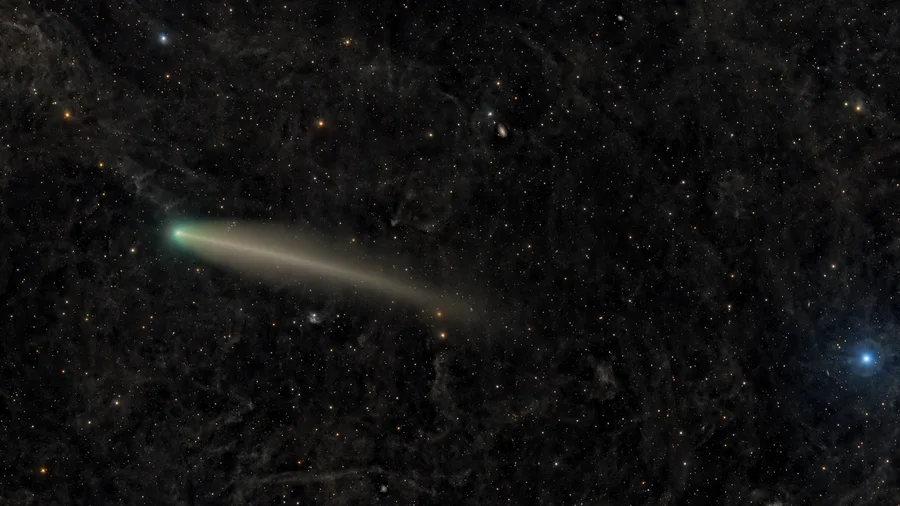
It has been a busy month for astronomy. In the midst of an eclipse season bookended by the total solar eclipse on August 12th and the deep partial lunar eclipse coming right up this week on August 28th, an outbound comet hanging high in the dawn sky just refuses to die: 220P/McNaught.
[astro-ph.EP] Interstellar objects (ISOs) provide direct constraints on the composition and evolution of extrasolar planetary systems. As the third confirmed ISO, comet 3I/ATLAS offers a rare opportunity to study pristine […] The post The Inbound Gas and Dust Evolution of Interstellar Comet 3I/ATLAS from Optical Spectroscopy and Multi-band Photometry appeared first on Astrobiology .
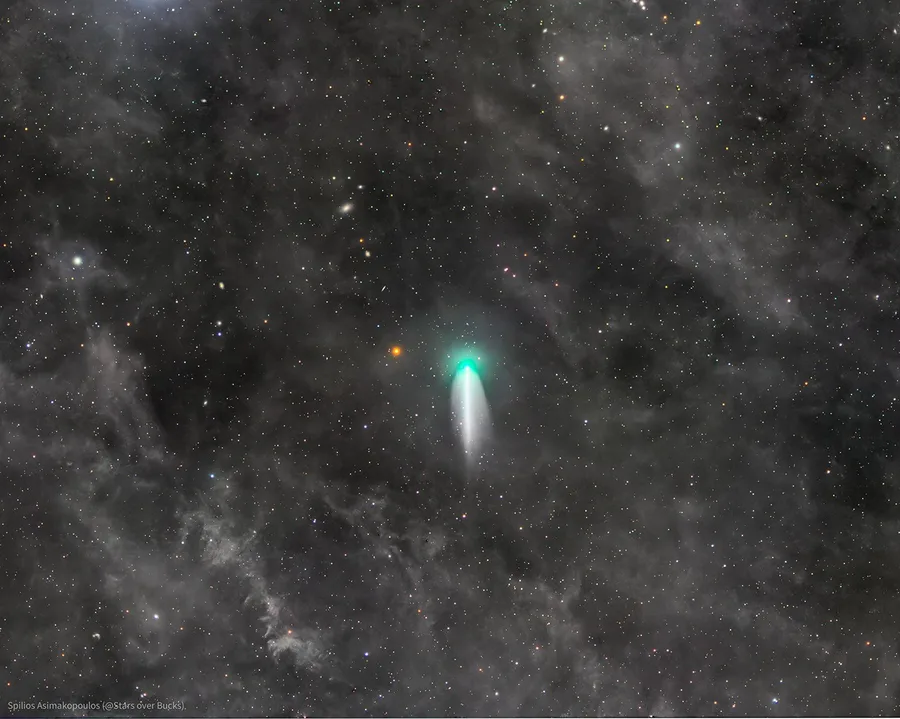
APOD Science APOD APOD: 2026 August 24 – Comet… Today’s APOD Archive Submissions Index Search Calendar RSS Education About Discuss APOD Astronomy Picture of the Day Discover the cosmos! Each day a different image or photograph of our fascinating universe is featured, along with a brief explanation written by a professional astronomer. Comet 220P […]
Is it possible for us to send a spaceship to Comet 3I/ATLAS to collect samples of its gas, dust, and surface and bring them back to Earth for analysis? Raymond Tanguay It would be great to get a spacecraft to an interstellar object to see it up close and to sample what it is made of. Continue reading "Could we send a spaceship to Comet 3I/ATLAS to collect samples and bring them back for analysis?…
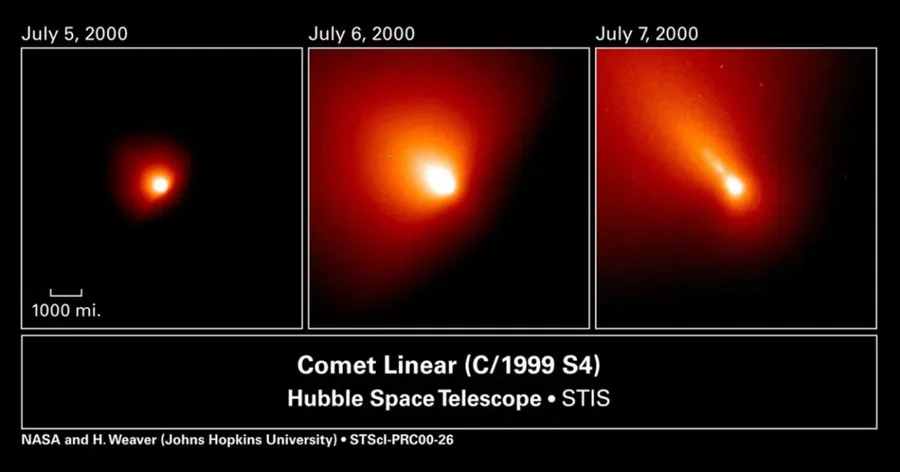
In September 1999, the Lincoln Near Earth Asteroid Research (LINEAR) project discovered a comet – Comet C/1999 S4, or Comet LINEAR – on a course for the Sun. Its unusual behavior drew attention: By July 5-7 of the following year, the Hubble Space Telescope had watched a piece of its crust blow off as if Continue reading "July 26, 2000: Comet LINEAR disintegrates" The post July 26, 2000: Comet LIN…
Comets are known for providing breathtaking observations of their long and shiny tails when they travel too close to the Sun. This happens because comets are made of ice and primarily orbit far from the Sun, but as their icy core heats up it evaporates, resulting in the aforementioned breathtaking observations. But while evaporating comets […] The post Spin-reversing comet may face self-destructi…
This periodic visitor is now bright enough to see in binoculars from a dark sky. We also report on a bright supernova in Ursa Major. The post Comet 10P/Tempel Brightens, Sets Sail South appeared first on Sky & Telescope .
Nature Astronomy, Published online: 21 July 2026; doi:10.1038/s41550-026-02912-8 Based on activity inferred from observed comet-like nongravitational acceleration, we report the detection of a cometary tail on a near-Earth object that was previously classified as inactive. This finding demonstrates that nongravitational accelerations can be used to infer the outgassing of ices on covertly ‘inacti…
Andy Tomaswick (https://www.universetoday.com/authors/andy-tomaswick)
7/21/2026
Our ability to track and visualize small rocks in space is still improving. And occasionally we’ll find a space rock that will remind us of that fact. One such rock is detailed in a new paper, led by Davide Farnocchia of NASA’s Jet Propulsion Laboratory, and recently published in Nature Astronomy, where the research team discovered what they thought was a normal, run of the mill asteroid, was act…
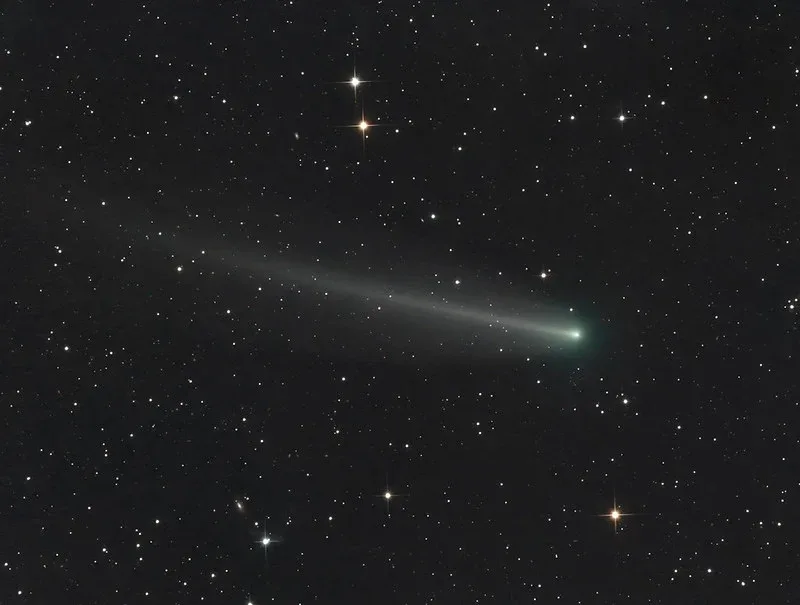
Chris Schur, taken from Happy Jack, Arizona Comet 10P/Tempel 2’s needle-thin dust trail stands out starkly in this image captured earlier this month as the comet was crossing Capricornus, heading toward its Aug. 2 perihelion. This trail of dust is not a traditional comet’s tail, directly blown out by the Sun — rather, it’s dust Continue reading "Tempel’s trail strengthens" The post Tempel’s trail…


 research.io