Andy Tomaswick (https://www.universetoday.com/authors/andy-tomaswick)
6d ago
One of the hardest things to calculate for an asteroid is its mass - but it is such a critical feature. It determines how much of an impact it would have if it hits something, or how many resources are potentially available on it. But to accurately measure it we typically use optical sensing and a guesstimate of its density based on its spectral profile. A new paper suggests a completely novel wa…
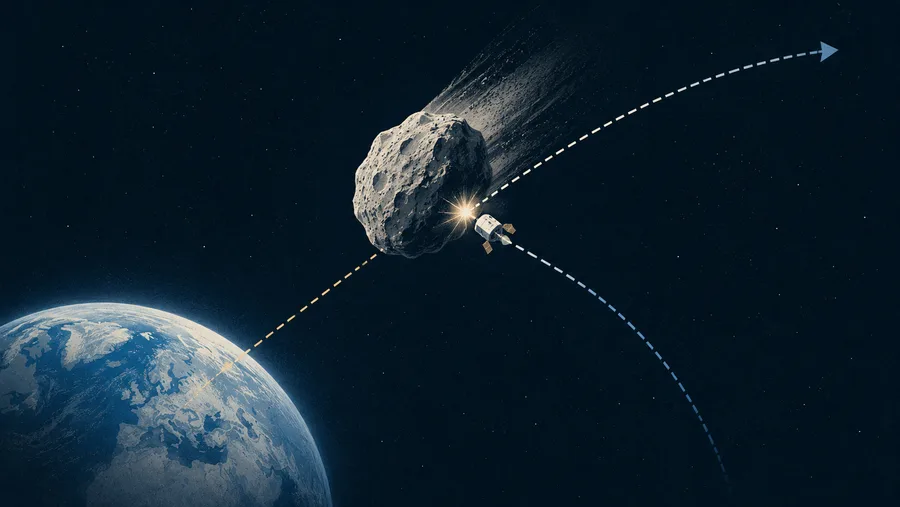
From high-speed battering rams to gravity tractors, the technology exists to protect the planet. The question is whether humanity will act in time — and in concert.
Nature Communications, Published online: 27 May 2026; doi:10.1038/s41467-026-73284-w The origin of asteroid (469219) Kamo‘oalewa, target of China’s Tianwen-2 mission, is debated. Here, the authors show that it probably originated from the Flora family and it resembles asteroid (25143) Itokawa-like composition but with a more space-weathered surface.
It’s the stuff of movies: an asteroid is on a collision course with Earth, and we have to do something to stop it—or die.
Disturbingly this scenario is also the stuff of the actual universe. Scientists have discovered more than 2,000 “potentially hazardous” asteroids. To merit that official NASA designation, an object must be at least 460 feet in diameter and have an orbit that passes within abou…
On the night of 18 February, engineers at the Space Telescope Science Institute pointed the James Webb Space Telescope at an almost empty patch of sky and waited. They were looking for a rock roughly 60 metres across, hurtling through the void many millions of kilometres from Earth. At that distance, in Webb’s narrow field of view, it would appear as something barely brighter than background nois…
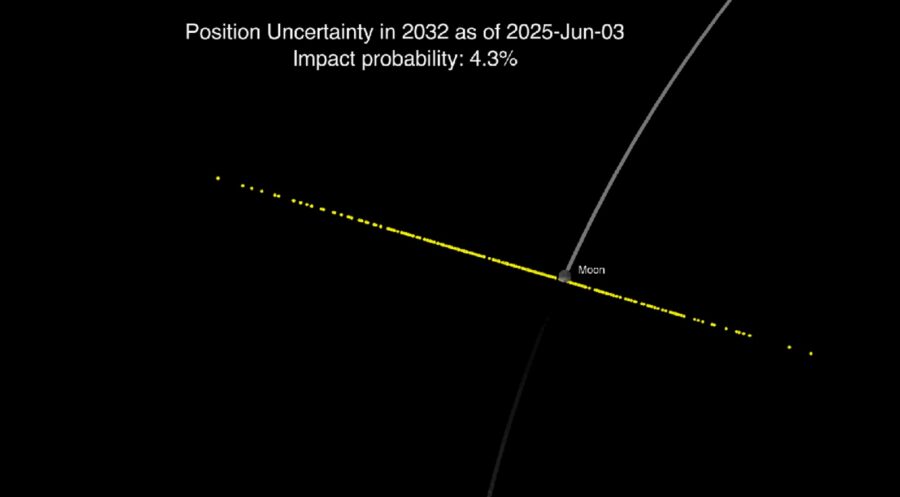
The asteroid known as 2024 YR4 recently caught the attention of scientists across the globe due to its exceptionally close flyby of the Moon. While it ultimately missed a direct collision, the event raised fascinating questions about the consequences of such a cosmic impact. Astronomers like Bill Gray tracked the object as it moved through...
Hayabusa2’s final target is much smaller than expected. This illustration shows the relative size of the spacecraft and the asteroid it will try to land on. Credit: ESO/M. Kornmesser , CC BY 4.0 ; Asteroid: T. Santana-Ros et al., Hayabusa2 model: SuperTKG , CC-BY-SA
A number of PSI scientists participated in the three-day Asteroid Science in the Age of Hayabusa2 and OSIRIS-Rex Workshop held at the Tucson Marriott University Park hotel. PSI was a Gold Sponsor of the event. ... Read More
Japan Blasted a Crater on Asteroid Ryugu and Here's the Photo Proof
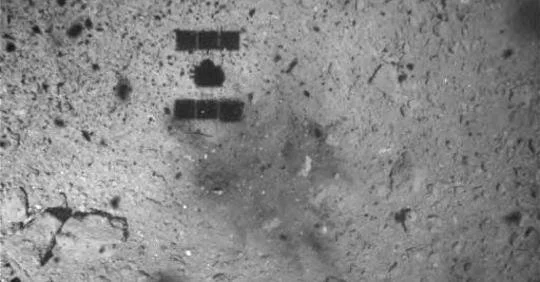
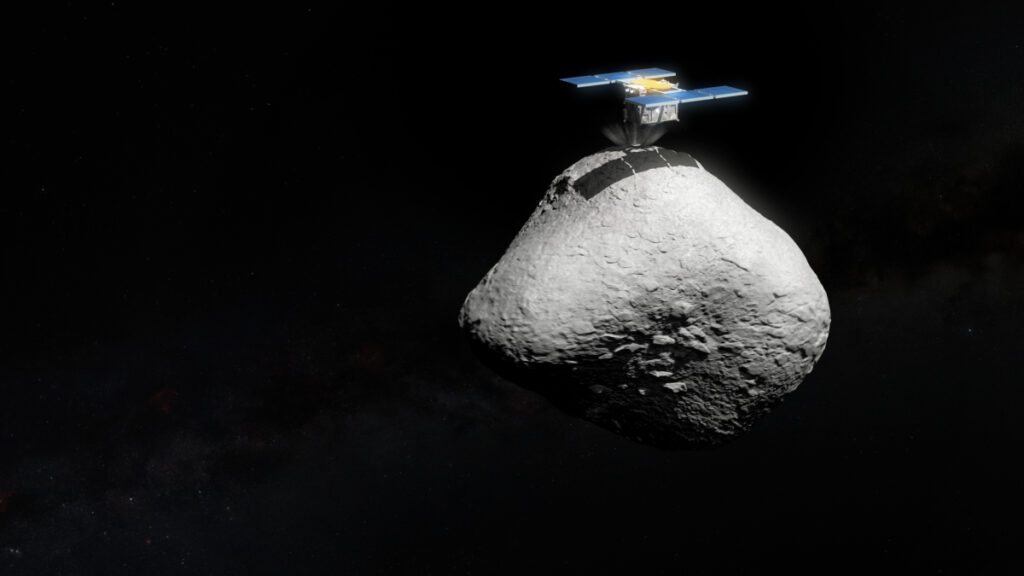
A Japanese spacecraft successfully blasted a crater into a space rock called Ryugu, the mission confirmed today (April 25), releasing an animation showing how the impact changed the asteroid's surface.
JAXA, the Japanese space agency is becoming more and more active these days, as Japanese researchers are getting involved in more and more ambitious projects. Recently, a probe they sent out returned home with grains of dust gathered from an asteroid, a feat without precedent in history.
The finding could provide valuable insight into the early history of our solar system, as well as give some cl…
The first results from the Japanese Hayabusa mission have been presented here at the Lunar and Planetary Science conference, and have generally got a warm response. Hayabusa visited the small asteroid Itokawa late last year, and managed to survey the lumpy rock in great detail, despite coping with some major technical problems.
[read more here]
The Japanese Space Agency (JAXA) mission was largely…