Most salmon migrate from the sea into fresh water to spawn. This became difficult during the last Ice Age, when populations of salmon were cut off from icebound spawning grounds. A study recently published in Quaternary Research, led by fisherman-scientist Patrick Martin, used genetic analyses of more than 32,000 chum salmon to suggest that some populations survived the last Ice Age isolated in f…
“Earth’s climate swings increasingly out of balance,” according to a World Meteorological Organization press release discussing findings from the State of the Global Climate 2025 report, published in the Bulletin of the American Meteorological Society (BAMS) on Aug. 10, 2026. The report includes research supported in part by data from the World Wide Lightning Location Network (W…
Michelle Koutnik, ESS research associate professor, will lead a project, "Supporting interdisciplinary Arctic learning with AI chatbot tool," that will design, develop and test an AI chatbot tool to support interdisciplinary learning about the Arctic. Akshay Mehra, ESS assisstant professor, is part of an interdisplinary team for a project, "Designing responsible AI for learning: A pedagogical fra…
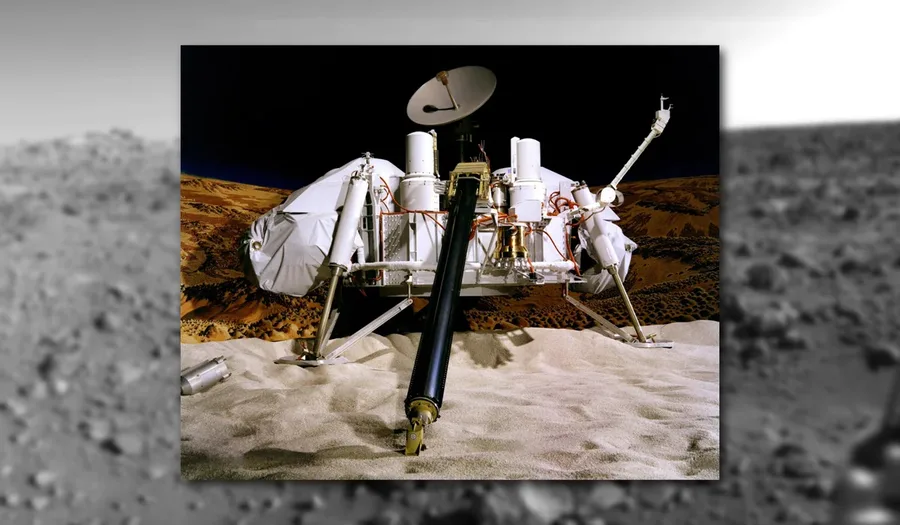
In searches for past and present Martian life, some scientists say we've been too cautious to see what's right in front of us. ESS Professor and UW Astrobiology Program Interim Director David Catling is quoted.
Moons get no respect. People think of them as dead and cold, often overshadowed (literally) by the superstar planets they orbit around. But planetary scientist Baptiste Journaux would disagree. He’s fascinated by moons and the growing research that has shown that moons are far more active than we used to think. In fact, they contain heat and ice and essential components needed for life. Pocket Sc…
The Pacific Northwest Seismic Network (PNSN) installed seismic sensors designed to record the ground shaking throughout Seattle Stadium, as Seattle hosts guests from all around the world for the 2026 FIFA World Cup games.
The UW Department of Earth & Space Sciences Research Symposium and Gala is an annual graduate student-organized event that brings together students, faculty, alumni and supporters to celebrate our students’ groundbreaking work. This year’s Gala, held during the first week of Spring Quarter, showcased over 30 student presentations, 17 posters, a department-wide photo contest and an awards rece…
UW research scientist Mira Berdahl, along with ESS Professors Eric Steig and Gerard Roe, helped develop a modeling approach showing that the glacier retreat that enabled the Alaska landslide was driven entirely by human-caused climate change rather than natural processes. Berdahl is interviewed.
Scientists are now warning that scaling back the Ocean Observations Initiatve could put Washington and Oregon at risk. However, the cable system managed by the UW Pacific Northwest Seismic Network used for earthquake and tsunami monitoring is not being removed. ESS Professor and PNSN Director Harold Tobin is interviewed.
A UW study, led by ESS graduate student Paul Morgan and co-author ESS Associate Professor Alison Duvall, published April 16 develops a workflow to map dam susceptibility at a regional scale, using stream width and landslide volume to project susceptibility within the Oregon Coast Range.
David Catling, professor of Earth and Space Sciences (as well as adjunct professor of Atmospheric and Climate Science and interim director of the UW Astrobiology Program) has been elected as a fellow of the Royal Society. Founded in 1660, the Royal Society is the national academy of sciences of the United Kingdom and the world’s oldest continuous scientific academy, famous for its historic fellow…
A Westport school rooftop refuge completed in 2016 serves as Cascadia’s first engineered refuge for tsunamis. Area residents funded the structure through a bond of the Ocosta School District. Most years, an Ocosta science teacher takes secondary-school students on canoe trips to view Grays Harbor evidence for the hazards for which the structure was designed. This year's outing, on May 22, mixed O…
A new study conducted by UW researchers suggests that the Seattle fault zone may produce its largest earthquakes less frequently than scientists previously estimated. Published in the journal Geology, the study, led by ESS graduate studend Elizabeth Davis, found evidence that only one major earthquake of roughly magnitude 7.5 has occurred on the Seattle fault zone in the past 11,000 years.
University of Washington Provost Tricia R. Serio announced that Joel Thornton, a professor and chair of the College’s Department of Atmospheric and Climate Science, will serve as the next Maggie Walker Dean of the College of the Environment. Thornton has served as interim dean since last July, filling the position vacated by Maya Tolstoy. Thornton is an atmospheric chemist who studies the impacts…
A research team, led by UW Biology Professor and ESS Adjunct Professor Gregory Wilson Mantilla, has identified a new species in the Cimolodon genus from a fossil the team discovered at a research site in Baja California.

 research.io