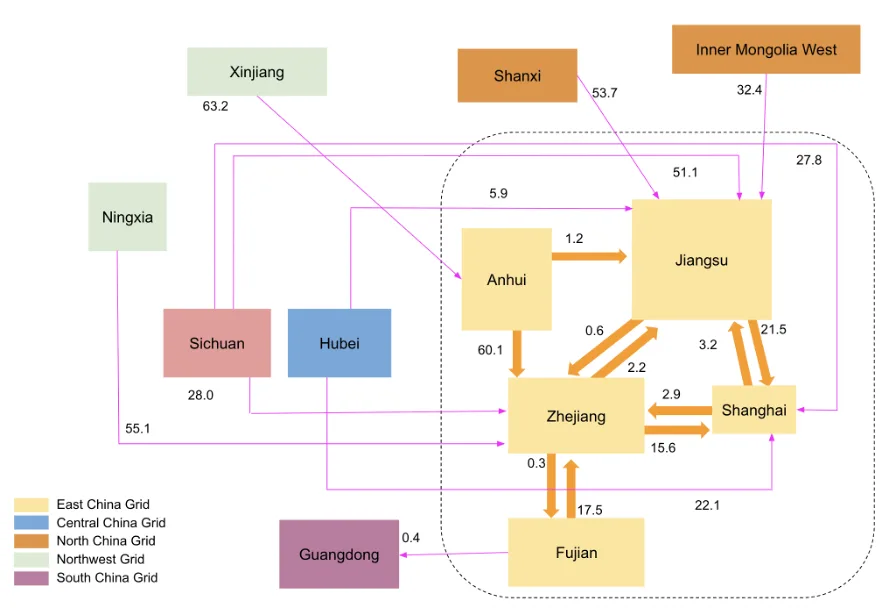
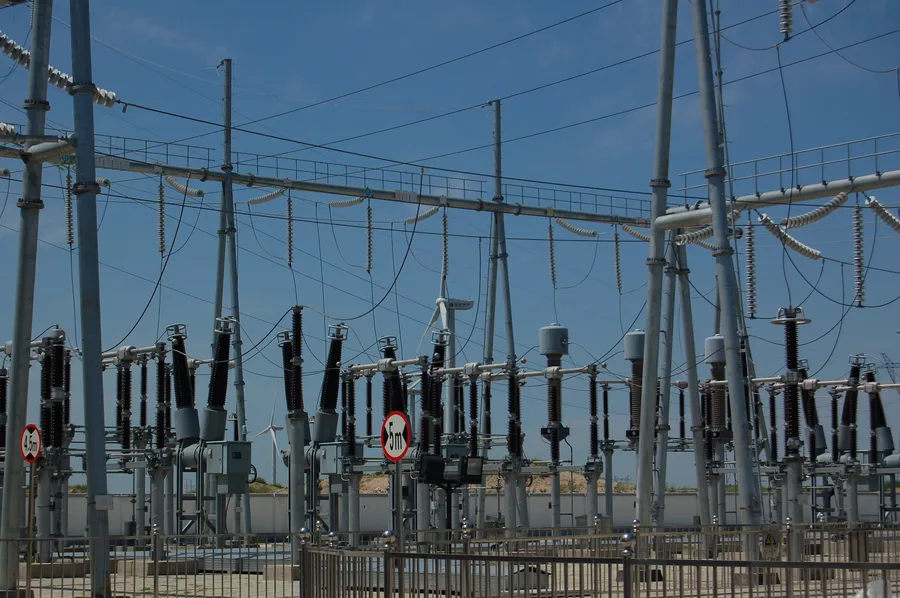
Figure: Yearly interprovincial and interregional transmission for ECG, 2022. China’s East China Grid (ECG)—covering Shanghai, Jiangsu, Zhejiang, Anhui, and Fujian—sits at the center of one of the country’s most economically important and electricity-intensive regions. As demand continues to grow, renewable penetration increases, and extreme weather risks become more frequent, policymakers face a …
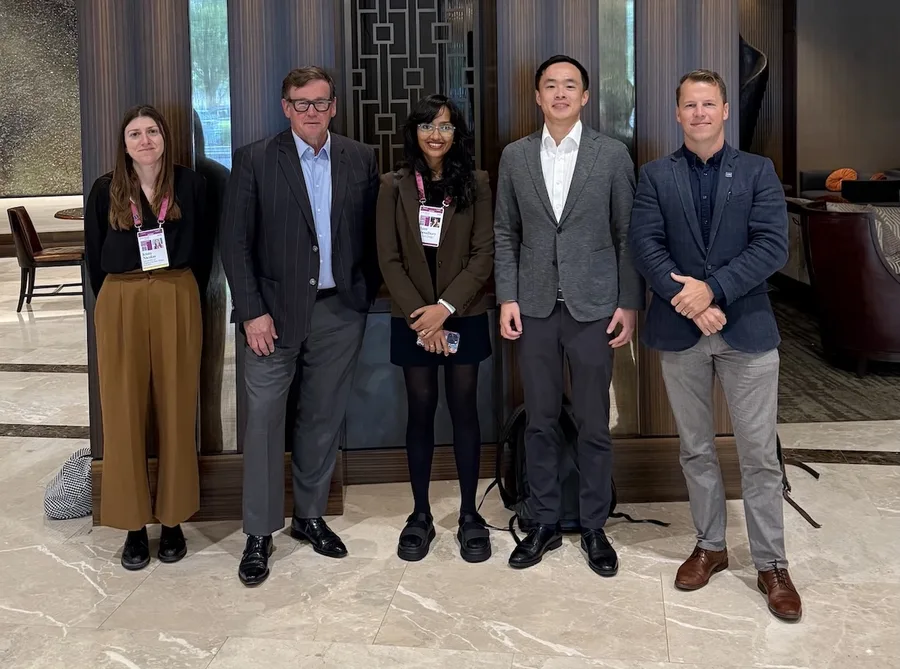
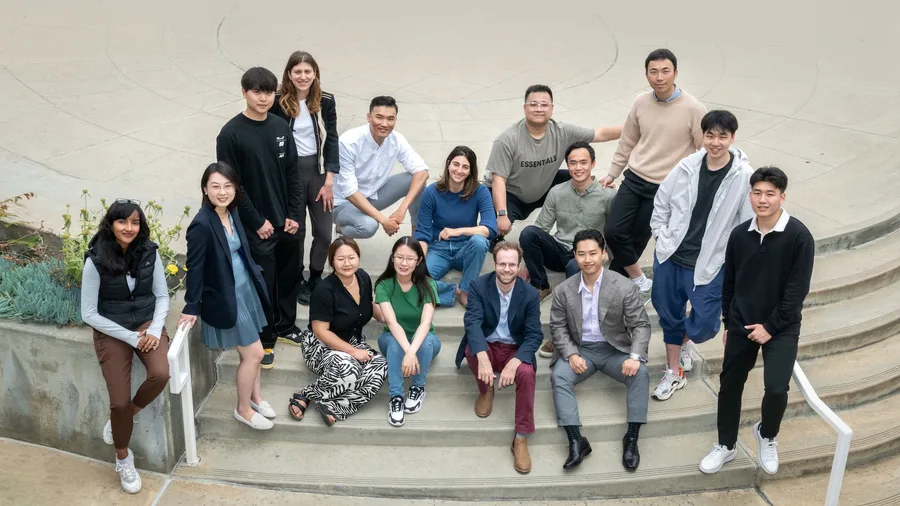
Pictured: Jenny Nicolas, Prof David Victor, Shiny Choudhury, Zhenhua Zhang and Zane Heather (SIO) Power Lab members Shiny Choudhury, Jenny Nicolas, and Zhenhua Zhang attended CERAWeek in Houston from March 22nd to 26th as part of the inaugural NextGen Fellow cohort. They were selected from a UCSD-wide internal pool of Ph.D. candidates based on their advanced-stage research, academic excellence, a…
This Brookings conversation with Ryan Hass and panelists Michael Dunne, Michael Davidson, and Kate Logan, argued that the United States faces a policy choice between excluding Chinese clean energy investment to reduce security and dependency risks and selectively allowing it to support deployment, affordability, and competitiveness. Existing U.S. policy has become a fragmented mix of tariffs, inv…
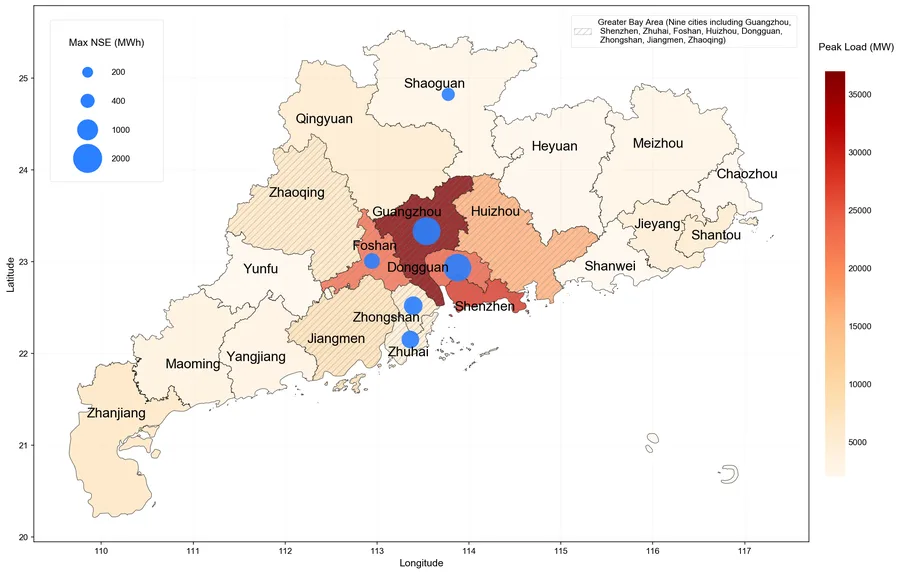
China’s power grid is facing several challenges to reliability. While demand continues to grow, new resources are coming online, which change previous patterns. China’s Southern Grid has a particularly unique situation, given its largest consuming province, Guangdong, is reliant on imported hydropower, which can face transmission constraints as well as low rainfall. Offshore wind has the potentia…
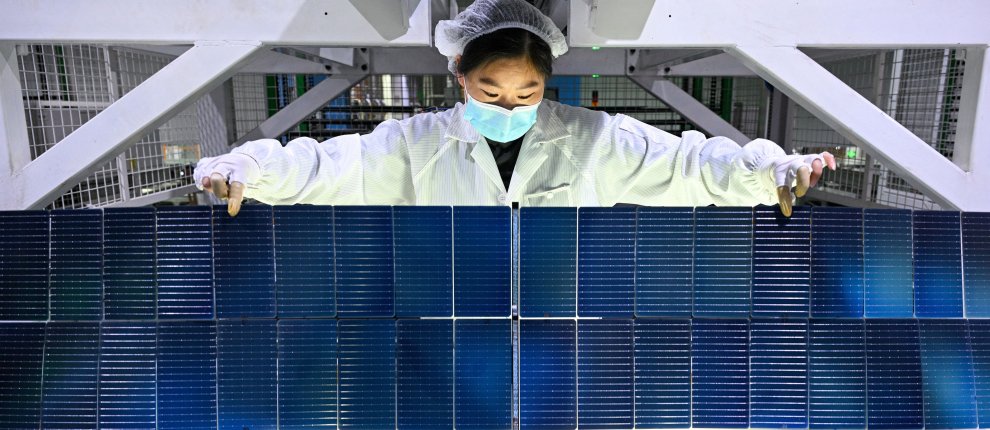
Over the past few years, China’s solar industry has entered a period of intense upheaval. Price wars and margin compression have forced industry leaders—including Jinko Solar, Trina Solar, and JA Solar—to report significant losses. These firms, along with LONGi Green Energy and Tongwei—the industry’s top five—slashed their workforce by over 30 percent in 2024. The market is facing industry consol…
Resource adequacy of the power sector is coming under increasing stress globally due to rising electricity demand, extreme weather, and growth of variable renewable energy (VRE). Institutionally, many power sectors are transitioning from traditional central planning to some degree of market liberalization, with varied regulatory approaches to ensuring supply security. China’s distinct medium- and…
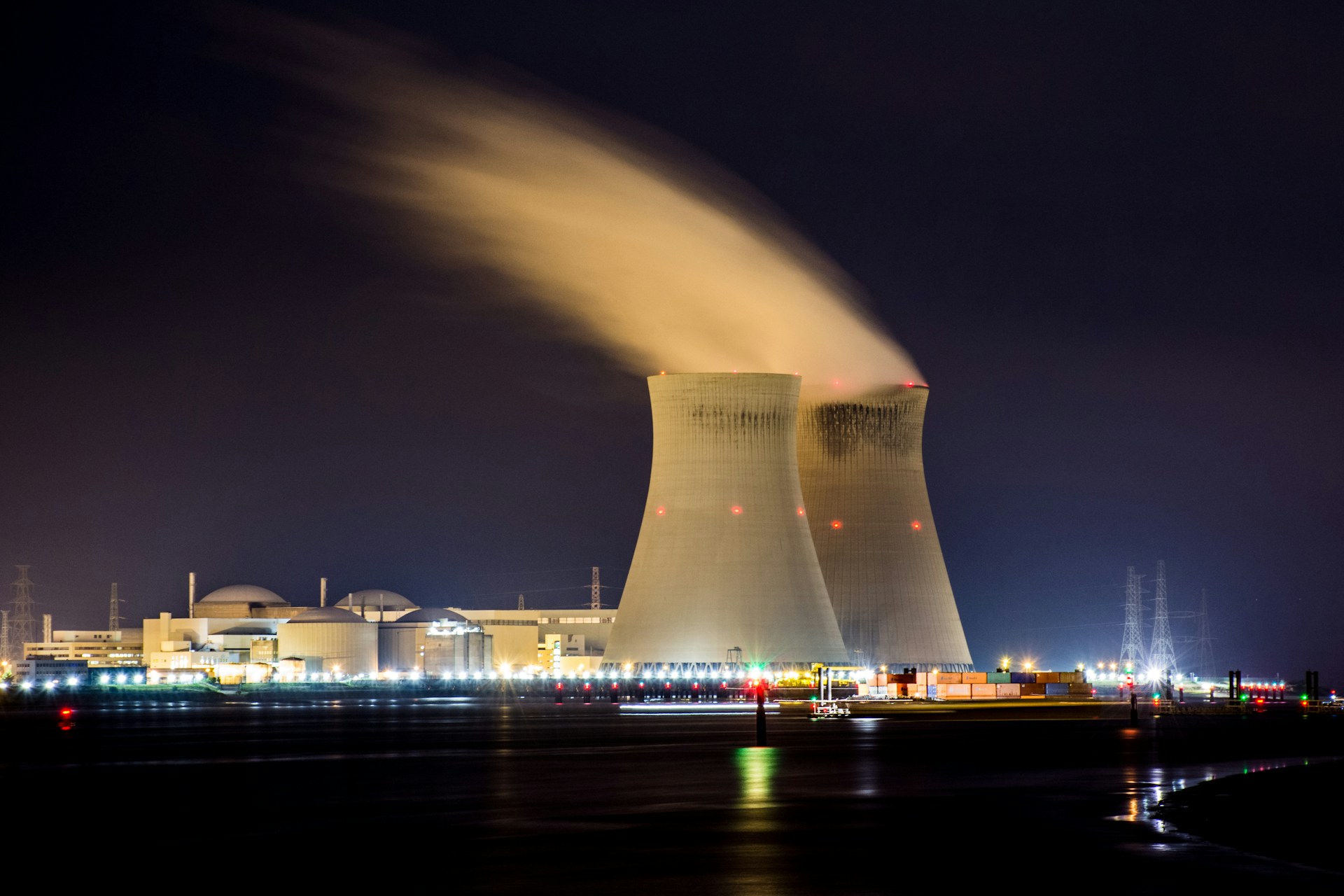
Nuclear reactors are often modeled as inflexible baseload generators with fixed downtimes and restrictive ramping limits. In practice, however, operational flexibility for a reactor is coupled with its fuel-cycle. A critical physics constraint arises from xenon poisoning, in which the buildup of the neutron absorbing xenon following a power ramp-down suppresses core reactivity, thereby limiting p…
A system-wide analysis of how Indonesia’s industrial parks can decarbonize captive coal generation through on-site renewables, storage, and strategic grid connections aligned with national climate commitments.
This policy brief evaluates how Viet Nam can meet its 2030 JETP targets and move toward a more ambitious 2035 NDC. It shows that a 47% renewable portfolio standard already delivers emission…
These takeaways represent significant points made during the discussion at the ”Workshop on Low-Carbon Transitions in Chinese SOEs” held at UC San Diego on June 6-7, 2025. They are not consensus observations.
Recommended citation:
21st Century China Center & Power Transformation Lab. (2025). Workshop on Low-Carbon Transitions in Chinese State-Owned Enterprises: Key Take-Aways. UC San Diego. Retri…
Chinese technology firms—bolstered by decades of state-backed industrial policy—have become dominant global players in key clean tech sectors. Concurrently, the United States is at a pivotal moment in clean energy investment and policy, with significant public funding and regulatory efforts aimed at reshoring supply chains and advancing domestic technological leadership.
To scale deployment, US f…
On May 9-10, 2025, the workshop convened leading scholars, policy experts and practitioners to examine how the intensifying geopolitical rivalry between the U.S. and China is reshaping opportunities and barriers for collaboration on climate mitigation, technology deployment and supply chain resilience.
The workshop consisted of presentations in six thematic panels that centered on climate policy …
This post is archived. Please check the Opportunities Page for current postings.
The Power Transformation Lab (https://pwrlab.org/) at the University of California San Diego is seeking a highly motivated Postdoctoral Research Scholar to contribute to a two-year project focused on helping Southeast and South Asian countries balance trade and investment with their decarbonization goals. The success…
This post is archived. Please check the Opportunities Page for current postings.
Job Description
The Power Transformation Lab (https://pwrlab.org/) at UC San Diego studies the engineering and institutional requirements of deploying low-carbon energy at scale. We work across multiple geographies and with academic, government, civil society, and industry partners to advance research and solutions t…
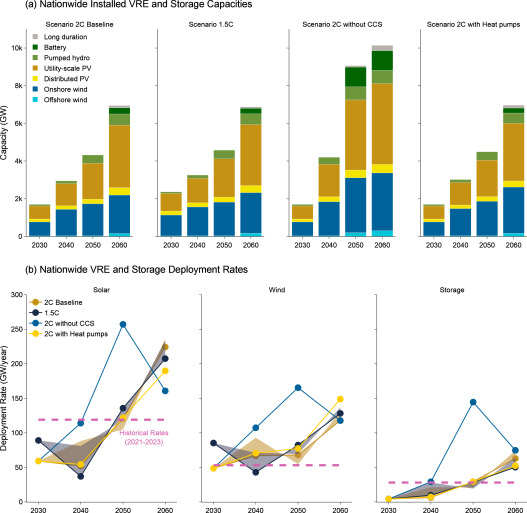
Acute temporal impacts and subnational limitations can hinder a country’s decarbonization pathway, despite national planning efforts. China, as the world’s largest greenhouse gas (GHG) emitter, has announced an ambitious climate policy goal of achieving carbon neutrality by 2060, which will require an unprecedented scale-up of low-carbon energy technologies. China’s variable renewable energy (VRE…