Wisconsin Plasma Physics Laboratory – UW–Madison
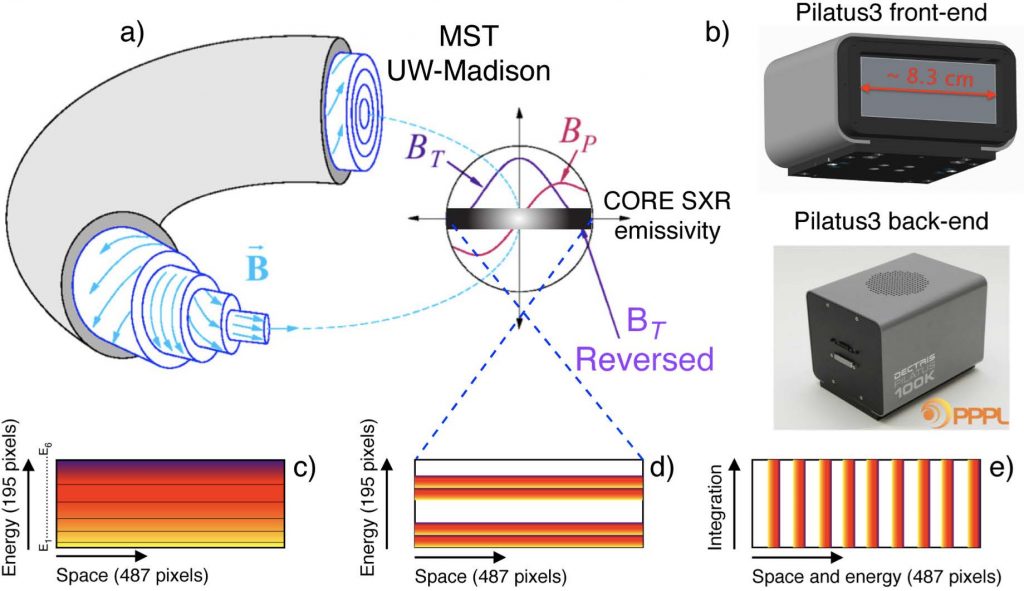
Two projects on MST have been selected for invited talks at the High-Temperature Plasma Diagnostics conference in May 2020:   Patrick VanMeter, University of Wisconsin–Madison Robust analysis of space-, time-, and energy-resolved soft x-ray measurements …
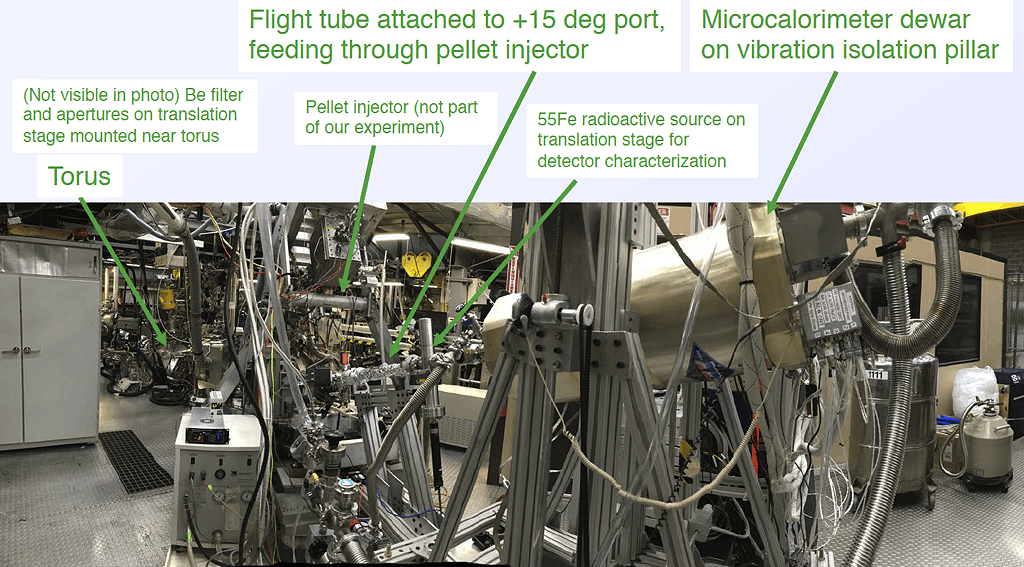
The effort to develop fusion for energy generation has been described as “bringing a star to earth.” Recently, a type of instrument similar to those being used to study the emission from hot, extraterrestrial plasma, …
A new study by UW-Madison physicists mimicked solar winds in the lab, confirming how they develop and providing an Earth-bound model for the future study of solar physics. Read the full article at: https://news.wisc.edu/researchers-recreate-the-suns-solar-wind-and-plasma-burps-on-earth/
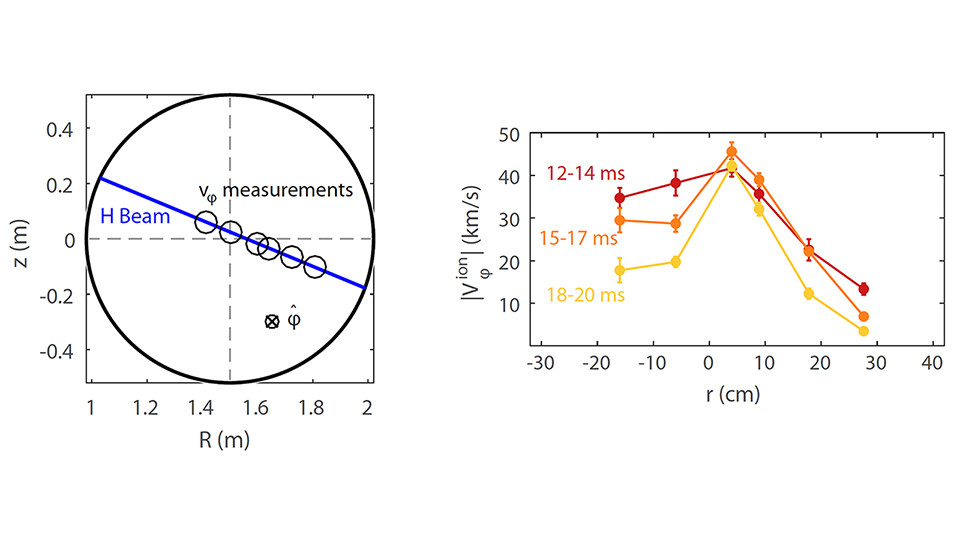
A recent Physics of Plasmas article by Darren Craig (Wheaton College) is highlighted in the AIP’s Scilight: Spectroscopic technique sheds insights on how confined plasmas flow” DOI: 10.1063/1.5119247. The Scilight reports: Craig et al. have …
WiPPL graduate student Steph Kubala has received a Blewett Fellowship from the American Physical Society (APS). After pausing her research to care for an ailing parent, Ms. Kubala has resumed her research, where she specializes …
In February 2019, the Big Red Ball (BRB) was operated for an initial investigation of compact toroid (CT) collisions as proposed by a Los Alamos National Laboratory (LANL) group. LANL researchers Scott Hsu and Tom …
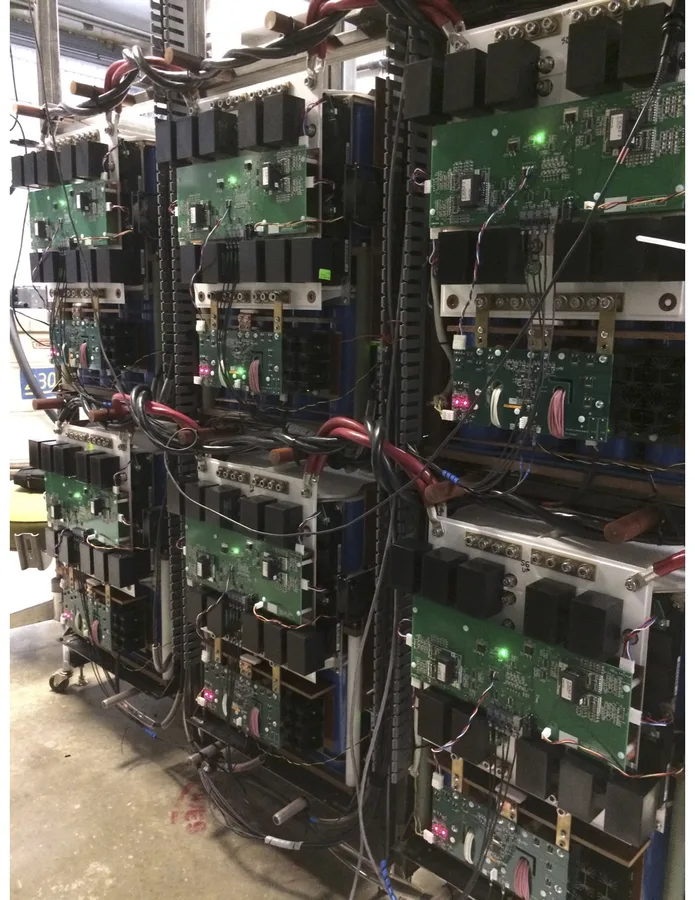
A UW-Madison Physics Department research team led by Dr. Brett Chapman was awarded a two-year Major Research Instrumentation grant from the National Science Foundation (NSF) for construction of programmable power supply (PPS) modules for experimental …
A collaboration between Dr. Luis? Delgado-Aparicio (Princeton Plasma Physics Laboratory), Dr. Lisa Reusch, and Dr. Daniel Den Hartog (UW-Madison) has successfully installed and operated a new soft-x-ray camera based on the Pilatus3 detector made by DECTRIS …
In March, the Big Red Ball at WiPPL was operated for an investigation of compressible MHD turbulence proposed by a collaboration of Swarthmore College professor Mike Brown, Swarthmore undergraduate student Emma Suen-Lewis, and Bryn Mawr …