This article was originally published in Life Science By Dr. Melanie Doyle-Eisele, Senior Director of Life Sciences and Head of Federal Business Development, on behalf of Lovelace Biomedical Early research offers insight, but major gaps remain in understanding long term respiratory effects The rapid rise of CBD vaping products has outpaced the science and regulatory frameworks needed to fully und…
Drug development rarely happens in isolation. Bringing a promising therapeutic from early research toward the clinic requires specialized expertise, thoughtful planning and the ability to translate complex data from multiple sources into decisions that move a technology forward. That thinking is behind a new consulting collaboration between Lovelace Biomedical and Matt Reed, PhD, an independent p…
By SME WHO? Failure has an image problem in the life sciences. Founders don’t talk about it, scientists spend years trying to prevent it, and boards and investors rarely celebrate it publicly. But some of the most valuable outcomes in drug development are the ones that reveal, quickly and conclusively, that a program, hypothesis, or strategy is unlikely to create ... Read More The post Failure Is…
From Biomarker Validation to Multi-Omics: Preparing Bioanalysis for the Next Generation of Precision Medicine By Ruwini Rajapaksha, PhD, Postdoctoral Fellow at Lovelace Biomedical Throughout my career, I have had the opportunity to work across academic research, startup innovation, diagnostics development, and preclinical bioanalysis. While the technologies and applications have varied— from opto…
Medical Countermeasures and Military Health: What Drug Developers Need to Know Before MHSRS Medical countermeasures have long played an important role in protecting service members and supporting national preparedness. Today, a combination of evolving global security concerns, increased government investment, and advances in biomedical science is creating new opportunities for sponsors to contrib…
By Hammad Irshad, Research Scientist As drug development expands into increasingly complex therapeutic modalities, delivery strategy has become a critical factor in development success. For many programs, inhalation is still treated as a formulation challenge to address later in development. Yet for inhaled products, success depends on much more than the therapeutic itself. Formulation, aerosoliz…
By Jacob Nelson, Associate Research Scientist The recent ASM Microbe meeting brought together an impressive cross-section of the infectious disease community, from researchers and public health leaders to technology developers and industry partners. After nearly two decades working in virology and vector-borne diseases, I attended the meeting with an interest in understanding where the science is…
For many emerging biotech companies, engaging a Contract Research Organization (CRO) feels like a milestone that comes later in development. The assumption is often that CRO discussions should begin once a study plan is finalized, funding is secured, and execution is ready to begin. In reality, however, some of the most valuable CRO conversations happen much earlier. Early engagement gives ... Re…
This article was originally published in Drug Discovery Online. By Andrew Alexander, DVM, Ph.D., MBA, DABT, senior director of preclinical toxicology, Lovelace Biomedical For early-stage biotech companies, the instinct to build a comprehensive preclinical data package is understandable. Scientific credibility, regulatory readiness, and investor confidence are often tied to the depth of available …
By Dave Revelli, Research Scientist, ABSL-3 Facility Director One of the few positive outcomes of the COVID-19 pandemic was the transformative way the scientific community collaborated to accelerate and validate a vaccine. Researchers identified, developed and deployed vaccines within a year of the onset of the pandemic, an achievement that has never before been accomplished in such a short timef…
By Dr. Melanie Doyle-Eisele, Senior Director of Life Sciences & Head of Federal Business Development Federal funding remains one of the most attractive opportunities for emerging and mid-sized life sciences companies. Grants and federal contracts offer the potential to accelerate research, validate innovation, and scale programs that might otherwise struggle to secure private investment. However,…
By Ted Barrett, PhD – Senior Director, Pharmacology In biotech, teams often equate the accumulation of preclinical experiments, endpoints, and validation work with progress. That instinct makes sense, especially in a field rooted in scientific rigor. But in today’s capital-constrained environment, that mindset is shifting. The question is no longer how much preclinical data can be generated, but …
By Jane Lindborg, Study Director & Research Scientist RNA-based therapies have moved rapidly from theoretical promise to clinical reality. Today, mRNA, siRNA, antisense oligonucleotides (ASOs), and other RNA modalities are being explored across oncology, rare disease, inflammatory conditions, and beyond. While these approaches offer powerful advantages—including speed of design and manufacturing…
By Julie Strickland, Senior Research Associate and Study Director As a first-time attendee of the Society of Toxicology annual meeting in late March, I anticipated a conference centered largely on traditional toxicology approaches—especially as it relates to animal studies. What I experienced instead was a field actively evolving, with a strong and shared focus on innovation, integration, and eth…
This article was originally published in Contract Pharma. Regulatory momentum, device innovation, and advances in formulation science are repositioning the nasal route as a strategic option for systemic and CNS therapies—provided sponsors address translational and development challenges early. March 2, 2026By: Ted BarrettSr. Director, Translational Research – Pharmacology, Lovelace Biomedical Aft…
[Albuquerque, N.M. – 2/5/2026] — Lovelace Biomedical, a not-for-profit preclinical contract research organization (CRO) that helps pharma, biotech, and federal partners generate the early-stage data required to advance therapies toward clinical testing, has appointed Andrew Alexander, DVM, PhD, MBA, DABT, Senior Director of Preclinical Toxicology. In this role, he will focus on operations and sci…
By Daniel Garner, Business Development Manager Every year, JPM Week carries a distinct energy, the kind that makes San Francisco feel like the center of the biotech universe, if only for a few days. This year was no exception. After more than five years of attending Biotech Showcase and JPM Week, I’ve learned that the real value isn’t found in ... Read More The post Biotech Showcase + JPM Week: R…
This article was published on: Linkedin. By Melanie Doyle-Eisele, Senior Scientist, Senior Director of Laboratory Animal Sciences, Lovelace Biomedical Across the life sciences, the movement to reduce reliance on animal models is gaining momentum. New Approach Methodologies (NAMs), including in vitro systems, organ-on-chip platforms, and computational models, are opening doors for innovation, ethi…
This article was originally published in Pharmaceutical Executive. The landscape of preclinical research is shifting fast—and 2025 may mark a defining moment. In April, the FDA announced its plan to remove the requirement for animal testing of monoclonal antibodies and other drugs, and in July, the National Institutes of Health announced it will no longer fund studies that rely exclusively ... Re…
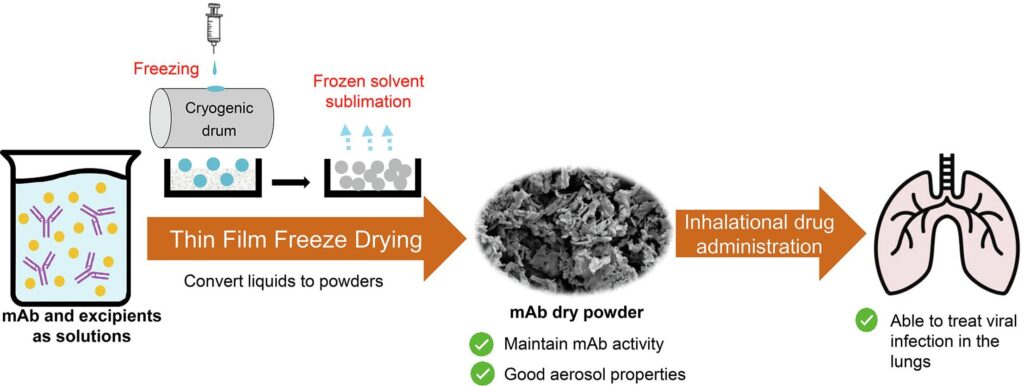
Inhalation drug delivery continues to evolve and develop for the delivery of novel compounds. In a recent publication, Lovelace Biomedical supported TFF Pharmaceuticals with their thin film freezing technology for delivery of an mAb against SARS-CoV2. These technologies, along with validated animal models, enable non-clinical evaluation of dry powder mAb’s. If you are interested in how to evaluat…





 research.io