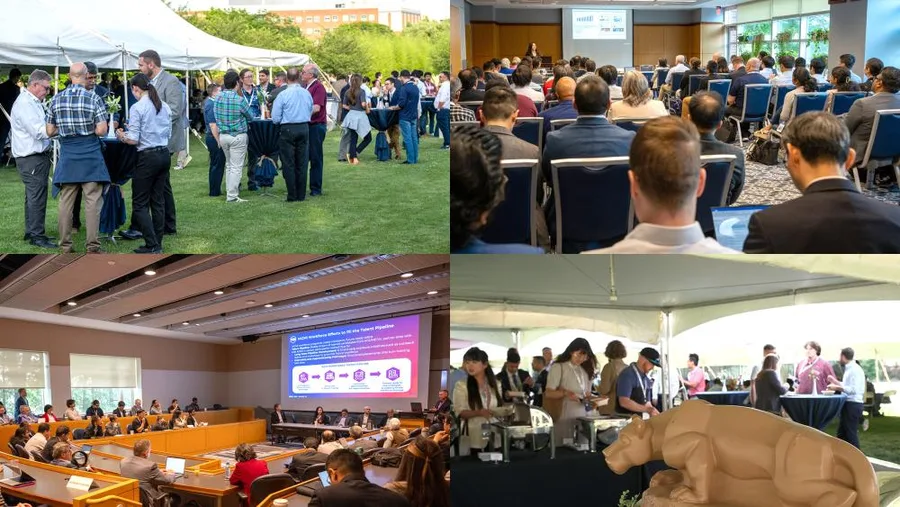
Penn State hosted the 54th annual SME North American Manufacturing Research Conference and the ASME International Manufacturing Science and Engineering Conference June 14-18 in State College.
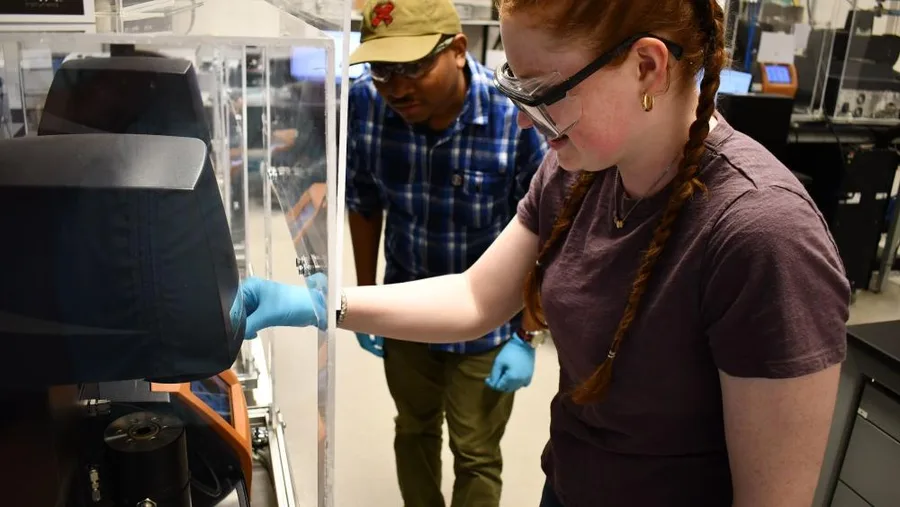
The Materials Characterization Lab, part of the Materials Research Institute at Penn State, is partnering with two Pennsylvania companies to leverage the University’s shared research infrastructure for industrial innovation with practical applications and workforce training. The new projects are in collaboration with AGC Chemicals Americas and Avery Dennison, and they are funded by the Pennsylvan…
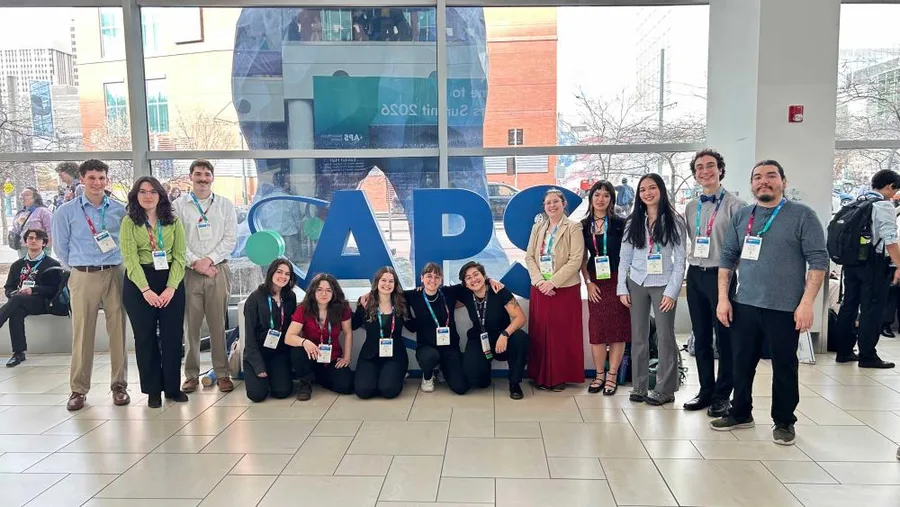
Students visiting Penn State for its Physics Research Experiences for Undergraduates program not only conduct hands-on research, but also explore the environmental, social and global impacts of that research. The program, hosted by the Department of Physics in the Eberly College of Science and the Center for Nanoscale Science, supports students from across the country who may not otherwise have a…
Herbert A. McKinstry, a pioneering materials scientist, educator, community activist and founding faculty member of Penn State’s Materials Research Laboratory, passed away at the age of 101.
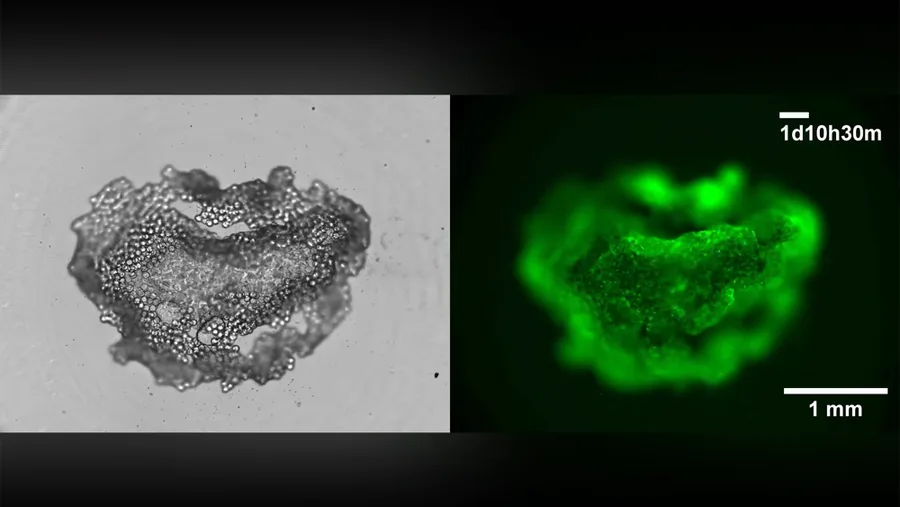
UNIVERSITY PARK, Pa. — Cell cultures — single layers of cells grown in a small dish — have enabled researchers to study biological growth, develop or test drugs and even discover what causes some diseases. Cell spheroids, 3D versions of cell cultures built using a process known as cell aggregation, are the next step in advancing this work, capable of more closely modeling real tissue.
According t…
UNIVERSITY PARK, Pa. — The Henry Luce Foundation has awarded Penn State a $700,000 grant through the Clare Boothe Luce (CBL) Program for Women in STEM to support the University’s Clare Boothe Luce Women in STEM (CBL WISe) Initiative. The five-year, institution-wide effort reflects a collaborative, intercollegiate partnership and will be co-led by Zoubeida Ounaies, distinguished professor of mecha…
UNIVERSITY PARK, Pa. — Superconductivity — the ability of a material to conduct electricity without any energy loss to heat — enables highly efficient, ultra-fast electronics essential for advanced technologies such as magnetic resonance imaging (MRI) machines, particle accelerators and, potentially, quantum computers. New research has now revealed that iron telluride (FeTe), a compound composed …
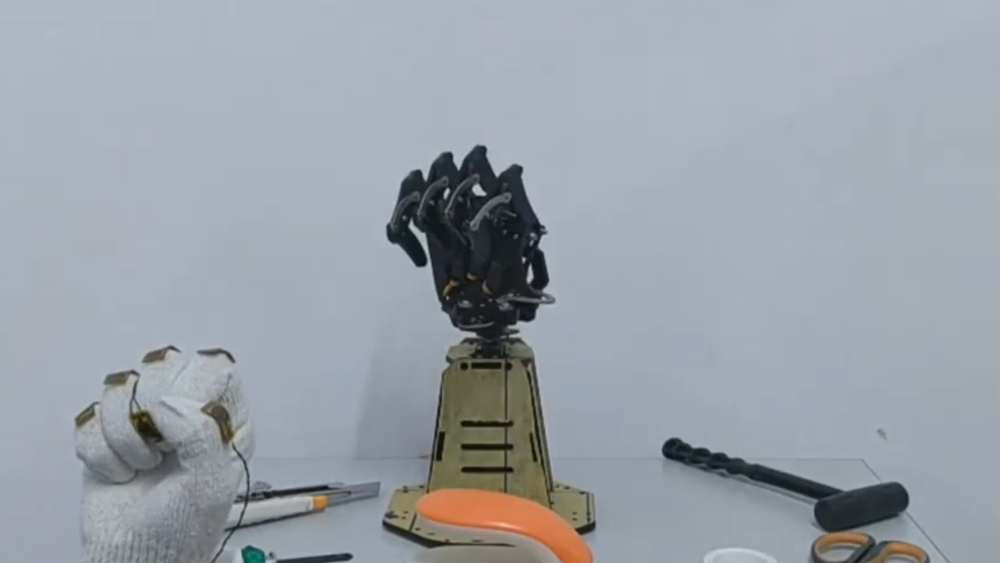
UNIVERSITY PARK, Pa. — A research team, including Huanyu “Larry” Cheng, James L. Henderson Jr. Memorial Associate Professor of Engineering Science and Mechanics at Penn State, is using pressure sensors — tiny devices, roughly the size of a paperclip, that can measure the force applied over an area — to design a highly sensitive electronic “skin” to use alongside robots and prosthetic limbs.
Cheng…
UNIVERSITY PARK, Pa. — The Center for Glass Research and the Materials Research Institute’s (MRI) Materials Characterization Lab (MCL) will hold a webinar titled “Optimizing Glass Surfaces for Manufacturing: From Root Causes to Real Solutions” on Wednesday, April 8, from 1 to 2 p.m.
Penn State’s glass research ecosystem enables partners to address surface‑driven performance challenges, such as ra…
UNIVERSITY PARK, Pa. — On March 20, during Brain Awareness Week, Nikki Crowley, associate professor of biology and of biomedical engineering, Huck Chair in Neural Engineering and director of the Penn State Neuroscience Institute at University Park and Santhosh Girirajan, T. Ming Chu Professor of Genomics and head of the Department of Biochemistry and Molecular Biology visited The Village at Penn …
UNIVERSITY PARK, Pa. — Millions of people in the United States have chronic wounds, including those living with diabetes, patients recovering from burns, post-surgical patients and other people with injuries. For clinicians, early detection of infection, inflammation or other recovery setbacks can be challenging to detect, primarily because patients may be self-reporting or awaiting lab results. …
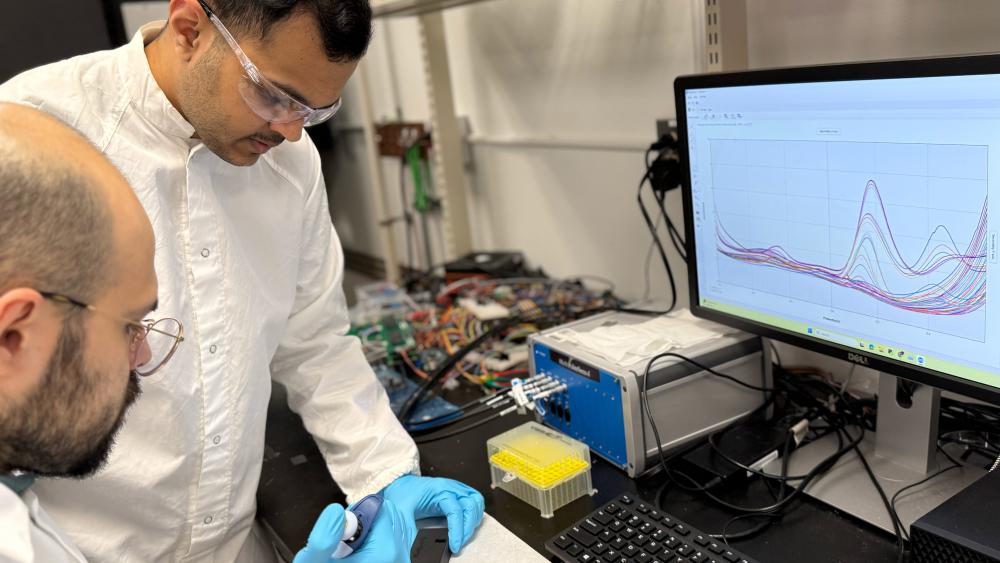
UNIVERSITY PARK, Pa. — Accurately measuring small shifts in biological markers, like proteins and neurotransmitters, or harmful chemicals in the water supply can identify critical problems before they have a chance to impact patients or the environment. While some existing sensors can monitor the microscopic matter behind these issues, they often have limitations. A primary example is a device kn…
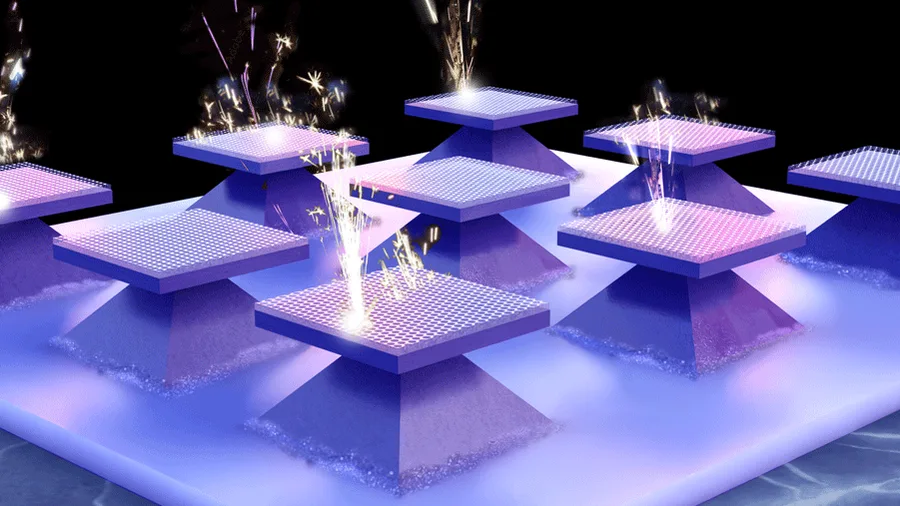
UNIVERSITY PARK, Pa. — Making computer chips smaller is not just about better design. It also depends on a critical step in manufacturing called patterning, where nanoscale structures are carved into materials to form the circuits inside everything from smartphones to advanced sensors.
To create these patterns, engineers use a hard mask, a thin, durable material layer that protects selected regio…
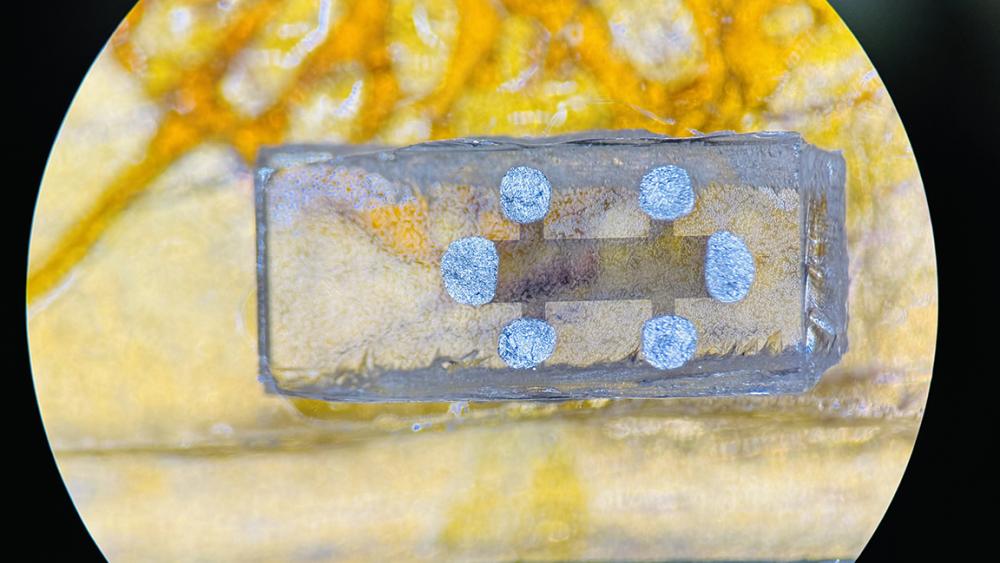
UNIVERSITY PARK, Pa. — The semiconductor chips driving modern-day computer processors are covered in billions of individual transistors, each of which can overheat under stress, causing steep drops in performance. To address this, a team led by researchers at Penn State has developed a microscopic thermometer, smaller than an ant’s antenna, that can be integrated onto a chip to accurately track t…
UNIVERSITY PARK, Pa. — The Penn State Huck Institutes of the Life Sciences announced a call for 2026-27 Seed Grant Program funding proposals, due by May 1. Huck seed grants foster innovative, interdisciplinary and collaborative life sciences research with the potential to drive scientific breakthroughs and generate new research directions leading to impactful externally funded research.
2026-27 H…
UNIVERSITY PARK, Pa. — Allison Beese, professor of materials science and engineering and of mechanical engineering at Penn State, has been named the senior associate director of Penn State’s new National Security Institute. She will begin her appointment on May 15.
The National Security Institute will enhance research outside the scope of Penn State’s Applied Research Laboratory (ARL), a Departme…
UNIVERSITY PARK, Pa. — Two Penn State faculty members have been elected to the National Academy of Engineering (NAE). Members of the class of 2026 include Barbara J. Arnold, chair and professor of practice of mining engineering in the John and Willie Leone Family Department of Energy and Mineral Engineering, and Qiming Zhang, Harvey F. Brush Chair and Professor of Electrical Engineering.
“Academy…
UNIVERSITY PARK, Pa. — A stretchy, conductive type of plastic could help power the next generation of implantable biomedical devices, like longer-lasting pacemakers or glucose monitors, according to Enrique Gomez, professor of chemical engineering at Penn State.
Using advanced imaging technology to examine a stretchy material commonly used in soft robotics and touchscreens known as PEDOT:PSS, Gom…
UNIVERSITY PARK, Pa. — In the race to lighter, safer and more efficient electronics — from electric vehicles to transcontinental energy grids — one component literally holds the power: the polymer capacitor. Seen in such applications as medical defibrillators, polymer capacitors are responsible for quick bursts of energy and stabilizing power rather than holding large amounts of energy, as oppose…
UNIVERSITY PARK, Pa. — Solar power continues to grow — accounting for most new capacity added to U.S. electric grids in 2024 — but the mid-1950s technology most often used to capture the sun’s energy comes with environmental costs.
Manufacturing silicon solar panels is an energy-intensive process that requires toxic chemicals and creates recycling challenges. But lower-impact organic solar cells,…







 research.io