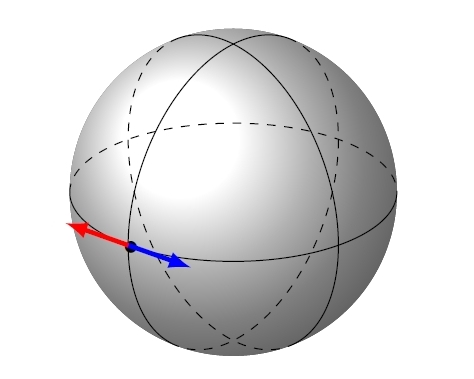
A new characterization of the Standard Model gauge group as the group of symmetries of an octonionic qutrit that restrict to act as unitary operators on an ordinary qutrit and, within that, a qubit.
Readers may have noticed that I haven't been very active here for a while. That isn't because I haven't felt the "blogging urge", but because I felt that the things I want to blog about right now wouldn't be...
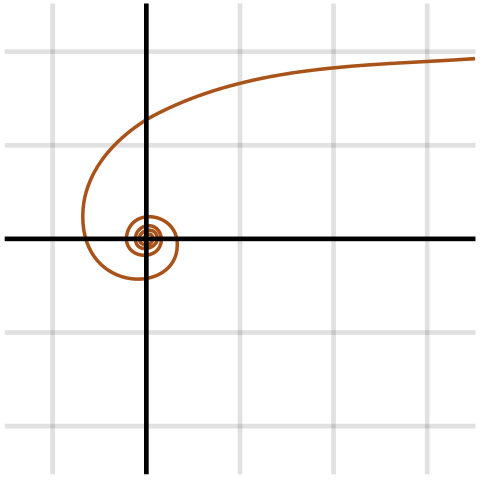
In the last episode of my column in Notices of the American Mathematical Society, we looked at a particle moving in an attractive central force whose strength is proportional to the inverse cube of the distance from the origin....
Geometry and the Exceptional Jordan Algebra
Posted by John Baez
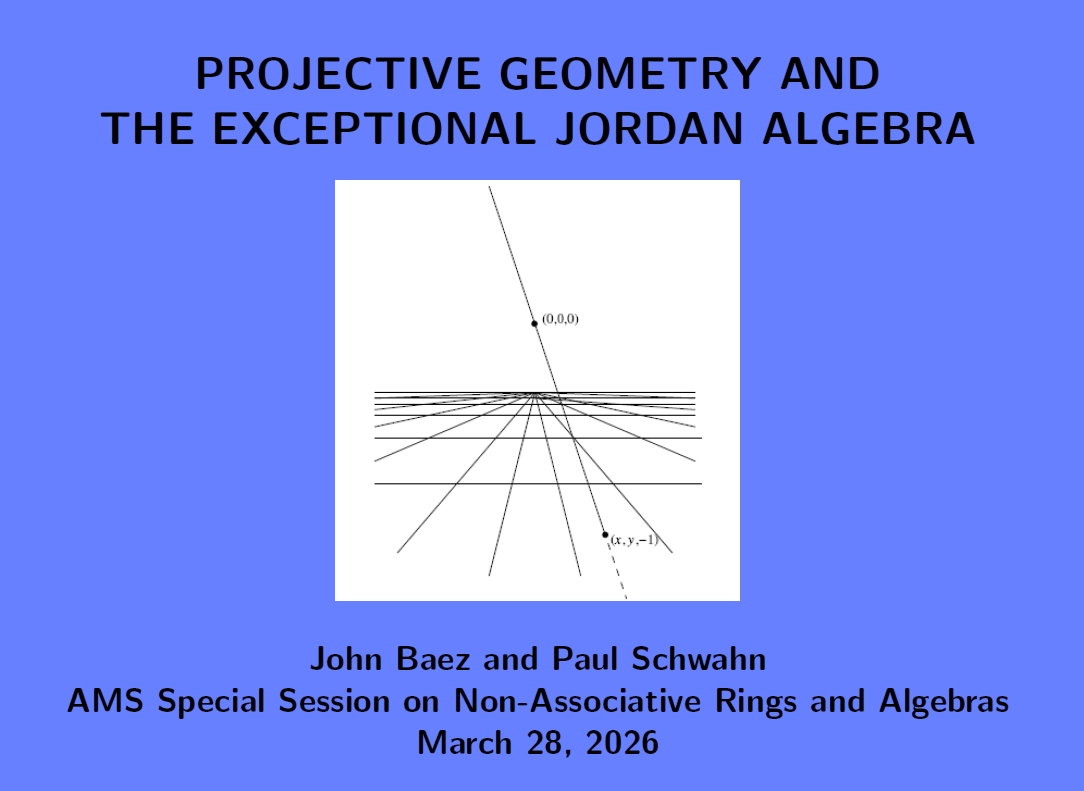
I’m giving a talk online tomorrow at the 2026 Spring Southeastern Sectional Meeting of the American Mathematical Society, in the Special Session on Non-Associative Rings and Algebras. The organizers are Layla Sorkatti and Kenneth Price. I doubt the talk will be recorded, but you can see my slides.
Abstract. Dubois-Violette and Todoro…
The Agent That Doesn’t Know Itself
Posted by John Baez
guest post by William Waites
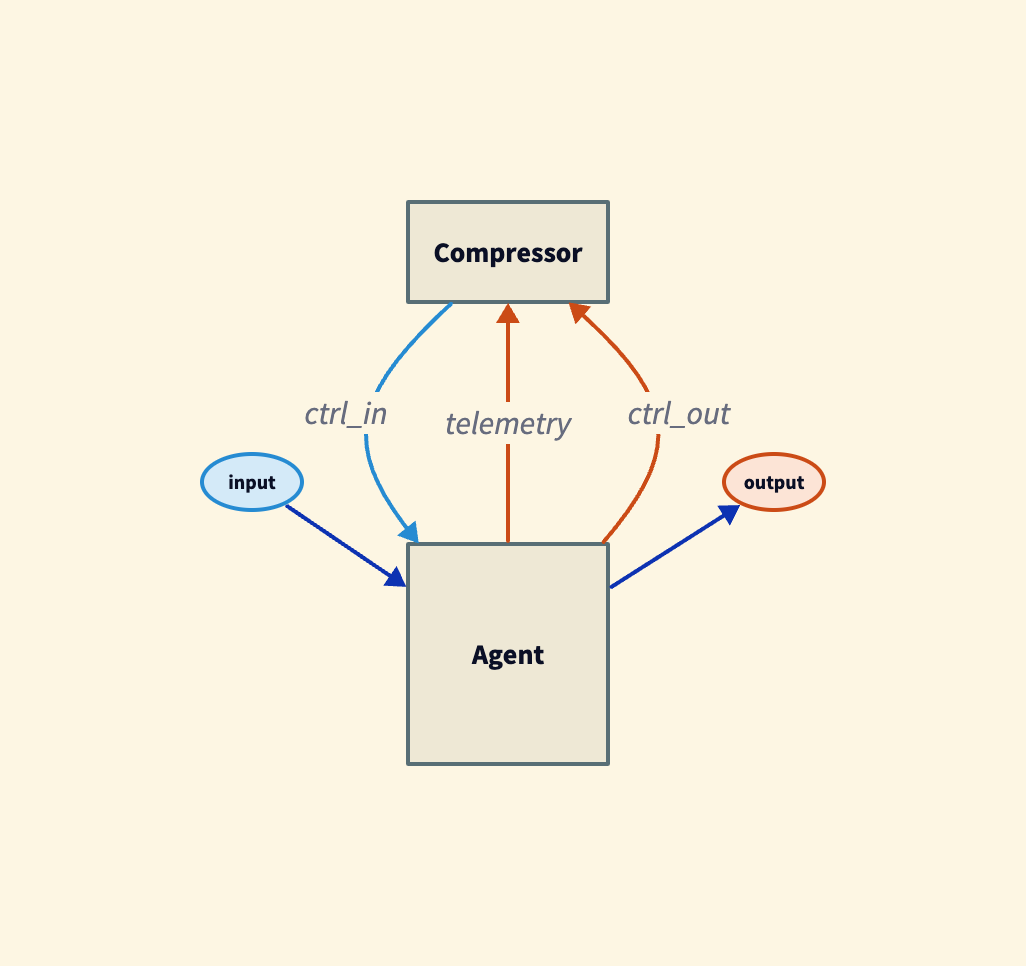
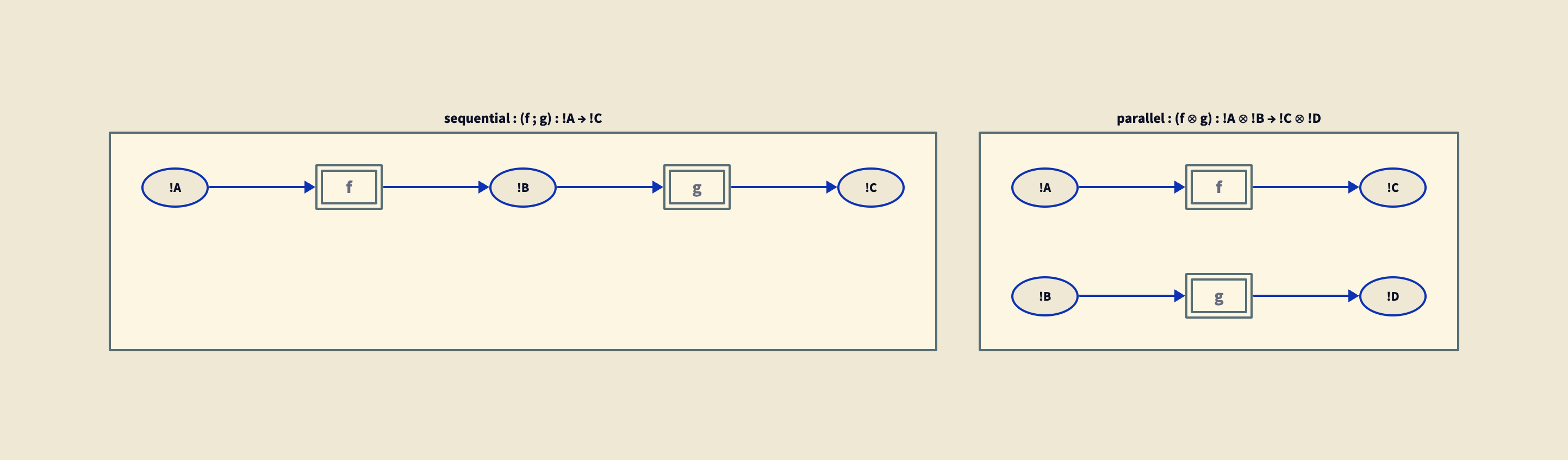
The previous post introduced the plumbing calculus: typed channels, structural morphisms, two forms of composition, and agents as stateful morphisms with a protocol for managing their state. The examples were simple. This post is about what happens when the algebra handles something genuinely complex.
To get there…
A Typed Language for Agent Coordination
Posted by John Baez
guest post by William Waites
How category theory can be used to help coordinate collections of interacting large language models.
Agent frameworks are popular. (These are frameworks for coordinating large language model agents, not to be confused with agent-based modelling in the simulation sense.) There are dozens of them for wrapping l…
The Univalence Principle
Posted by Mike Shulman
(guest post by Dimitris Tsementzis, about joint work with Benedikt Ahrens, Paige North, and Mike Shulman)
The Univalence Principle is the informal statement that equivalent mathematical structures are indistinguishable. There are various ways of making this statement formally precise, and a long history of work that does so. In our recently-publishe…
Categorifying Riemann’s Functional Equation
Posted by John Baez
David Jaz Myers just sent me some neat comments on this paper of mine:
and he okayed me posting them here. He’s taking the idea of categorifying the Riemann zeta function, explained in my paper, and going further, imagining what it might mean to categorify Riemann’s functional equation
where is the ‘completed’ Riemann zeta function, …
Coxeter and Dynkin Diagrams
Posted by John Baez
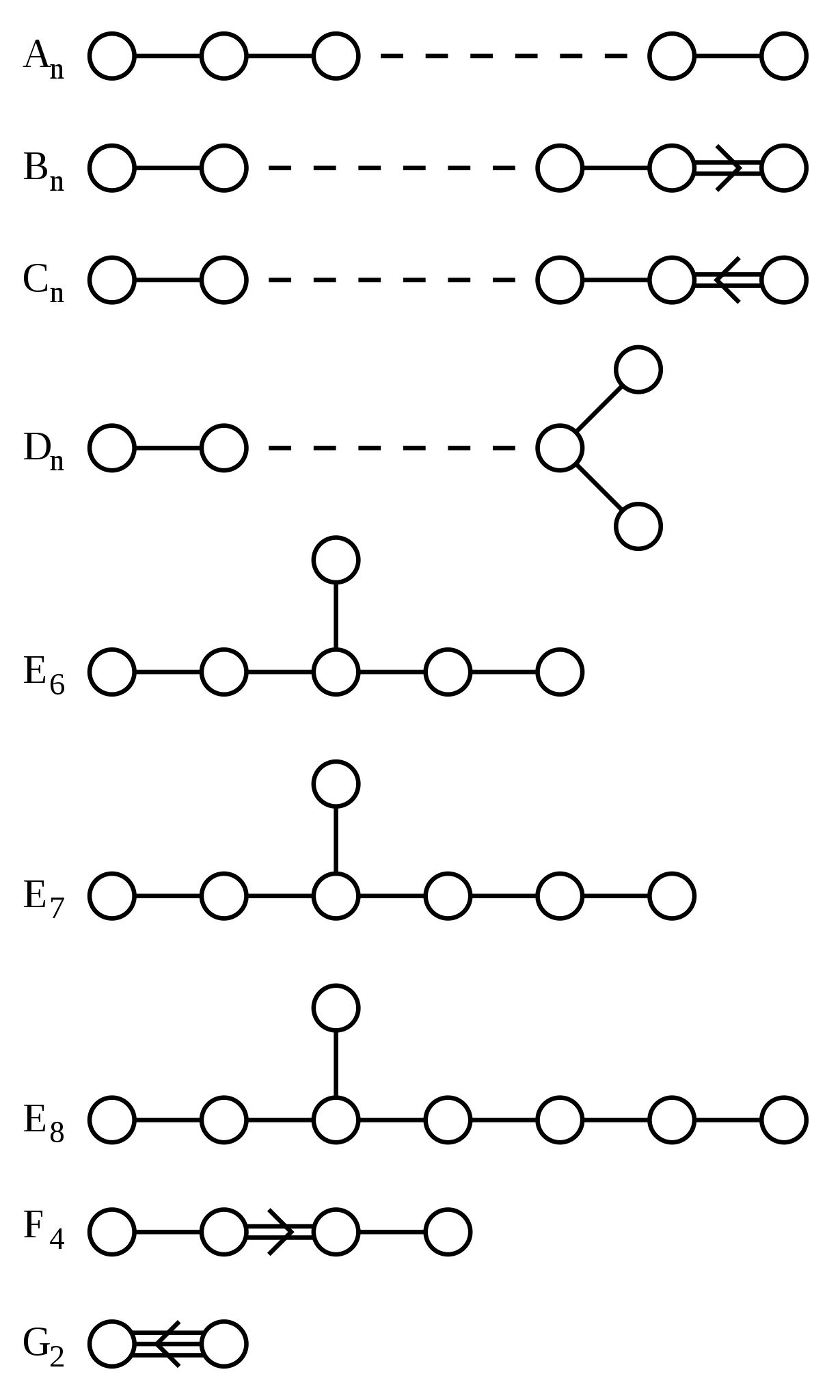
Dynkin diagrams have always fascinated me. They are magically potent language — you can do so much with them!
Here’s my gentle and expository intro to Dynkin diagrams and their close relative, Coxeter diagrams:
Abstract. Coxeter and Dynkin diagrams classify a wide variety of structures, most notably finite reflection groups, lattices having such gro…
Octonions and the Standard Model (Part 13)
Posted by John Baez
When Lee and Yang suggested that the laws of physics might not be invariant under spatial reflection — that there’s a fundamental difference between left and right — Pauli was skeptical. In a letter to Victor Weisskopf in January 1957, he wrote:
“Ich glaube aber nicht, daß der Herrgott ein schwacher Linkshänder ist.”
(I do not believe…
log|x| + C revisited
Posted by Mike Shulman
A while ago on this blog, Tom posted a question about teaching calculus: what do you tell students the value of is? The standard answer is , with an “arbitrary constant”. But that’s wrong if means (as we also usually tell students it does) the “most general antiderivative”, since
is a more general antiderivative, for two arbitrary constants and . (I’m w…
Octonions and the Standard Model (Part 12)
Posted by John Baez
Having spent a lot of time pondering the octonionic projective plane and its possible role in the Standard Model of particle physics, I’m now getting interested in the ‘bioctonionic plane’, which is based on the bioctonions rather than the octonions .
The bioctonionic plane also has intriguing mathematically connections to the Standar…
Beyond the Geometry of Music
Posted by John Baez
Yesterday I had a great conversation with Dmitri Tymoczko about groupoids in music theory. But at this Higgs Centre Colloquium, he preferred to downplay groupoids and talk in a way physicists would enjoy more. Click here to watch his talk!
What’s great is that Tymoczkyo not faking it: he’s really found deep ways in which symmetry shows up pervasive…
The Inverse Cube Force Law
Posted by John Baez
Here’s a draft of my next column for the Notices of the American Mathematical Society. It’s about the inverse cube force law in classical mechanics.
Newton’s Principia is famous for his investigations of the inverse square force law for gravity. But in this book Newton also did something that was rarely discussed until the 1990s. He figured out what …
Second Quantization and the Kepler Problem
Posted by John Baez
The poet Blake wrote that you can see a world in a grain of sand. But even better, you can see a universe in an atom!
Bound states of hydrogen atom correspond to states of a massless quantum particle moving at the speed of light around the Einstein universe — a closed, static universe where space is a 3-sphere. We need to use a spin-½…
Dynamics in Jordan Algebras
Posted by John Baez
In ordinary quantum mechanics, in the special case where observables are described as self-adjoint complex matrices, we can describe time evolution of an observable using Heisenberg’s equation
where is a fixed self-adjoint matrix called the Hamiltonian. This framework is great when we want to focus on observables rather than states. But Heisenberg’s…
A Complex Qutrit Inside an Octonionic One
Posted by John Baez
Dubois-Violette and Todorov noticed that the Standard Model gauge group is the intersection of two maximal subgroups of . I’m trying to understand these subgroups better.
Very roughly speaking, is the symmetry group of an octonionic qutrit. Of the two subgroups I’m talking about, one preserves a chosen octonionic qubit, while the other…