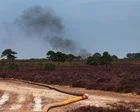
Key tourist route closed and residents rallying round as battle against wildfire expected to go on for several days The battle to contain a large wildfire spreading across the New Forest will go on for several days, experts have said, as wind changes and a desiccated landscape fuel the flames. Smoke billowed above the deserted A31 road, the main tourist route into the New Forest national park whe…
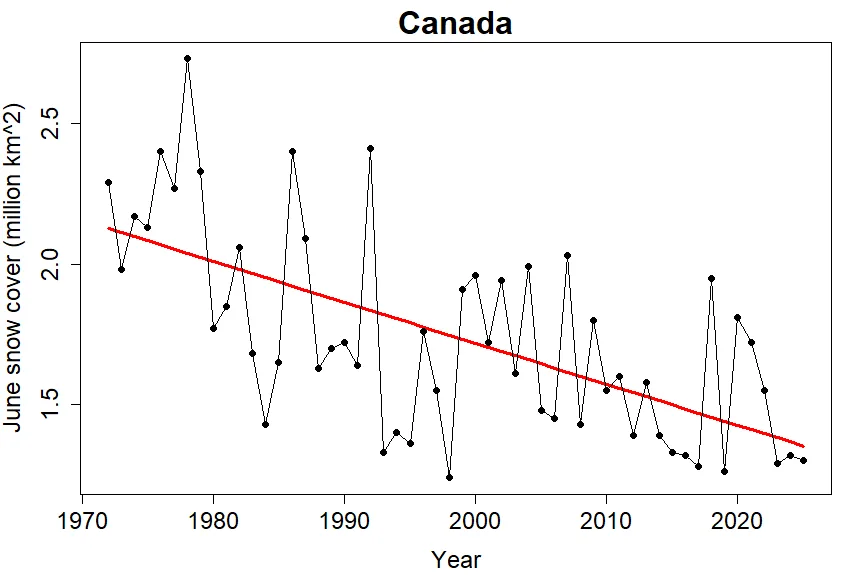
The forest in Canada is burning, and the smoke is a big problem for both Canadians and Americans as it makes its way across their country and into ours. Our president has blamed Canada for mismanaging their forests and threatens ... Continue reading ...
Scientific Data, Published online: 13 July 2026; doi:10.1038/s41597-026-07695-1 A high spatial resolution daily fire perimeter progression dataset for wildfires in the Western United States: 2020–2024
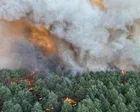
Wildfire quickly burnt more than 800 hectares, with villages evacuated, highway partly closed and high-speed rail disrupted French officials rushed two firefighting planes to the Paris region on Sunday after a “very virulent” fire of “exceptional scale” erupted in the sprawling Fontainebleau forest about 60km (40 miles) south-east of the capital. The fire began late afternoon in the one-time roya…
Wildfire risk mitigation on private property is central to reducing community wildfire vulnerability. Homeowners have control over many of the key factors that contribute to wildfire risk on their parcels, yet vulnerable conditions persist. One potential explanation is a misalignment between homeowners' and trained assessors' perceptions of parcel-level wildfire risk. Prior research has documente…
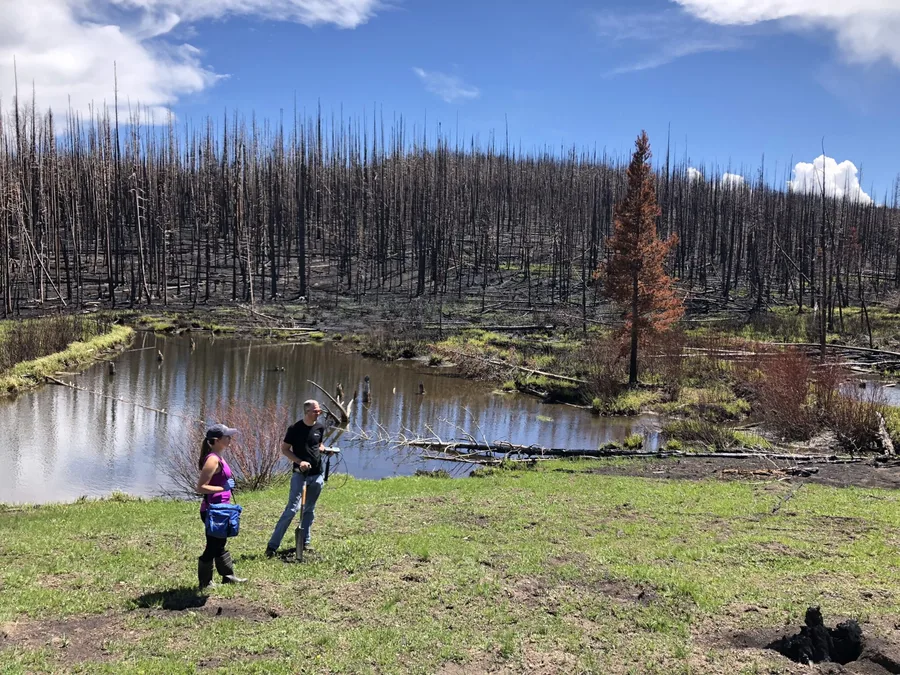
When asked to picture a wildfire, most people imagine a forest—trees burning, smoke billowing, and flames casting shadows. Images of wildfire are becoming more familiar as large fires make headlines across the US. But the effects of fire extend beyond forests. Streams and rivers flowing through burned areas are also impacted by wildfire and can carry those impacts to downstream communities and ec…
Background Wildfire risk in the United States is rising and remains a land management priority. The quantitative wildfire risk assessment (QWRA) framework integrates fuels, topography, weather and values at risk to estimate the potential change in value from wildfire. Within this, response functions (RFs) represent how values respond to fire intensity. These are often based on expert judgment, bu…
This study investigated the ignition and burning behavior of single foliage elements and naturally occurring foliage groups under controlled convective heating. Across all species, droplet ejection and combustion was observed, with more frequent ejection and burning occurring in foliage groups. The combustion of ejected droplets represented a distinct ignition phenomenon and contributed to early …
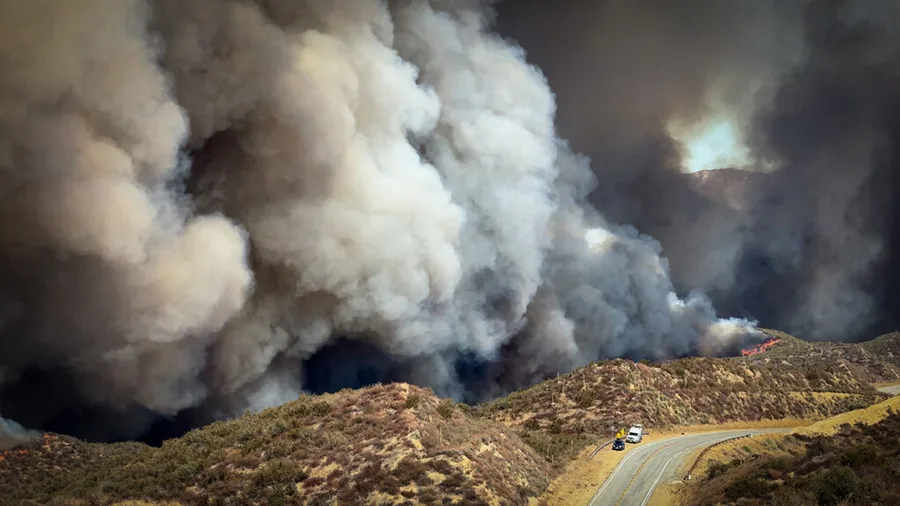
Researchers used wind speeds, topography, and vegetation availability to model the outcomes of the January 2025 Los Angeles wildfires, including the Hughes Fire, seen here. Credit: Andrew Avitt, USDA Forest Service/Flickr , Public Domain
Land and Atmosphere Precursors to Fuel Loading, Wildfire Ignition and Post‐Fire Recovery
Alizadeh, Mohammad Reza; Adamowski, Jan; Entekhabi, Dara
Land surface‐atmosphere coupling and soil moisture memory are shown to combine into a distinct temporal pattern for wildfire incidents across the western United States. We investigate the dynamic interplay of observed soil moisture, vegetation water con…
The huge, long-lasting wildfires that have become increasingly common in recent years can cause changes in soil chemistry that affect water contamination, air quality and plant growth. These changes, however, are poorly monitored and rarely factor into post-fire recovery efforts or risk assessments, according to a CSU-led article published May 14 in Nature Reviews Earth & Environment. The post CS…
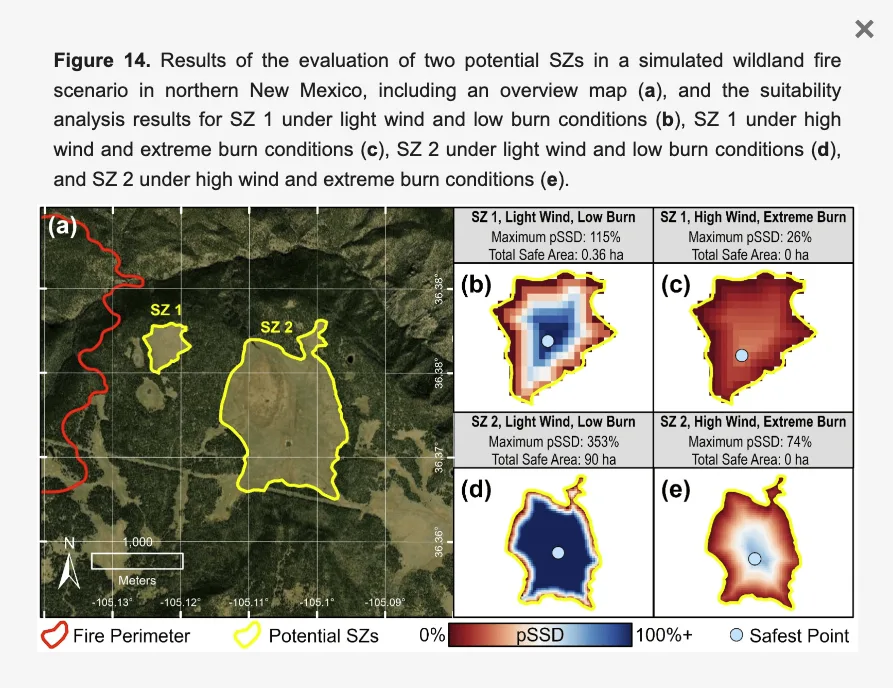
Abstract: Safety zones (SZs) are critical tools that can be used by wildland firefighters to avoid injury or fatality when engaging a fire. Effective SZs provide safe separation distance (SSD) from surrounding flames, ensuring that a fire’s heat cannot cause burn injury to firefighters within the SZ. Evaluating SSD on the ground can be challenging, […]
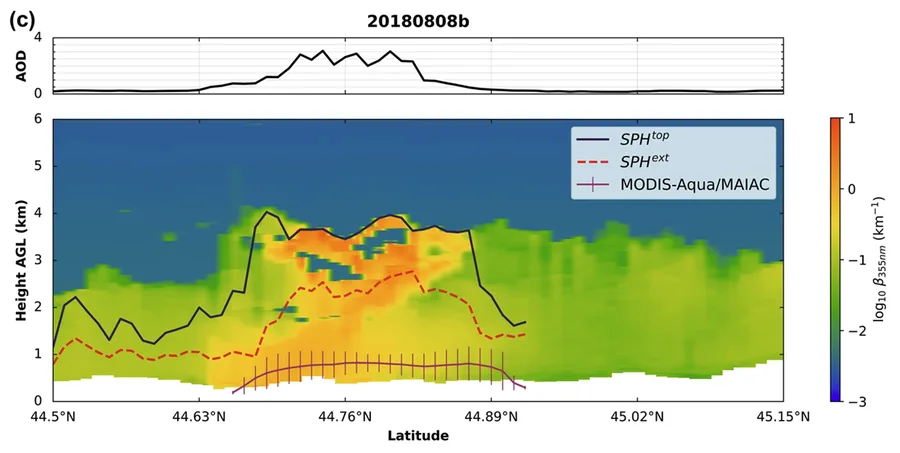
Abstract: As wildfires intensify and fire seasons lengthen across the western U.S., the development of applicable models that can predict the density of smoke plumes and track wildfire-induced air pollution exposures has become critical. Wildfire smoke plume height is a key indicator of the vertical placement of plume mass emitted from wildfire-related aerosol sources in […]
A new study led by the USDA Forest Service’s Pacific Northwest Research Station examines the context surrounding the 2020 Labor Day fires in western Oregon and Washington.
UC scientists and researchers discussed fire in the wildland-urban interface, or WUI, at the second UC wildfire symposium Wednesday. UC President Michael Drake began by explaining what was discussed in the first wildfire symposium before touching on the WUI, where the built environment comes in contact with the natural lands. “Here in California, we are seeing firsthand… The post UC wildfire symp…
This new online seminar series will cover the breadth of wildland fire research relevant to California and introduce researchers to new topics and research groups across the state. Topics will include fire weather, wildfire risk, fire ecology, remote sensing, emissions, fire dynamics, fire modeling and public health. Featuring many early-career researchers, this series is aimed at… The post New C…
With a new $2 Million grant from the National Science Foundation, an interdisciplinary team of researchers including Adam Watts, Ph.D. of the Desert Research Institute (DRI) in Reno are initiating […] The post Camp Fire tragedy leads to new wildfire research appeared first on DRI .
The 2014 Carlton Complex wildfire in north central Washington was the largest contiguous fire in state history. In just a single day, flames spread over 160,000 acres of forest and rangeland and ultimately burned more than 250,000 acres in the midst of a particularly hot, dry summer.
The wildfire, driven by strong winds and explosive growth, was unprecedented in how it burned the landscape, destr…
In head fires, the fire travels in the same direction as the wind. Head fires produce the fastest rate of spread, highest flame lengths, and most intense fires. In the....


 research.io