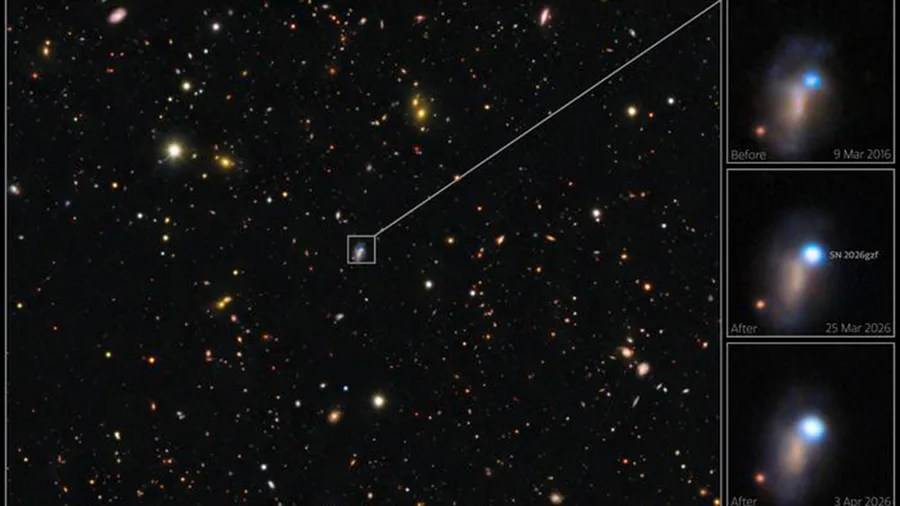
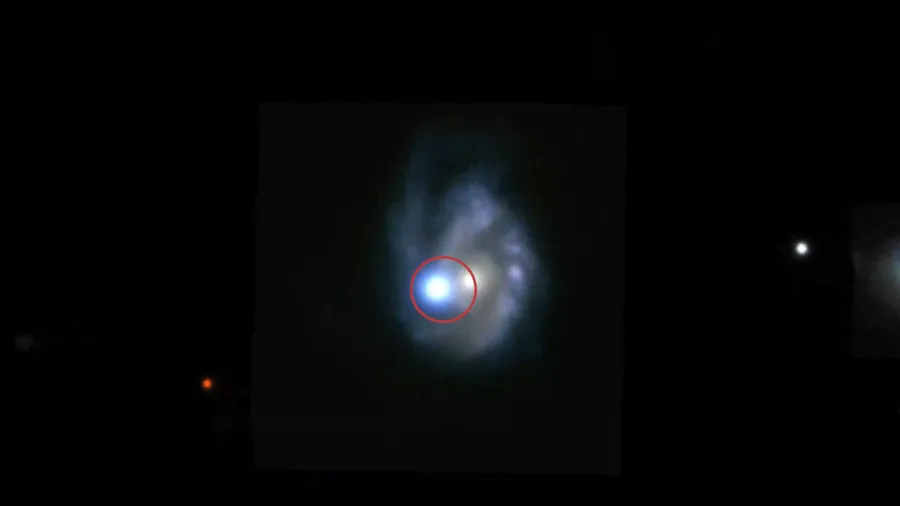
A team of telescopes around the world, including the newly activated Vera C. Rubin Observatory, joined forces to observe the first shocking moments of a supernova explosion in unprecedented detail.
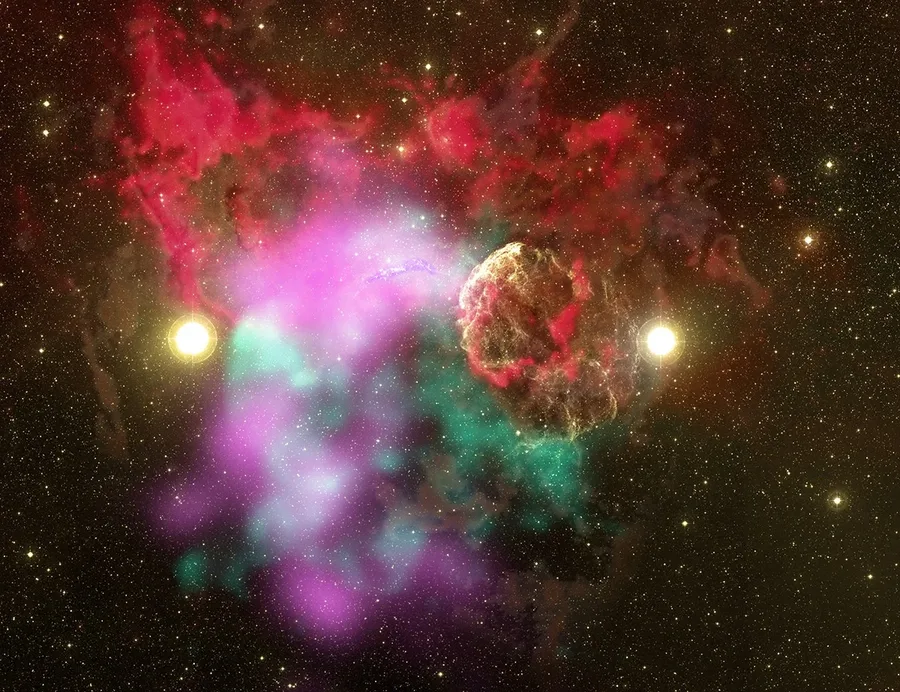
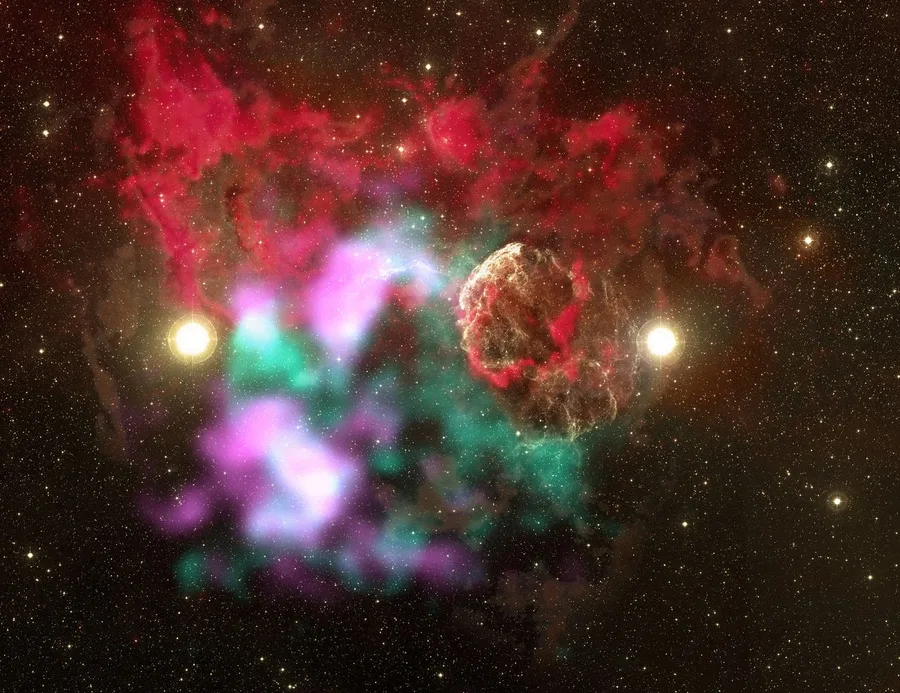
Astronomers have identified a supernova remnant beside the well-known Jellyfish Nebula (IC 443), and evidence suggests both are the wreckage of two stars that once orbited each other before exploding separately.
For the first time ever, astronomers have found two sibling stars that each exploded as supernovas, gaining a new view of these epochal cosmic cataclysms
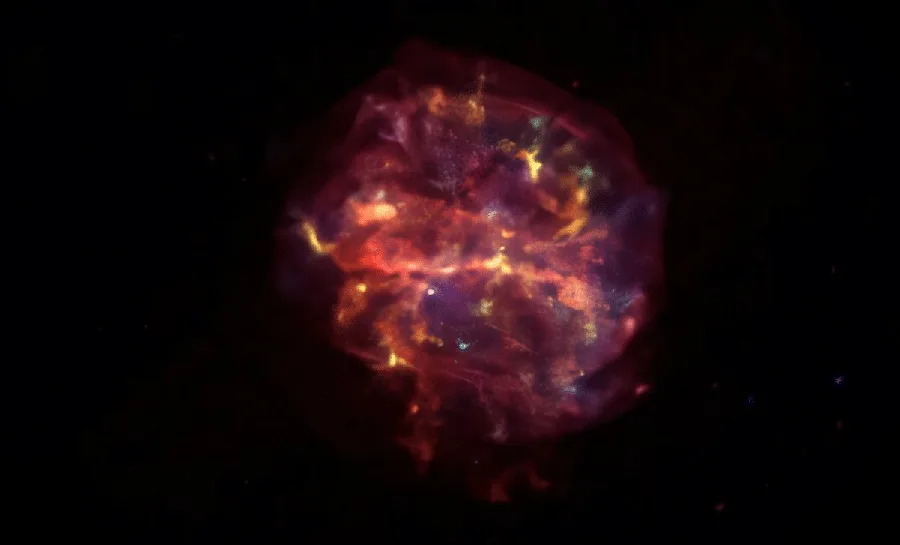
A decade of NASA Chandra observations has revealed that the young supernova remnant G292.0+1.8 is expanding unevenly, uncovering a puzzling phenomenon that could reshape our understanding of stellar explosions.
Astronomers studying the rare supernova SN 2021yfj discovered material from one of the deepest layers of a dying star, providing a rare look at its hidden interior. The finding confirms key theories about how massive stars forge the elements that help build planets, worlds, and life. Astronomers have glimpsed the inner structure of a dying […]
On July 4, 1054, a supernova explosion occurred, marking the death of a star thought to be nine to 11 times more massive than our Sun. This event was observed and recorded around the ancient world, including by Japanese, Korean, and Arab astronomers. Anasazi Native American artists may have drawn a pictograph symbolizing the event Continue reading "July 4, 1054: The Crab Nebula supernova explodes…
Astronomers studying the rare supernova SN 2021yfj discovered material from one of the deepest layers of a dying star, providing a rare look at its hidden interior. The finding confirms key theories about how massive stars forge the elements that help build planets, worlds, and life.
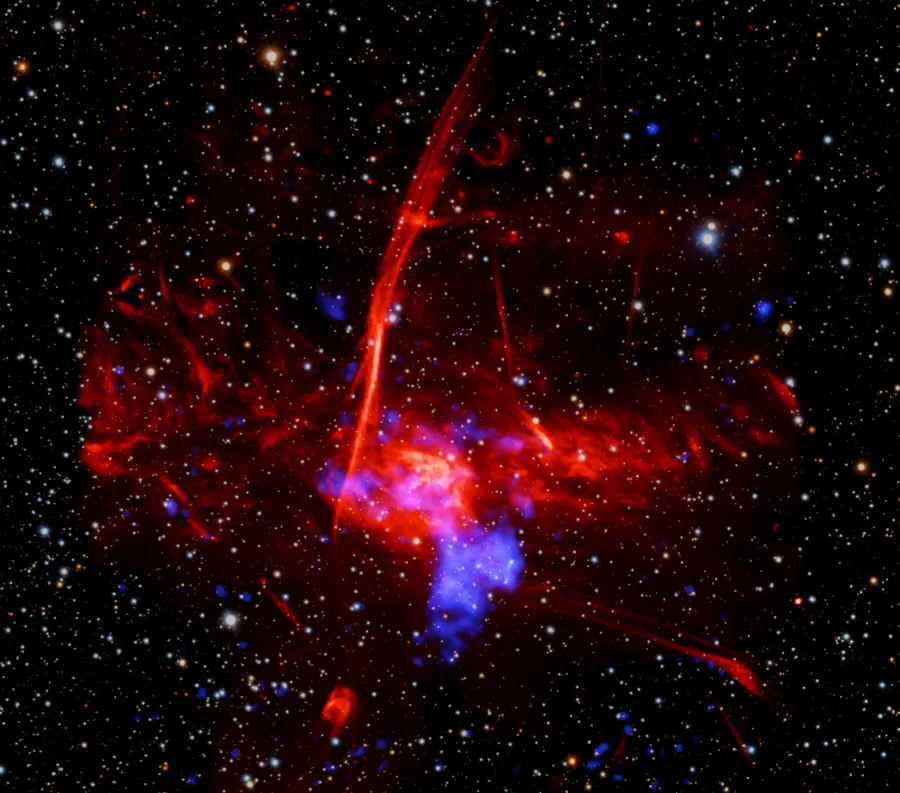
Using data from NASA’s Chandra X-ray Observatory, astronomers may have found a supernova remnant – seen in this June 11, 2026, image – in an intriguing neighborhood in the middle of the Milky Way galaxy. Supernova remnants are the expanding remains of exploded stars and provide elements like iron, oxygen, and silicon that are critical […]
NASA's Fermi Gamma-ray spacecraft has observed a super-bright, supercharged supernova explosion powered up by the creation of a highly magnetic dead star, or magnetar.
When stars at least thirty times the mass of our Sun reach the end of their lives, astronomers had assumed they simply winked out, collapsing silently into black holes under the force of gravity from which not even light can escape. No bright supernova explosion, no spectacular death throes, just a quiet gravitational implosion.
Except that's not what happened with SN 2022esa.
A team of researche…
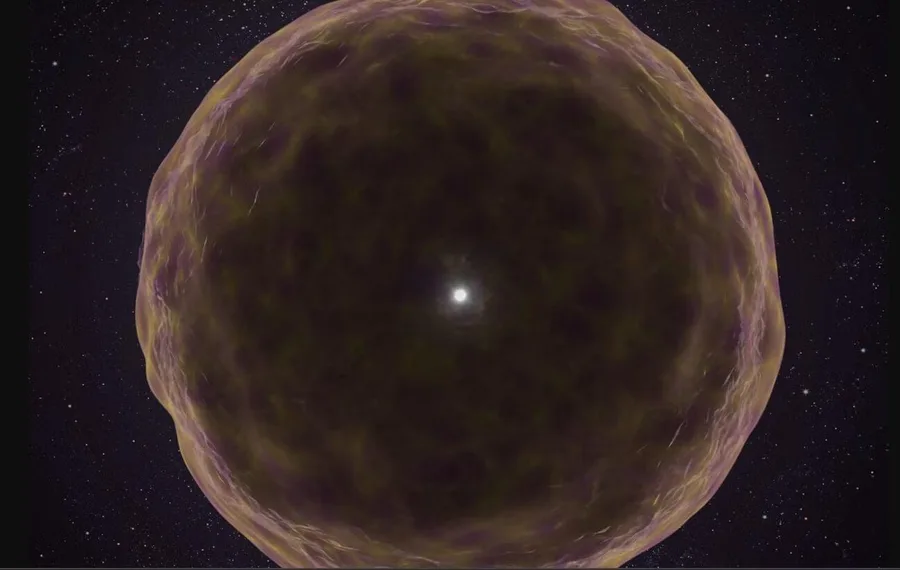
Astronomers unveil the surprising hidden geometry of a supernova
- Date:
- November 16, 2025
- Source:
- ESO
- Summary:
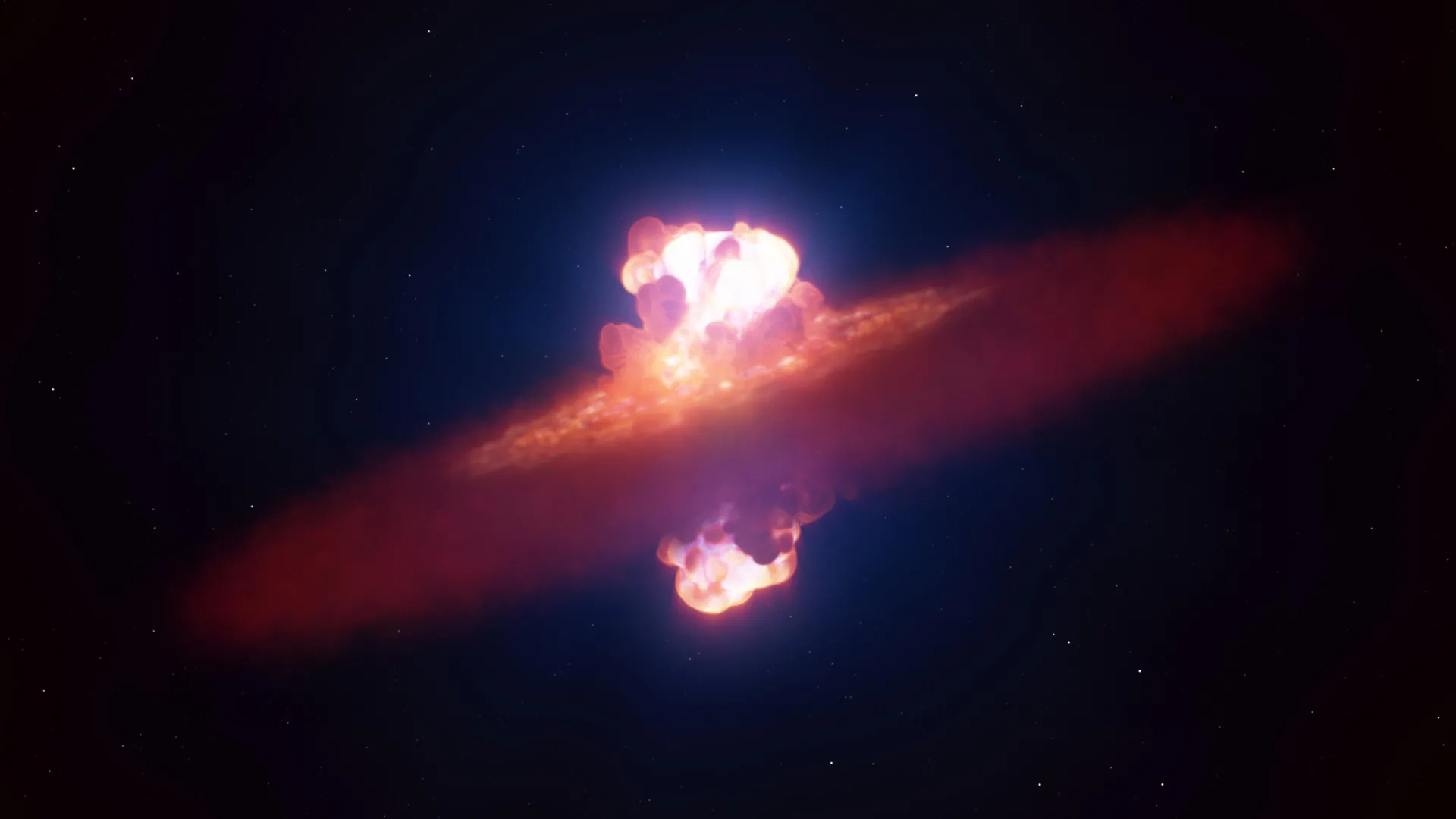
- Astronomers have, for the first time, recorded the moment a star’s explosion broke through its surface. The nearby supernova, SN 2024ggi, revealed a surprisingly olive-shaped blast when studied with ESO’s Very Large Telescope. The discovery helps scientists better understand t…
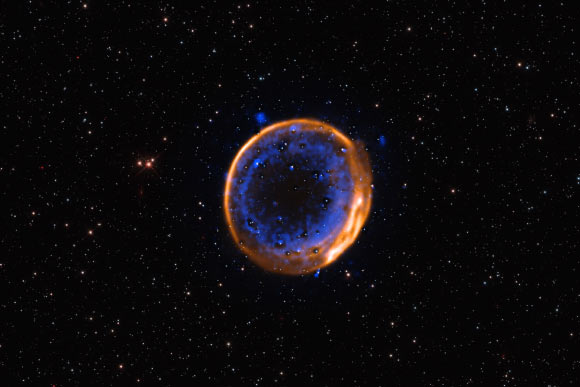
Astronomers using ESO’s Very Large Telescope (VLT) have imaged SNR 0509-67.5, a very young (300-350 years old) remnant of Type Ia supernova, and spotted patterns that confirm its star suffered a pair of explosive blasts. The post VLT Captures Image of Double-Detonation Supernova Remnant appeared first on Sci.News: Breaking Science News .
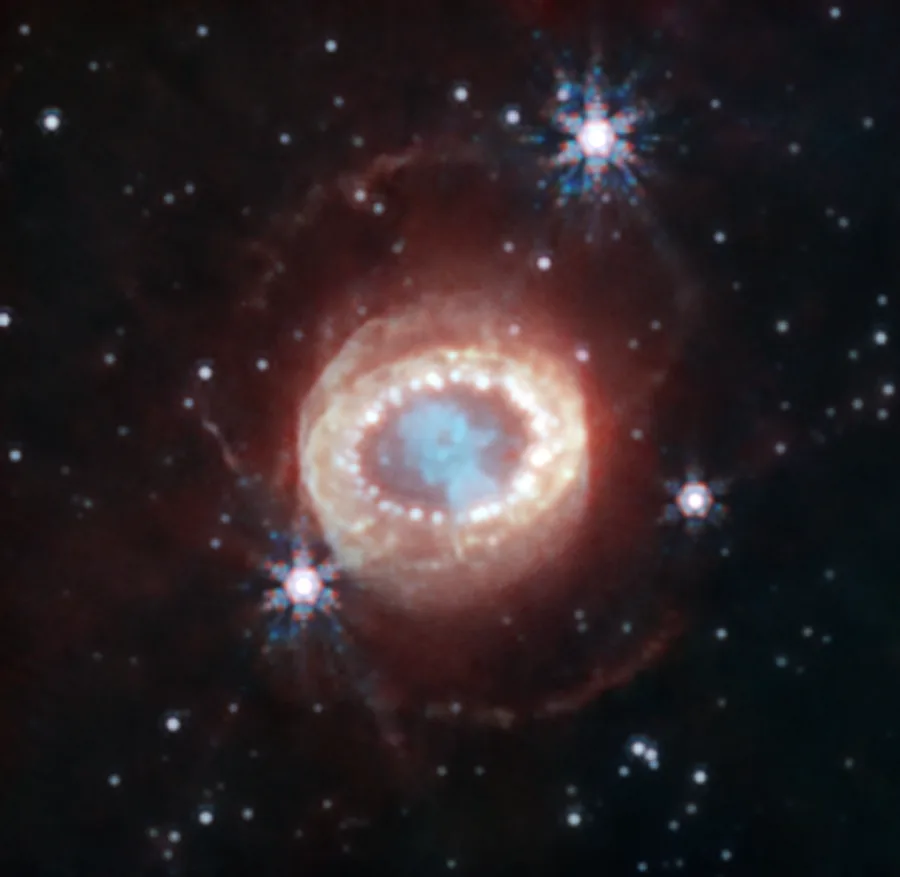
NASA’s James Webb Space Telescope has begun the study of one of the most renowned supernovae, SN 1987A (Supernova 1987A). Located 168,000 light-years away in the Large Magellanic Cloud, SN 1987A has been a target of intense observations at wavelengths ranging from gamma rays to radio for nearly 40 years, since its discovery in February of 1987. The post STScI: Webb Reveals New Structures Within I…
A supernova at least twice as bright and energetic, and likely much more massive than any yet recorded has been identified by an international team of astronomers, led by the University of Birmingham. The team, which included experts from Harvard, Northwestern University and Ohio University, believe the supernova, dubbed SN2016aps, could be an example of
Supernova (SN) Refsdal — Key Points Astronomers have been trying to understand space for thousands of years. Supernova Refsdal was the first known multiply-imaged supernova. Multiple images of the supernova are produced by strong gravitational lensing. Astronomers predicted the reappearance of the supernova before it was observed. The multiple images of the supernova exhibit measurable...
An unusual supernova studied by multiple telescopes, including the SOAR telescope and other telescopes at the National Science Foundation’s (NSF) Cerro Tololo Inter-American Observatory (CTIO) and NSF’s Kitt Peak National Observatory (KPNO), is thought to herald the birth of a new black hole or neutron star, caught at the exact moment of its creation. The post NOAO: Unusual Supernova Opens a Rare…
A supernova occurs when a star explodes. From the earth, people can see a new start appear in the sky and then fade over months back to invisibility. Such explosion can be exploded can be caused by a massive star near the end of its life collapsing into a black hole or neutron star or a dead star; a white dwarf, collapsing into a neutron star. At the turn of the 19th century, the binary star syst…
In a galaxy far, far away, a massive star suffered a nasty double whammy. On Oct. 20, 2004, Japanese amateur astronomer Koichi Itagaki saw the star let loose an outburst so bright that it was initially mistaken for a supernova. The star survived, but for only two years. On Oct. 11, 2006, professional and amateur astronomers witnessed the star actually blowing itself to smithereens as Supernova 20…


 research.io