Nature Astronomy, Published online: 12 August 2026; doi:10.1038/s41550-026-02943-1 Some apparent single stars hide a dramatic history of past interaction with their companions. The authors show how chemical fingerprints left on a star’s surface can unmask these binary interaction products and unravel their past evolution.
We know what will happen to the Sun and our Solar System because we can look outward into the galaxy and examine older Sun-like stars in their evolutionary end states. Nothing lasts forever, including a star's hydrogen. Eventually, stars deplete their hydrogen fuel and leave the main sequence behind. Stars with masses similar to the Sun will first swell and turn red, then shed their outer layers.…
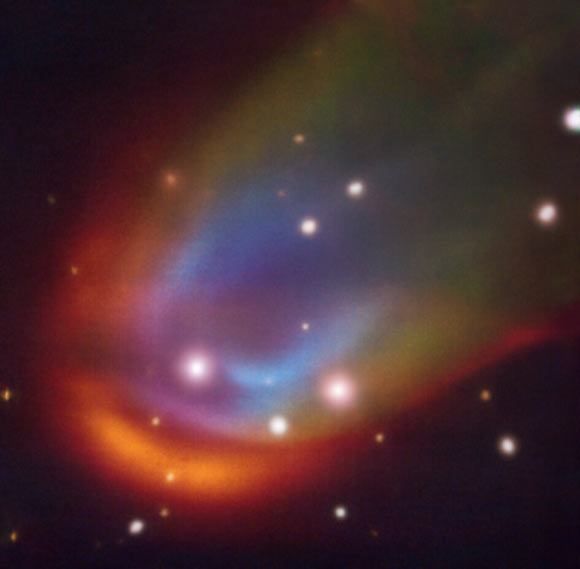
Using ESO’s Very Large Telescope (VLT), astronomers have captured a breathtaking shock wave around the white dwarf star 1RXS J052832.5+283824 (RXJ0528+2838 for short) -- a phenomenon that doesn’t fit existing models and could reshape our understanding of stellar evolution. The post Unexpected Shock Wave Detected around Nearby White Dwarf appeared first on Sci.News: Breaking Science News .
To better understand stellar evolution, the Space Telescope Science Institute (STScI) in Baltimore, Maryland, has launched an ambitious new initiative with Hubble called ULLYSES (UV Legacy Library of Young Stars as Essential Standards). The post STScI: Hubble Launches Large Ultraviolet-Light Survey of Nearby Stars appeared first on AURA Astronomy .
By Simon Jeffery, AOP Research Astronomer In 1930, Dorrit Hoffleit reported that star number #4749 in the Harvard List of variables had faded four times between 1897 and 1929, and identified it as an R Coronae Borealis (RCB) variable. RCB stars are luminous low-mass stars (red giants) with surfaces around […]
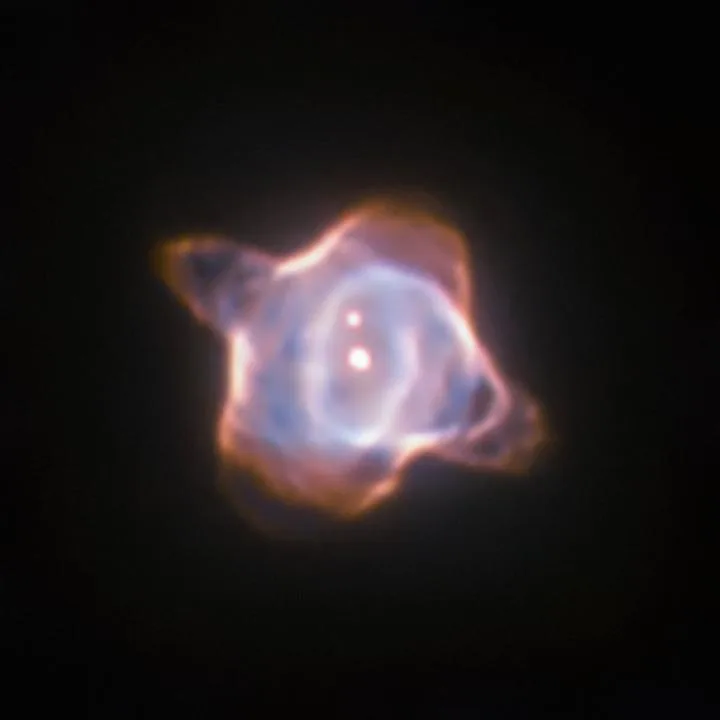
An international team of astronomers using Hubble have been able to study stellar evolution in real time. Over a period of 30 years dramatic increases in the temperature of the star SAO 244567 have been observed. Now the star is cooling again, having been reborn into an earlier phase of stellar evolution. This makes it the first reborn star to have been observed during both the heating and coolin…