star-formation
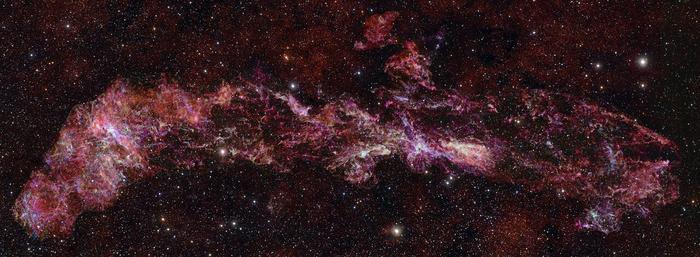
A vast new radio telescope mosaic of the galaxy’s turbulent core is forcing astronomers to rethink where and why stars form — and has already thrown up one object nobody can explain. Cold gas streams through the heart of the Milky Way in ribbons and filaments, feeding on itself, crashing into dense clumps, occasionally igniting a star — and mostly, for reasons nobody properly understands, not doi…
A team including Northwestern University astrophysicists has developed the most realistic, highest-resolution 3D simulation of star formation to date. The result is a visually stunning, mathematically-driven marvel that allows viewers to float around a colorful gas cloud in 3D space while watching twinkling stars emerge. Called STARFORGE (Star Formation in Gaseous Environments), the computational…
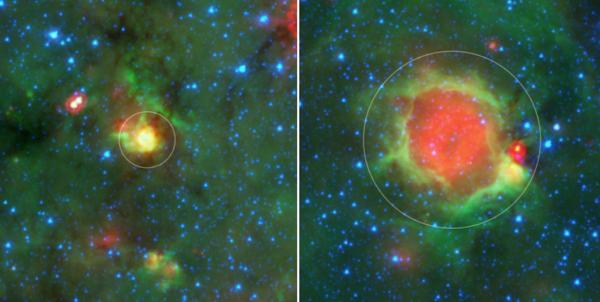
A serendipitous discovery by citizen scientists has provided a unique new window into the diverse environments that produce stars and star clusters, revealing the presence of “stellar nurseries” before infant stars emerge from their birth ... Read More
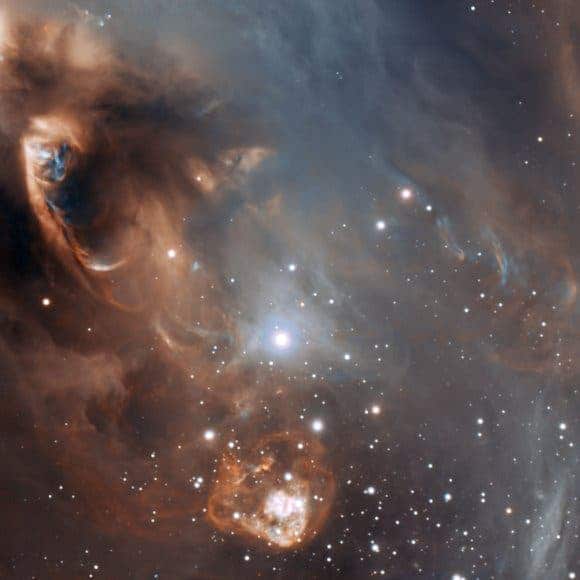
The process of starbirth is a beautiful yet violent one; newborn stars spew material into the surrounding gas, creating surreal photos, often with glowing bulbs, arcs or streaks. This kind of picture is always spectacular, and ESO’s Very Large Telescope (VLT) managed to catch quite a few of them on camera, delighting astronomers and the general public as well. This new image, released today, was …
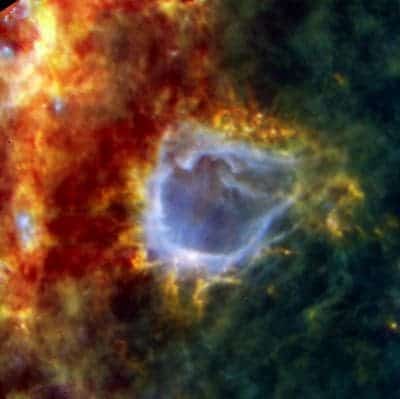
The first touchable scientific results of the Herschel infrared space observatory are spectacular indeed; not only is it showing previously hidden details of star formation, but it also shows thousands of distant galaxies “building” stars with incredible energy and covering the Milky Way in wonderfully coloured star clouds. Not only are the images spectacular by any standards, but they also raise…