social-neuroscience
Submission checklist Getting started The submitting and corresponding author(s) must register and log in with Frontiers to be able to follow the review process Ensure that your manuscript fits the scope of the journal/section/Research Topic in which it will be submitted and that you have chosen the correct article type. Submission of the wrong article type or to a specialty that does not match th…
Why submit? Frontiers' journals were purposely designed to address many of the issues that authors face in traditional publishing models. Fairness of review, speed of publication, and widespread visibility are just a few of the benefits available for Frontiers' authors. Fast, transparent review All articles submitted to Frontiers are subjected to review without selection bias. Our peer review sys…
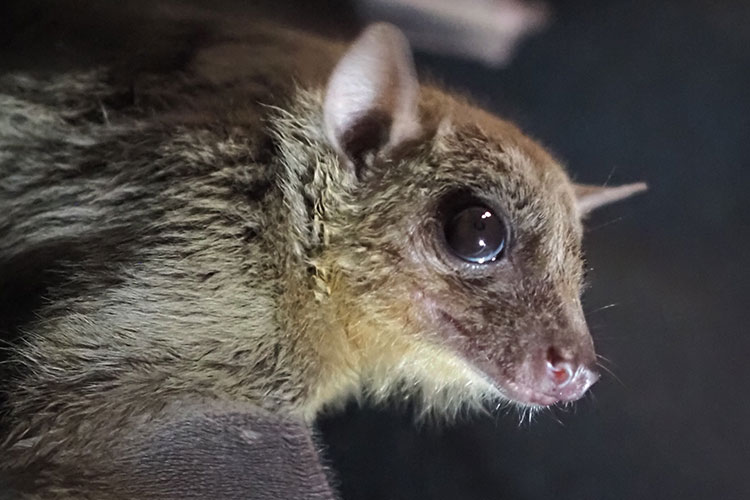
Neuroscientists led by Michael Yartsev used wireless neural recording devices to track the brain activity of Egyptian fruit bats as they freely interacted in groups and occasionally vocalized to each other through high-pitched screeches and grunts. The study published in the journal Science provides the first glimpse into how the brains of social mammals process these types of complex group inter…
By Ava Ma de Sousa This post was originally published on Cogbites. Figure 1. Image created with Canva. Reference: Amodio, D., & Cikara, M. (2020). The social neuroscience of prejudice. In press at Annual Review of Psychology. Is racism rooted in the brain? Given the deep historical roots of many current issues of bias […] The post Seven Lessons about Prejudice from Social Neuroscience appeared …
Hypothesis and Theory Published on 09 Jul 2019 A Mechanism of Synaptic Clock Underlying Subjective Time Perception in Social and Evolutionary Neuroscience - 10,067 views - 2 citations Hypothesis and Theory Published on 09 Jul 2019 in Social and Evolutionary Neuroscience Brief Research Report Published on 26 Mar 2019 in Social and Evolutionary Neuroscience Hypothesis and Theory Published on 09 Jan…
When happens in the brain after social learning? The connectivity between the medial prefrontal cortex (mPFC) and the temporo-pariental junction is increased. We saw in the Masterclass on Social Neuroscience the importance of these two brain areas, which are part of the default mode network. […] The post The Brain is Wired to Be Social appeared first on The Neuroscience School .
Social neuroscientist Antonia Hamilton on social connotations of imitation, copying silly actions, and mockery The post Imitation first appeared on Serious Science .
Sorry about the light posting these past couple of weeks, I went through an ultra busy phase. I’ll start reviewing some social neuroscience research again tomorrow, but I thought I’d try a quick post about how intimately linked the mind … Continue reading →
I meant to post this earlier, but Nature Neuroscience devoted the most recent issue to Social Neuroscience. There are quite a few good review articles to spend your time on…