philosophy-of-language

PhilPapers: Recent additions to PhilArchive

In The Sellarsian Mind. New York: Routledge. forthcomingIn this article I examine Wilfrid Sellars’s account of linguistic rules and rule-following, with a special focus on how the topic emerges and develops in his earliest philosophical writings. In the first part of the article, I show how Sellars’s distinctively original approach to rules and rule-following is elaborated in the project of pure …

philosophyphilosophy-of-language
PhilPapers: Recent additions to PhilArchive

The Final Mirror of Miscommunication Language is not what it seems. It does not simply connect minds, transmit ideas, or mirror reality. It fails—and it fails systematically. This book exposes a disturbing possibility: that miscommunication is not an accident of language, but its underlying condition. What we call understanding may in fact be a carefully maintained illusion, sustained by structur…

philosophyphilosophy-of-language
PhilPapers: Recent additions to PhilArchive

In Oxford Studies in Philosophy of Language Volume 2. Oxford, GB: Oxford Studies in Philosophy O. pp. 234-266. 2021A recurring narrative in the literature is that the empirical facts about negated conditionals provide compelling evidence for the principle of Conditional Excluded Middle and sit uncomfortably with a large family of analyses of conditionals as universal quantifiers over possible wor…

philosophyphilosophy-of-language
PhilPapers: Recent additions to PhilArchive

Phenomenology and Reason The Miscommunication Trilogy, The Conspiracy of Speech, Vol. I, Part 14 Phenomenology and Reason, is a sustained philosophical investigation into the destabilization of language in contemporary reality, drawing on the convergence of phenomenology, linguistics, philosophy of language, and the sciences of information to expose a central condition: language no longer functio…

philosophyphilosophy-of-language
PhilPapers: Recent additions to PhilArchive

The analytic-synthetic distinction is a topic relevant to both the philosophy of language and the philosophy of mind. In dealing with subject-predicate distinctions, the analytic-synthetic distinction attempts to demonstrate what we can say. At the same time, through a priori- a posteriori distinctions, the analytic-synthetic distinction attempts to demonstrate what we can know. For these reasons…

philosophyphilosophy-of-languagephilosophy-of-mind
PhilPapers: Recent additions to PhilArchive

The philosophy of language faces three interrelated foundational problems that have resisted unified treatment. The first is the problem of semantic content: what constitutes the determinate meaning of a linguistic expression, and how is that content related to the referents, inferential roles, and use conditions associated with the expression? The second is the problem of vagueness: why are so m…

philosophyphilosophy-of-language
PhilPapers: Recent additions to PhilArchive

_Abiroun Journal for Interdisciplinary Studies_:e.g. 19-31. 2026This study examines the relationship between grammar and logic in the Arabic-Islamic intellectual tradition as a complex epistemological problem rather than a merely technical dispute between two independent disciplines. It argues that this debate constitutes a critical intersection where philosophy of language, epistemology, history…

history-of-sciencephilosophyphilosophy-of-languagesocial-science

Daily Nous

Louis deRosset, currently professor of philosophy at the University of Vermont, will be moving to the University of Notre Dame. Professor deRosset works in metaphysics, philosophy of language, and philosophy of logic. He is the author of Fundamental Things: Theory and Applications of Grounding, among other writings, which you can learn more about here. He will be taking up his new position as pro…

philosophyphilosophy-of-languagephilosophy-of-logic
Leiter Reports

I made some judgment calls, like treating Wittgenstein’s classic work as part of “Anglophone” philosophy of language; treating books that straddle philosophy of language and mind as belonging here; and largely excluding the kind of work professional linguists do, even when it is of interest to philosophers of language. (Chomsky is a tricky case, but […]

philosophyphilosophy-of-language
Leiter Reports

Once again, some folks who would likely be way up there–like David Kaplan, Stephen Neale, and Nathan Salmon–do not have Google Scholar pages. Some linguistics faculty are very important for philosophers of language (like Barbara Partee with 26,600 citations, and David Beaver with 11,400), but I’ve focused on those primarily in philosophy departments (linguistics tends […]

philosophyphilosophy-of-language
ZEGRa

Dear Colleagues, ZEGRa is excited to announce the latest addition to our team: Ruosen Gao. Ruosen joins us as a visiting Phd student from the Department of Philosophy at Zhejiang University, China. His primary research interests lie at the intersection of philosophy of mind, philosophy of language and AI. He…

aiphilosophyphilosophy-of-languagephilosophy-of-mind
Imperfect Cognitions
Lisa Bortolotti (noreply@blogger.com)
5/26/2015

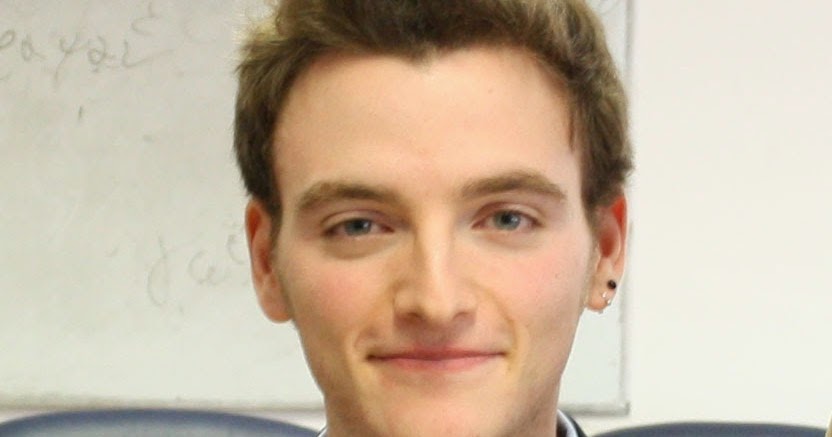
This post is by Michele Tinnirello (pictured above), a PhD student in Philosophy at University of Messina. His research covers the pragmatics of acts of communication within philosophy of language and its relationship with philosophy of mind, neurolinguistics, and artificial intelligence.  My philosophical background concerns mainly the most famous debates within the philosophy of mind

philosophyphilosophy-of-languagephilosophy-of-mind