Sleep is not simply downtime between study sessions. Research suggests it plays an important role in memory consolidation while sleep loss can interfere with attention and learning. #childprotection, #health, #tips, #sleep, #students, #learning, #memory, #memoryconsolidation, #studytips, #neuroscience, #sleepdeprivation, #remsleep, #nremsleep, #productivity, #brainhealth, #supereducational
Memories are constantly revised in acts of recollection. They are moulded by new information, beliefs and emotions, and other people’s versions of events.
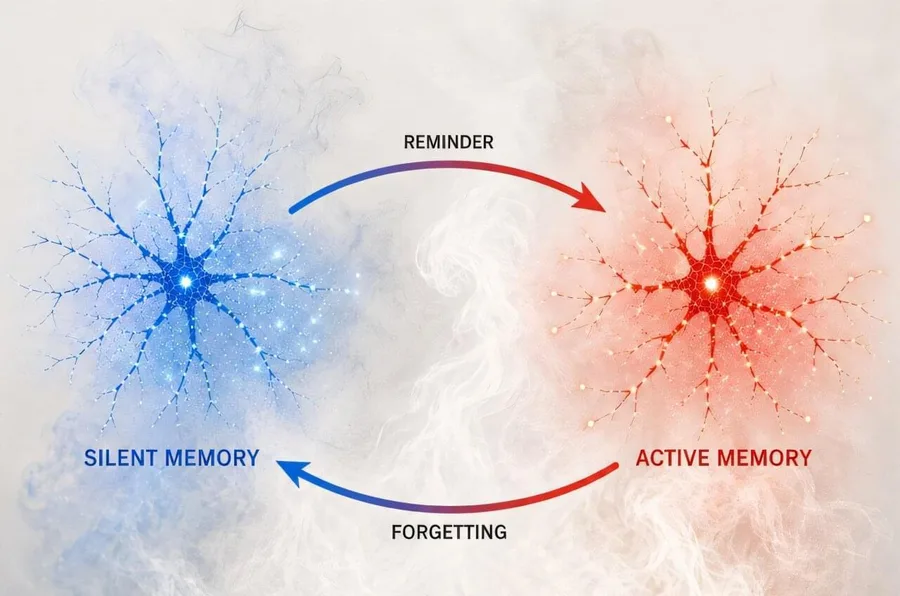
Memory is not a perfect record. Some memories fade, while others remain hidden and can be brought back by reminders. But reminders can also distort what is remembered, and scientists still know little about how the brain accurately recovers memories or forms false ones. In a new study published in Nature Neuroscience, researchers in the […]
Nature Neuroscience, Published online: 29 July 2026; doi:10.1038/s41593-026-02357-2 In macaques, old memories, relative to new ones, are supported by more stable and interconnected cell assemblies. New-biased and old-biased assemblies reactivate during overnight sleep and can sometimes reactivate together, suggesting a mechanism for balancing new learning with memory linking and durability.
Most everyday moments are quickly forgotten, while others stay with us for a lifetime. How the brain determines which memories are retained and which are lost remains an open question. A neuroscience team at the University of Tübingen, led by Professor Andrea Burgalossi of the Institute of Neurobiology and the Werner Reichardt Center for Integrative […]
If you work with Claude day after day, it builds up a memory of your work - and it turns out to be nothing fancy: a pile of plain markdown files. One index, a lot of small notes, a few rules. It's basically Karpathy's "LLM Wiki," and the interesting part is that nobody designs it. Claude's own memory nudges you into it. The thing I expected to build, and didn't I work with Claude on the same proj…
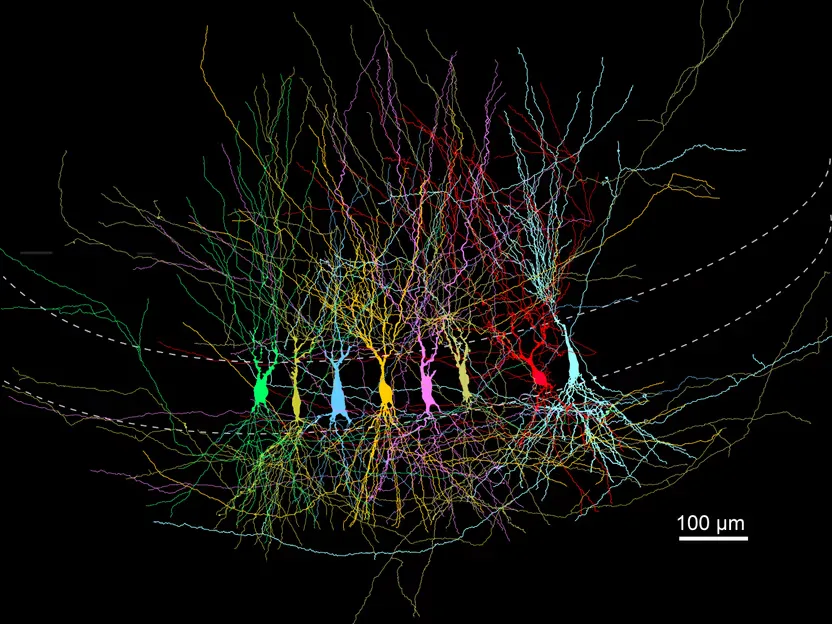
The hippocampus is a key brain region involved in memory formation and spatial orientation. It transforms short-term memories into long-term ones, helping us retain and build upon our experiences. Researchers led by Magdalena Walz Professor for Life Sciences Peter Jonas at the Institute of Science a...
Source: PsyPost Have you ever struggled to remember the name of someone you just met? A recent study published in the Journal of Experimental Psychology: Learning, Memory, and Cognition suggests that the natural "stickiness" of a person's face plays a key role in whether you will recall their name. The study found that highly memorable faces help people remember associated names, but the effect d…
Anan Moran and Elor Arieli discuss their paper, " Distinct Progressions of Neuronal Activity Changes Underlie the Formation and Consolidation of a Gustatory Associative Memory ," published in Vol. 42, Issue 5 of JNeurosci, with Megan Sansevere from SfN's Journals' staff. Find the rest of the Spotlight collection here . With special guests: Anan Moran and Elor Arieli Hosted by: Megan Sansevere On …
The year that was 2020 is finally behind us. And yet the memories of this trying year will be lasting, not least of which because it was such an emotionally turbulent experience. Somewhat fittingly, the collection of invited articles in this issue focus on emotion and memory.
In the first invited article, Fabrice Teroni from the University of Geneva provides a philosophical, bidirectional perspec…
Emotional memories dominate our life histories. How are emotionally-laden events prioritized in the brain and linked to neural systems that promote memory? This question has been at the forefront of affective neuroscience for decades but has received renewed attention as advances in imaging methodology have permitted more detailed accounts of neural interactions that contribute to complex human b…
Recalling the names of old classmates 50 years after graduation or of favorite childhood television series illustrates the amazing abilities of human memory. Emotion and repeated exposure are both known to play a role in long-term memorization, but why do we remember things that are not emotionally charged and have only been seen or experienced a few times in the past? To answer this question, sc…
This is the fourth in our series of posts on the papers published in a special issue of Consciousness and Cognition on the Costs and Benefits of Imperfect Cognitions. Here Catherine Loveday summarises her paper, co-written with Martin Conway, 'Remembering, Imagining, False Memories and Personal Memories'.
Ogwo David Emenike once wrote, 'Our imagination goes ahead of us,
Trying to remember how you arranged last year’s Christmas ornaments on the tree? It turns out that blankly gazing at your empty tree could help. According to a new study, when we look even at an empty space, it cues our brain to remember the orientation of objects that previously occupied that space. Our eye […] The post When Gazing Into Nothing Helps Us Remember appeared first on Cognitive Neuro…
Earlier this year, scientists published a bizarre finding: A decapitated flatworm that grows a new head seems to retain memories from its old one. Weird—but not even close to the weirdest finding in the annals of flatworm memory research. Half a century ago, experiments by James McConnell the University of Michigan suggested memory in flatworms could be transferred through cannibalism. That’s rig…
"The Time Tunnel" (1966) Endel Tulving , that Great Canadian Psychology Researcher and memory theorist, has long held that episodic memory , or the vivid recollection of events and their associated spatiotemporal contextual details, affords humans the unique ability to engage in mental time travel : What makes mental time travel possible? Psychologist Endel Tulving offered a theory on our uniquel…